Due to low temperatures, issuance timing delayed by 7 days compared to last year
Approximately 20 patients occur annually
Small red house mosquitoes, which transmit Japanese encephalitis, have been confirmed in Wando-gun, Jeollanam-do, and Jeju City, Jeju Special Self-Governing Province, prompting the Korea Disease Control and Prevention Agency to issue a nationwide Japanese encephalitis advisory on the 30th.
The Japanese encephalitis advisory is issued when the vector mosquito, the small red house mosquito, is first collected in the given year. This year's advisory was issued 7 days later than March 23 of last year. This is presumed to be because the average temperature in the southern region in March was lower than last year, delaying mosquito activity.
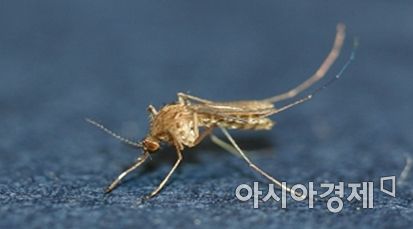
The small red house mosquito is a dark brown, small mosquito that inhabits rice paddies, animal barns, and puddles. It usually appears from late March and reaches peak activity in August to September. This mosquito mainly feeds at night. When infected with the Japanese encephalitis virus, most cases show mild symptoms such as fever and headache, but in rare cases, it progresses to encephalitis with severe symptoms. Encephalitis symptoms include high fever, seizures, confusion, convulsions, and paralysis, with 20-30% of patients potentially dying. Additionally, 30-50% of Japanese encephalitis patients experience various neurological complications depending on the affected area.
In South Korea, about 20 Japanese encephalitis cases occur annually. The first cases are mainly reported in August to September, with most occurring by November. Among the 91 reported cases from 2019 to 2023, 55.4% were male and 44.6% female. The main symptoms observed were fever, altered consciousness, headache, and vomiting, with 73.6% of patients experiencing complications such as cognitive impairment, motor impairment or paralysis, speech disorders, and seizures.
The Korea Disease Control and Prevention Agency recommends vaccination according to the standard immunization schedule for children subject to the national essential vaccination program (born after 2011), as there is an effective vaccine against Japanese encephalitis. It also recommends vaccination for adults aged 18 and over who have no prior vaccination experience and live in or plan to be active in high-risk areas (near rice paddies or pig farms) during transmission periods, foreigners who have migrated from non-epidemic areas and plan to reside long-term in Korea, and travelers to Japanese encephalitis risk countries (Bangladesh, Bhutan, India, China, Japan, etc.).
To prevent Japanese encephalitis, it is advisable to avoid outdoor activities at night. If outdoor activities at night are unavoidable, wearing light-colored, loose-fitting long clothes and applying mosquito repellent to exposed skin, clothing, shoe tops, and socks is helpful. Strong perfumes or scented cosmetics should be avoided as they may attract mosquitoes. To prevent mosquitoes from entering indoors, it is necessary to maintain window screens and use mosquito nets. Additionally, eliminating standing water around the house, such as puddles and blocked drainage, to prevent mosquito breeding is essential.
© The Asia Business Daily(www.asiae.co.kr). All rights reserved.
![Clutching a Stolen Dior Bag, Saying "I Hate Being Poor but Real"... The Grotesque Con of a "Human Knockoff" [Slate]](https://cwcontent.asiae.co.kr/asiaresize/183/2026021902243444107_1771435474.jpg)















