Francis Scott Key Bridge Collapse
Baltimore Harbor Indefinitely Closed
Baltimore Major East Coast US Export-Import Port
Ripple Effects on Other Ports
Bridge Reconstruction May Take Years
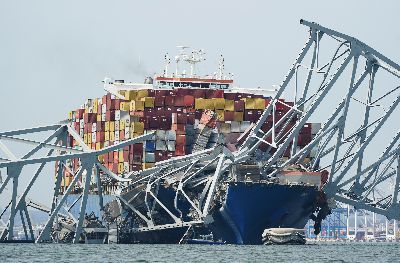
On the 26th (local time), the indefinite closure of the Port of Baltimore is expected to cause supply chain disruptions following the collapse of a bridge in Maryland, USA. The Port of Baltimore is a major import-export port on the U.S. East Coast and is considered a key hub for logistics involving automobiles, various agricultural machinery, and raw materials.
According to major foreign media including the Associated Press, at around 1:27 a.m. that day, the Francis Scott Key Bridge spanning the Patapsco River in Baltimore collapsed due to a ship collision, halting vessel traffic at the Port of Baltimore. Transportation Secretary Pete Buttigieg stated, “This incident will have a significant and long-term impact on the supply chain,” but added, “it is too early to estimate how long it will take to reopen the port.”
What kind of port is the Port of Baltimore?
Located in Chesapeake Bay on the U.S. East Coast, the Port of Baltimore is a major gateway connecting the Atlantic Ocean and the United States. Last year, it handled 52 million tons of international cargo, ranking as the ninth largest U.S. port. Bloomberg News described the Port of Baltimore as “a key eastern gateway for automobiles, agricultural and construction equipment, and raw materials.”
The Port of Baltimore has been the largest U.S. port for automobile imports and exports for 13 consecutive years. This is why European automakers such as BMW, Volkswagen, and Mercedes-Benz have vehicle shipping infrastructure near the port. Last year, the tariff revenue from vehicles imported through the Port of Baltimore reached a record high of $22.5 billion, which is 26% higher than the $17.9 billion at the second-ranked Savannah-Brunswick port.
Bloomberg News reported that the automotive industry is busy seeking alternative routes. Ford’s Chief Financial Officer John Lawler said, “With the port closure, the automotive industry may have to look for other East Coast ports, or even ports nationwide,” adding, “we are continuously looking for solutions.”
The Port of Baltimore is also one of the major U.S. gateways for various agricultural machinery, including combines, tractors, hay balers, and excavators. Dean Croke, a senior industry analyst at transportation analytics firm DAT Freight & Analytics, said, “March is the planting season in the U.S. Midwest and a peak season for importing agricultural equipment through the Port of Baltimore, so this supply chain disruption is expected to have a considerable impact on the agricultural sector.”
Concerns also exist regarding raw material supply. According to supply chain risk assessment firm Everstream Analytics, the Port of Baltimore is an important hub for items such as steel, aluminum, and sugar. Approximately 30 to 40 container ships stop weekly for these goods. There are also projections that up to 2.5 million tons of coal exports could be blocked over the next six weeks. As a result, U.S. coal company Consol Energy’s stock price plunged 7% that day.
Possibility of cascading supply chain disruptions
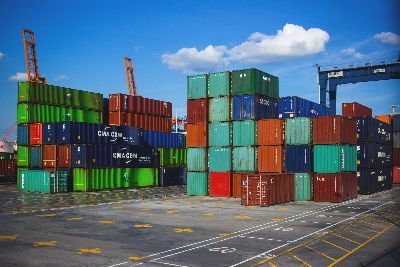
The problem is that as companies seek alternative ports for shipping, supply chain disruptions could cascade. With cargo volumes pouring into the ports of New York-New Jersey and Virginia, shipping schedules may be delayed. Lars Jansen, CEO of Vespucci Maritime, noted, “(Cargo volume at these two ports) is expected to increase by about 10%,” adding, “some bottlenecks and cost increases may occur.” Some also predict ripple effects at the Savannah and Charleston ports, which are relatively far from the Port of Baltimore.
Supply chain disruptions also raise concerns about rising logistics costs. According to global shipping analytics firm Xeneta, the cost of maritime freight services from the Far East to the U.S. East Coast has surged 150% this year due to the Panama Canal drought and the Red Sea conflict. If costs rise further, it could fuel inflation.
Reconstruction could take years
The New York Times (NYT) highlighted that after the Sunshine Skyway Bridge collapse in Florida in 1980, it took seven years to open a new bridge, forecasting that “repairing the bridge could take years.” White House advisor Tom Perez said, “We hope for a quick recovery, but it is still too early to predict how long reconstruction will take.”
U.S. President Joe Biden stated, “The Port of Baltimore is one of the largest shipping hubs in the United States,” and emphasized, “The federal government must cover the full cost of rebuilding the bridge.”
© The Asia Business Daily(www.asiae.co.kr). All rights reserved.
![Clutching a Stolen Dior Bag, Saying "I Hate Being Poor but Real"... The Grotesque Con of a "Human Knockoff" [Slate]](https://cwcontent.asiae.co.kr/asiaresize/183/2026021902243444107_1771435474.jpg)
















