Maintaining Party Membership Qualifications under Article 21 of the Political Parties Act
Second Trial Decision Annulled and Remanded for 2021 Minsaengdang Election 'Invalidity'
The Supreme Court has ruled that even if existing city/provincial party organizations are dissolved due to failure to apply for change registration during the process of newly merging different political parties under a new party name, party members belonging to the dissolved city/provincial parties still retain their status as members of the merged party.
In the case of a new merger, there was a split in lower courts and the Supreme Court over the interpretation of Article 19 of the Political Parties Act, which stipulates that existing city/provincial parties are dissolved if they fail to apply for change registration within a certain period, and Article 21 of the same law, which states that "members of parties before the merger become members of the merged party."
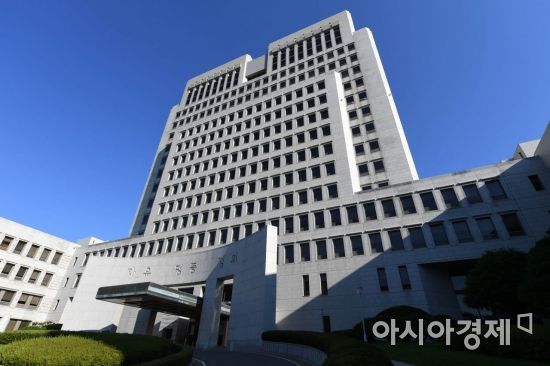
According to the legal community on the 25th, the Supreme Court's 2nd Division (Presiding Justice Kim Sang-hwan) overturned the lower court ruling that had confirmed the invalidity of the August 28, 2021 election for the party leader and supreme council members of the defendant (Minsheng Party) in the appeal case filed by former emergency committee co-chairpersons Kim Jeong-gi and Lee Gwan-seung against the party, and remanded the case to the Seoul High Court.
The court stated, "The lower court judged that the election in this case could not be recognized on the premise that party members belonging to the dissolved city/provincial parties had no membership status in the defendant, based on Article 19, Paragraph 4 of the Political Parties Act. This judgment involved a misapplication of the relevant provisions of the Political Parties Act, which affected the ruling," explaining the reason for overturning and remanding.
On February 24, 2020, two months before the 21st general election, three parties?Bareunmirae Party, Alternative New Party, and Democratic Peace Party?merged to form the Minsheng Party. At that time, the Minsheng Party held 20 incumbent lawmakers, making it the third largest negotiating group in the National Assembly after the Democratic Party and the United Future Party (now People Power Party).
Before the merger, the three parties each had 17 city/provincial party organizations. Among them, 11 city/provincial parties held reorganization conventions and applied for change registration, but the remaining six (Daejeon, Daegu, Incheon, Gangwon, Gyeongsangbuk-do, Jeju) did not hold reorganization conventions or apply for change registration and were thus dissolved.
Article 19 (Merger) Paragraph 1 of the Political Parties Act states, "When political parties merge under a new party name (hereinafter referred to as a new merger) or merge into another party (hereinafter referred to as an absorption merger), the merger can be made by resolution of the joint meeting of the representative bodies or their authorized agencies of the merging parties."
Paragraph 4 of the same article states, "If the newly merged party does not apply for change registration within the period stipulated in the proviso of Paragraph 3, the relevant city/provincial party shall be deemed dissolved on the day following the expiration of that period."
The proviso of Paragraph 3 of Article 19 states, "However, in the case of a new merger, the city/provincial party must hold a reorganization convention and apply for change registration within three months from the date of the merger registration application."
In other words, in the case of a new merger like the Minsheng Party, if the city/provincial party does not hold a reorganization convention and apply for change registration within three months from the merger registration application date, the city/provincial party is deemed dissolved the day after the expiration of that period.
The Minsheng Party conducted a party-wide vote from August 24 to 27, 2021, and held elections for party leader and supreme council members on August 28 of the same year. Seo Jin-hee, who received the most votes, was elected party leader, and Lee Seung-han, Lee Jin, and Jan Ye-chan, who ranked 2nd to 4th, were elected as supreme council members.
Subsequently, acting co-chairpersons Kim Jeong-gi and Lee Gwan-seung filed a lawsuit to confirm the invalidity of the election, claiming that people without party membership from the dissolved city/provincial parties participated in the vote.
The first trial court ruled the election invalid and ruled in favor of the plaintiffs.
Although Article 21 of the Political Parties Act states that "members of parties before the merger become members of the merged party," the court interpreted this as applying only to members of city/provincial parties that completed the procedures under Article 19, Paragraph 3, i.e., those who held reorganization conventions and applied for change registration, and not to members of city/provincial parties that were dissolved due to failure to comply with the legal procedures.
The court stated, "Article 21 of the Political Parties Act applies to cases where the merger of political parties is lawfully conducted. For a merger to be lawfully established, the requirements set forth in each paragraph of Article 19 must be met. In the case of a new merger, only by holding a reorganization convention and applying for change registration can the city/provincial party be incorporated into the newly merged party's organization," concluding, "Therefore, Article 21 applies only to members of city/provincial parties that have completed such procedures in the case of a new merger."
The court pointed out that the Minsheng Party's party constitution stipulates that the party leader and supreme council members are to be elected by a party-wide vote, and that among the total 415,711 eligible voters, approximately 13.7%, or 57,075, were members of the six city/provincial parties that were deemed dissolved under Article 19, Paragraph 4 of the Political Parties Act, belonging to the pre-merger parties.
In the actual vote, 17,567 people participated, accounting for about 4.2% of all eligible voters, meaning that more than three times that number, 57,075 people, had no voting rights.
The court explained the reason for invalidating the election, stating, "Considering the number of people who were granted voting rights despite not being members of the defendant party at the time of the election, the ratio of these people to the total and actual voters, and the final vote counts of the candidates, such defects are serious and reasonably considered to have affected the election results."
The plaintiffs appealed, but the second trial court upheld the same judgment.
However, the Supreme Court's judgment differed.
The court stated, "The defendant (Minsheng Party) was lawfully established according to the procedures stipulated in the Political Parties Act, and accordingly, the plaintiffs naturally acquired membership status in the defendant as stipulated in Article 21 of the Political Parties Act," adding, "Even if the city/provincial parties to which the plaintiffs belonged are deemed dissolved under Article 19, Paragraph 4 of the Political Parties Act, this does not change the situation."
Even if the city/provincial parties were dissolved due to failure to hold reorganization conventions and apply for change registration, the plaintiffs still acquire membership status in the newly merged party under Article 21 of the Political Parties Act.
The court based this judgment on the following: ▲ Articles 19, Paragraphs 3 and 4 of the Political Parties Act only regulate procedures for reorganizing city/provincial party organizations after the effect of the new merger has occurred, and are not provisions concerning the procedures, effect, or timing of the effect of the new merger itself (in other words, these provisions regulate the handling of city/provincial parties that did not apply for change registration after the merger, not the effect of the merger itself); ▲ and that, barring special circumstances, changes within an organization or institution cannot affect party membership status.
The court added, "According to the Political Parties Act, a political party is composed of a central party located in the capital and city/provincial parties located in special cities, metropolitan cities, and provinces (Article 3), and must have at least five city/provincial parties (Article 17)," emphasizing the need to consider that party members can exist even in regions without city/provincial parties.
In other words, the fact that the Political Parties Act sets the establishment requirements for political parties (Article 4, Paragraph 2; Article 17) such that a party can be established by having city/provincial parties in at least five regions among many cities and provinces implies that residents in regions without city/provincial parties can naturally be members of the party.
Finally, the court noted that, in light of Article 8 of the Constitution, which guarantees freedom of joining and leaving political parties, it is difficult to interpret that "members of city/provincial parties deemed dissolved under Article 19, Paragraph 4 of the Political Parties Act are not subject to Article 21."
The court pointed out, "Such an interpretation would unjustly force people who have already become members of the merged party against their will to leave the party."
Ultimately, the court concluded, "The plaintiffs, who were members of the parties before the merger, naturally acquired membership status in the defendant party upon the defendant's lawful completion of the new merger registration, and even if the city/provincial parties to which the plaintiffs belonged are deemed dissolved under Article 19, Paragraph 4 of the Political Parties Act, this does not change the situation."
© The Asia Business Daily(www.asiae.co.kr). All rights reserved.
![Clutching a Stolen Dior Bag, Saying "I Hate Being Poor but Real"... The Grotesque Con of a "Human Knockoff" [Slate]](https://cwcontent.asiae.co.kr/asiaresize/183/2026021902243444107_1771435474.jpg)















