Ongoing Opinion Poll Calls
Controversy Over Election Candidate Promotional Calls
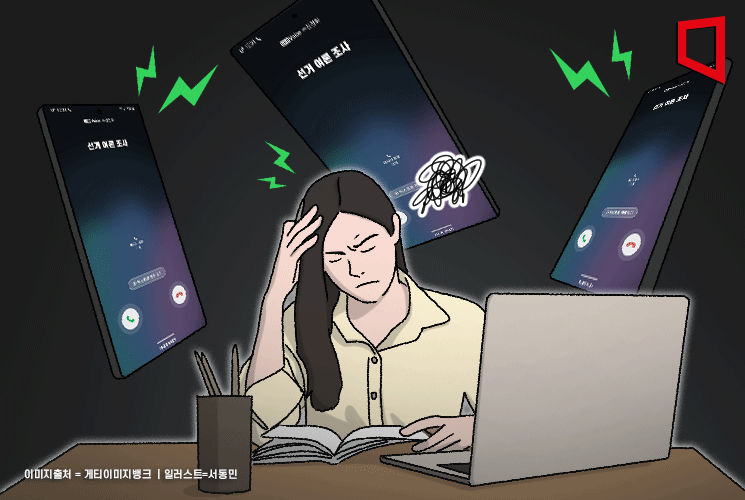
A office worker A (33) living in Jung-gu, Seoul, has recently been troubled by the flood of opinion poll calls. Due to the nature of his work, he frequently needs to communicate with the outside, but during working hours, he has almost missed important work calls several times because dozens of opinion poll calls kept coming in.
Even when blocking the number, calls came again with only the last digits changed, making the blocking useless. A said, "These days, I receive dozens of calls a day regardless of day or night," adding, "Even though I blocked them, calls keep coming from changed numbers, making it difficult to look at the navigation while driving."
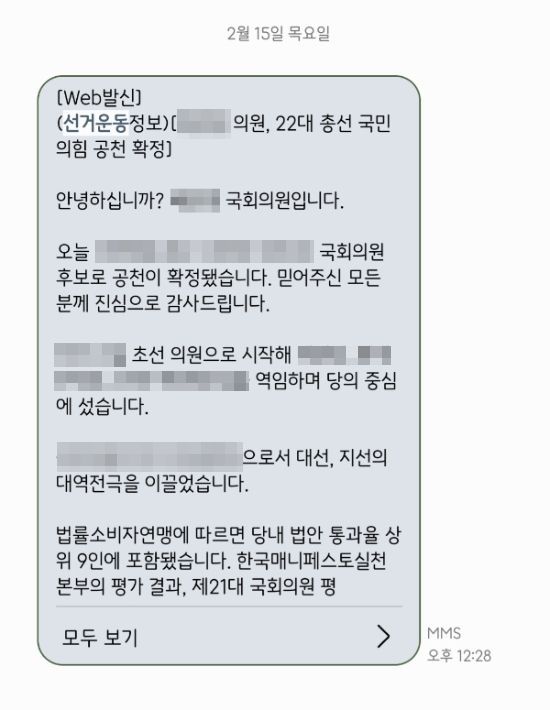
As the 22nd National Assembly election approaches, more people are complaining about the inconvenience caused by various opinion poll calls and election text messages. While sending opinion poll calls and election campaign texts during election season is not illegal, there are cases of exploiting loopholes in the law during the personal information collection process, highlighting the need for institutional improvements.
Article 57 and 108 of the Public Official Election Act specify that political parties and opinion poll agencies can request voter numbers from mobile carriers for the purpose of intra-party primaries and election opinion polls. At this time, the numbers are provided as virtual numbers starting with '070' instead of actual numbers. It is legally permissible for opinion poll agencies to receive voter numbers, and since they are provided as virtual numbers, the risk of actual personal information leakage is low.
An official from an opinion poll specialist company explained, "We know there are many complaints from voters that calls have increased significantly this year," adding, "However, since the registration requirements for opinion poll agencies were strengthened this year, the number of agencies registered with the National Election Commission has drastically decreased. Voter numbers are all provided as virtual numbers, so there is no risk of personal information leakage." Voters who do not wish to receive calls can contact their mobile carriers to refuse number provision. For SKT, call 1547; for KT, 080-999-1390; and for LG Uplus, 080-855-0016.
Election campaign texts are also one of the factors that annoy voters during election season. According to the Public Official Election Act, if election campaign texts are sent simultaneously to more than 20 people, the same voter can receive up to 8 messages within 24 hours. In other words, if recipients are divided into groups of 20 or fewer, unlimited messages can be sent regardless of the number of times. As a result, 'trick operations' dividing recipients into groups of 20 are rampant among text message dispatch agencies.
There is also a possibility of exploiting loopholes in the law during the personal information collection process. According to the Personal Information Protection Act, when collecting personal information through a third party, consent must be obtained from the individual. Even when obtaining personal information directly from the individual, the purpose of collection and processing must be clearly stated. Buying and selling personal information through brokers or collecting personal information without the individual's consent are all subject to punishment.
However, it is practically difficult to prove whether voters' personal information was 'illegally collected.' Even if numbers were illegally collected through clubs, acquaintances, or brokers, if the actor denies it, there is virtually no way to punish them. The current Public Official Election Act does not have separate regulations regarding the route of personal information collection, so there is no way to punish it.
Choi Kyung-jin, president of the Personal Information Protection Law Society, advised, "To punish illegal collection under the Personal Information Protection Act, 'illegality' must be proven, which is practically difficult," adding, "A possible alternative is to institutionalize by creating a 'white list' of voters who actively want to receive election calls and a 'black list' of those who actively refuse."
© The Asia Business Daily(www.asiae.co.kr). All rights reserved.
![Clutching a Stolen Dior Bag, Saying "I Hate Being Poor but Real"... The Grotesque Con of a "Human Knockoff" [Slate]](https://cwcontent.asiae.co.kr/asiaresize/183/2026021902243444107_1771435474.jpg)
















