Transplant syndrome frequently occurs in young children
Exact causes and treatments for transplant syndrome remain unknown
A story has emerged about a 3-year-old British girl who continuously eats non-food items such as plaster, foam, and wool due to 'Pica,' a type of eating disorder. On the 18th (local time), the American daily newspaper New York Post introduced the story of Winter, who suffers from Pica. Also known as pica disorder, Pica is a condition characterized by the persistent consumption of non-nutritive substances such as dirt, trash, paper, and hair.
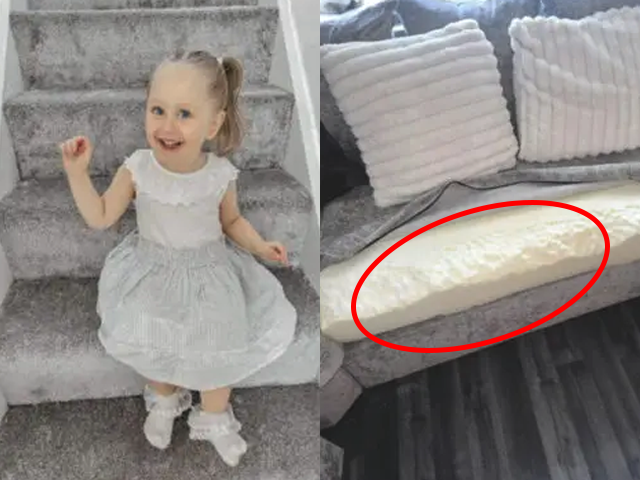 A heartbreaking story has been shared about Winter, a 3-year-old child who continuously eats non-food items such as plaster, foam, and wool due to 'pica,' a type of eating disorder.
 [Photo by New York Post]
Winter developed normally like other children, gradually speaking and walking until about 13 months old. Although she put objects in her mouth, it was considered normal behavior for a child and not seen as a problem. However, Winter suddenly became much less talkative, and her abnormal eating habits worsened. Later, Winter was diagnosed with Pica, an eating disorder, and after further tests, she was also diagnosed with autism. Winter began eating unexpected items such as peeling wallpaper, sofa foam, toy yarn, plants, and candle wax. The most horrifying incident was when she was seen breaking a picture frame and attempting to eat glass shards.
Winter’s mother, Ahern, said, "Pica can be more common in children with autism," and that her child "finds ways to eat things she absolutely should not, no matter what." Believing that Winter sought various textures, Ahern provided her with various sensory play activities and even prepared a specially designed chewable necklace for Pica patients. Ahern said, "The doctor told us there is little we can do," and added, "I hope the condition improves as she grows."
Pica: Eating Inedible Objects
Pica is a disorder frequently seen in young children. It typically appears between the ages of 1 and 2 and often resolves on its own during early childhood. The types of objects ingested vary by age. Younger children often eat paint, plaster, hair, strings, and cloth, while older children may consume animal feces, sand, insects, leaves, and pebbles.
Poverty, ignorance, child abuse, parental psychopathology, developmental delays, and family conflicts increase the risk of developing Pica. If a child shows symptoms of Pica, it is important to visit a hospital promptly. Treatments for Pica include aversion therapy using mild electric stimulation or unpleasant sounds and smells, extinction and negative reinforcement techniques, shaping behavior methods, and overcorrection strategies.
In cases with complications such as lead poisoning, medical treatment is provided, and sometimes treating iron or zinc deficiencies can eliminate Pica. If excessive stress is the cause, psychological and social environmental factors causing stress are carefully assessed, and family counseling, behavioral therapy, and environmental therapy are combined.
Finally, in addition to treating Pica symptoms, treatment for possible complications must also be conducted. Eating substances like paper, styrofoam, and hair can accumulate in the body, causing nutritional deficiencies, intestinal obstruction, tooth damage, intestinal infections, iron deficiency, and lead poisoning, which can lead to further harm.
© The Asia Business Daily(www.asiae.co.kr). All rights reserved.
![Clutching a Stolen Dior Bag, Saying "I Hate Being Poor but Real"... The Grotesque Con of a "Human Knockoff" [Slate]](https://cwcontent.asiae.co.kr/asiaresize/183/2026021902243444107_1771435474.jpg)















