On the 19th, Ministry of Land, Infrastructure and Transport Announcement at the People's Livelihood Forum
Promoting by Distinguishing Between 'Maintenance-Linked' and 'Urban Regeneration' Types
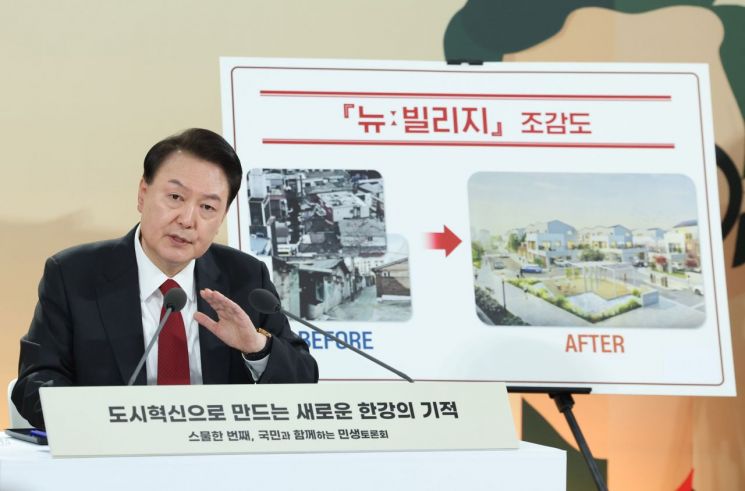
On the 19th, the Ministry of Land, Infrastructure and Transport announced that it will introduce 'New:Village,' which offers apartment-level convenience facilities and residential environments in old low-rise residential areas where full redevelopment is difficult.
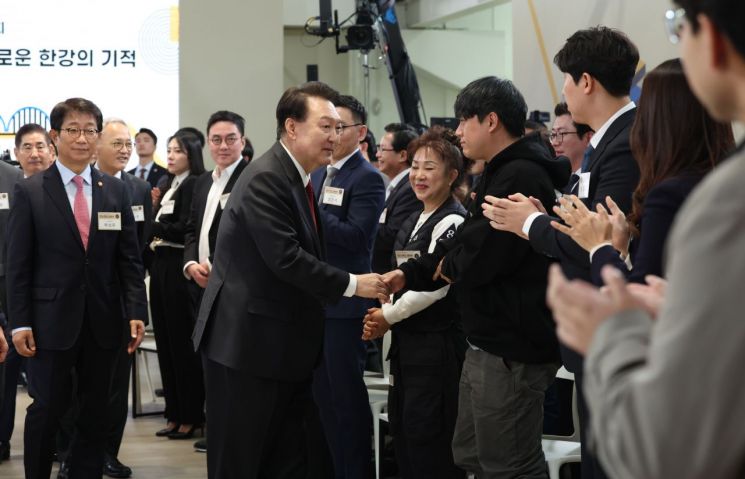
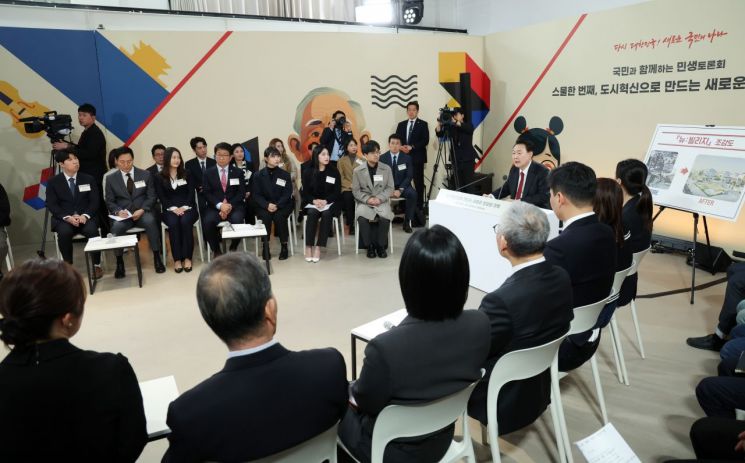
On the same day, the Ministry announced the 'Three Major Innovation Plans for Urban Space, Residence, and Quality' at the 21st 'Public Discussion on Livelihood with the People: A New Miracle of the Han River Created with Citizens' event held at the Mullae Art Factory in Yeongdeungpo-gu, Seoul, presided over by President Yoon Seok-yeol.
The 'New:Village' project will be promoted in two categories: 'Maintenance-Linked Type,' which supports autonomous housing maintenance projects within small-scale housing maintenance management areas, and 'Urban Regeneration Type,' which supports autonomous housing maintenance projects and individual reconstruction outside the management areas.
The Ministry of Land, Infrastructure and Transport will invest national funds in 'New:Village' to support the installation costs of infrastructure and convenience facilities. Infrastructure includes public parking lots, roads, water supply and sewage, utility tunnels, green spaces, public open spaces, and firefighting water facilities, while convenience facilities refer to facilities used jointly by many residents, such as security facilities, community exercise facilities, and libraries.
The funding for 'New:Village' will be adjusted from the existing urban regeneration project budget used for village beautification, investing 10 trillion won over 10 years to support convenience facilities. Consulting related to the 'New:Village' project will also be provided through specialized organizations supporting small-scale maintenance projects and urban regeneration projects.
'New:Village' Maintenance-Linked Type
First, the 'Maintenance-Linked Type' adds a convenience facility package to the autonomous housing maintenance project. The autonomous housing maintenance project refers to a project where fewer than 10 single houses or fewer than 20 multi-family houses form a resident consensus body to renovate and build independently.
This project can be carried out within small-scale housing maintenance management areas. These areas are regions with high demand for small-scale maintenance in old low-rise residential areas but have poor infrastructure, requiring systematic maintenance such as establishing block-by-block maintenance plans and creating infrastructure. These areas are selected by local government heads.
The current fund support loan limit, which is 50% of the total project cost, is planned to be expanded to 70%. Installation costs for infrastructure and convenience facilities will also be supported by national funds within approximately 15 billion won. A Ministry of Land, Infrastructure and Transport official stated, "We will prioritize allocating the existing small-scale maintenance management area budget to resident-preferred facilities."
The floor area ratio will be relaxed up to 1.2 times the legal maximum both inside and outside the management areas, and the resident consent rate will be eased to 80% inside and outside the management areas.
'New:Village' Urban Regeneration Type
Second, the 'Urban Regeneration Type' refers to autonomous housing maintenance projects and individual reconstruction promoted within urban revitalization areas. Urban revitalization areas are designated to intensively promote urban regeneration projects to maximize their effects.
The current loan limit is 50 million won per unit for construction costs, which will be expanded to 75 million won per unit. Installation costs for infrastructure and convenience facilities will also be supported by national funds within approximately 15 billion won. A Ministry of Land, Infrastructure and Transport official stated, "We will restructure urban regeneration projects that were previously promoted without linkage to residential maintenance to focus on improving living-centered residential environments."
The floor area ratio will be relaxed up to 1.2 times the legal maximum both inside and outside the management areas, and building height regulations will also be eased in accordance with the floor area ratio limit.
Vacant House Maintenance Activation
The Ministry of Land, Infrastructure and Transport also announced measures to address blind spots in residential area maintenance.
It stated that it will ease the burden of residential area maintenance, including street housing maintenance projects, and expand project feasibility. The fund loan period will be extended from the existing 5 years to 7 years, and early repayment will be allowed.
When supplying infrastructure using vacant houses and land outside project areas, the floor area ratio will be increased to 1.2 times the legal maximum. Fund loans will also be supported at 1.9% interest up to 70% of the total project cost.
Areas where residents find it difficult to maintain on their own will be designated as 'Residential Regeneration Innovation Districts,' where the public sector will step in. Up to 25 billion won in national funds will be provided, combining the project implementation capabilities of local governments and the Korea Land and Housing Corporation (LH) to quickly supply convenience and infrastructure facilities desired by residents.
To activate vacant house maintenance, consulting for maintenance plan establishment will be provided to local governments with high needs for vacant house maintenance through organizations such as the Korea Real Estate Board or the Korea Research Institute for Human Settlements. Vacant house dense areas will also receive additional points when selecting urban regeneration projects. Conditions for additional points include areas with 10 or more vacant houses, vacant house area exceeding 20%, and two-thirds or more of buildings being old or deteriorated.
Seed Loans for Old Commercial Buildings
The Ministry of Land, Infrastructure and Transport will also promote grassroots commercial district revitalization. First, it plans to expand support for 'Seed Loans' (fund loans) necessary for remodeling old commercial buildings. It will provide funds at an interest rate of about 2.2% for remodeling commercial buildings aimed at revitalizing commercial districts within urban regeneration areas, such as traditional markets.
Commercial-residential complexes (with a housing ratio of up to 40%) will be included as eligible recipients of Seed Loans. Considering recent commercial district trends, restrictions on industries eligible for Seed Loans will also be relaxed. Previously, pubs and baseball practice facilities could not receive Seed Loans, but going forward, only harmful facilities will be disallowed.
Introducing the latest mechanical parking systems will also help alleviate parking difficulties. When applying for urban regeneration projects, plans to install mechanical parking systems that ensure user safety and convenience will receive additional points. Mechanical parking will now accommodate electric vehicles and large passenger cars, which had previously faced difficulties entering.
To encourage private-led parking supply activation, the allowable mixed-use ratio for parking-only buildings will be relaxed from 30% to 40%.
© The Asia Business Daily(www.asiae.co.kr). All rights reserved.
![Clutching a Stolen Dior Bag, Saying "I Hate Being Poor but Real"... The Grotesque Con of a "Human Knockoff" [Slate]](https://cwcontent.asiae.co.kr/asiaresize/183/2026021902243444107_1771435474.jpg)

















