Increase in People and Companies Leads to More Jobs
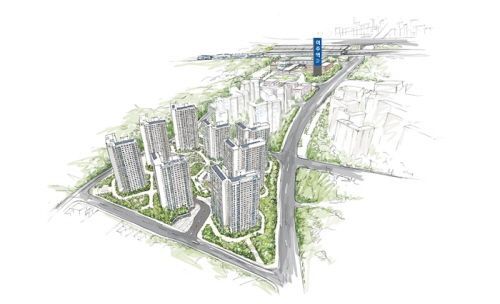
As the Seoul metropolitan real estate market experiences a boost from the Seoul Metropolitan Express Railroad (GTX), the inclusion of Yeoju Station in the GTX-D line plan announced by the government in January has brought attention to the real estate market in Yeoju, Gyeonggi Province.
Yeoju City, where the extension of the Gyeonggang Line to Wonju is already planned, is also accelerating large-scale development projects around Yeoju Station, with a growing population and increasing number of businesses.
Since its elevation to city status in September 2013, Yeoju, now over 10 years old, has been undergoing urban redevelopment, station area development, and industrial complex construction in various locations. Yeoju is transforming into a hub city in the southeastern Gyeonggi region, attracting increased corporate investment and population influx due to massive development projects. Consequently, the apartment sales market is also gaining momentum.
The most notable major advantage drawing attention to Yeoju is the establishment of a metropolitan transportation network. First, with the inclusion of Yeoju Station in the GTX-D line, announced as part of the government's 'Phase 2 GTX Project' on January 25, a massive special effect is expected. Using the GTX-D line, travel from Yeoju Station to Samseong Station will take about 30 minutes.
Additionally, the Gyeonggang Line double-track electrification project, an east-west metropolitan railway network crossing the country, is accelerating with a goal of full opening by the end of 2029. Following the already opened sections of Pangyo?Yeoju, Songdo?Wolgok, and Seowonju?Gangneung, the opening of the Wolgok?Pangyo and Yeoju?Seowonju sections will enable seamless travel from Songdo to Gangneung without transfers.
In this case, access from Yeoju Station to Pangyo Station will be possible within 40 minutes. Once the entire Gyeonggang Line is open, Yeoju will be connected westward to Pangyo and Incheon, and eastward to Wonju and Gangneung. The GTX-D line connects Gimpo, Hanam, and Wonju in Gyeonggi Province. This signifies that Yeoju can establish itself as a hub area for metropolitan railway networks in the southeastern metropolitan area.
In line with these environmental changes, active development around Yeoju Station is also expected. First, Yeoju Station area (1,947 households) and Gyodong and Gyodong 2 districts (1,156 households) have completed occupancy, and including Yeoju Station Xi Heritage (769 households), the largest residential complex in Yeoju with 3,872 households is being formed. Including the ongoing Hongmun 1 and 2 districts and Gyodong 1 district, a mini new town with about 6,000 households will be established.
Moreover, a second urban development project covering 530,000 square meters, with about 3,900 housing units, is planned. Also, the third urban development project in the Yeoju Station area, covering approximately 840,000 square meters, will include the Yeoju Administrative Complex Town (new city hall). Construction is scheduled to start in 2025 with a target completion in 2028. Once the third urban development project is completed, the Yeoju Station area will be reborn as the administrative and residential center of Yeoju.
While many regions face extinction risks due to low birth rates and aging populations, Yeoju's recent population trends are noteworthy. According to the Ministry of the Interior and Safety's resident registration population statistics, as of the end of last year, Yeoju City's population was 118,536. This is a 2.8% (3,178 people) increase from 115,358 in 2020, three years prior. This growth rate is over 1 percentage point higher than the overall increase rate of Gyeonggi Province (1.8%) during the same period.
The number of businesses and workers has also increased significantly. According to the Gyeonggi Province business survey, as of the end of 2022, Yeoju had 18,780 businesses and 59,946 employees. This represents an increase of 9,703 businesses and 16,042 employees compared to five years earlier (2018). As a result, the unemployment rate has dropped significantly. According to Statistics Korea, Yeoju's unemployment rate in the first half of 2023 was 1.0%, well below Gyeonggi Province's 2.7% and the national average of 2.8%.
The steady increase of people and businesses in local areas indicates regional economic revitalization. As population grows and business attraction becomes active, jobs are created, various development projects proceed, transportation networks open, and the real estate market gains vitality. Consequently, the future value of the region also rises significantly.
In the Yeoju Station area, equipped with such an environment, the luxury brand apartment 'Xi' will make its debut in the first half of the year. GS Construction will offer 769 units of 'Yeoju Station Xi Heritage' in Gyodong, Yeoju Station area, Gyeonggi Province, in May. This apartment complex consists of 769 units ranging from 59 to 136 square meters (exclusive area). 86% of the total units are 59㎡ (166 units) and 84㎡ (497 units), which are popular among actual residents.
'Yeoju Station Xi Heritage,' located in the Yeoju Sejong District urban development zone, boasts excellent transportation. Through the Gyeonggang Line Yeoju Station within walking distance, travel to Pangyo Station is possible within 40 minutes. Additionally, the Seo Yeoju IC on the Jungbu Inland Expressway, Yeoju IC on the Yeongdong Expressway, and the Second Yeongdong Expressway are nearby, making travel convenient not only within the metropolitan area but nationwide.
The complex also boasts a pleasant residential environment. Surrounding the complex are Hwanghak Mountain Forest Bathing Area, Hwanghak Mountain Arboretum, Yeongwol Park, Yeoju Neighborhood Park, Yang Island Park, Geumeunmorae Riverside Park, and the Sejong Daewang Tomb, among other parks and tourist facilities. The Namhan River is also close. Schools such as Sejong Elementary and Sejong Middle School are within walking distance from the apartment complex. Within a radius of about 3 km, convenience facilities such as E-Mart, Yeoju Bus Terminal, Hi-Mart, Yeoju Police Station, and Jeil Market are concentrated.
All units are designed in a slab-type layout with 4-Bay or more (a layout with three rooms and a living room facing the front balcony), which is advantageous for ventilation and lighting. More than half of the units have three-sided balconies, enhancing indoor comfort.
All parking facilities are underground, securing spacious landscaping and safe play areas for children. Compared to surrounding apartments, a wider and differentiated community including Kyobo Bookstore curation and a Together Care Center will be established.
In particular, the early sell-out of 'Icheon Xi The Ric?' in nearby Icheon City, which was launched in October last year, has raised expectations for the first Xi apartment sale in the Yeoju area.
© The Asia Business Daily(www.asiae.co.kr). All rights reserved.
![Clutching a Stolen Dior Bag, Saying "I Hate Being Poor but Real"... The Grotesque Con of a "Human Knockoff" [Slate]](https://cwcontent.asiae.co.kr/asiaresize/183/2026021902243444107_1771435474.jpg)















