"Additional Data Needed for Inflation Decline"
Base Interest Rate Judged to Have Reached Peak
At the Federal Open Market Committee (FOMC) meeting in January this year, Federal Reserve (Fed) officials expressed caution about early interest rate cuts and reaffirmed a cautious stance. They noted that while inflation showed 'solid progress,' more evidence of a decline was needed. They judged that the current benchmark interest rate of 5.25-5.5% was likely at its peak.
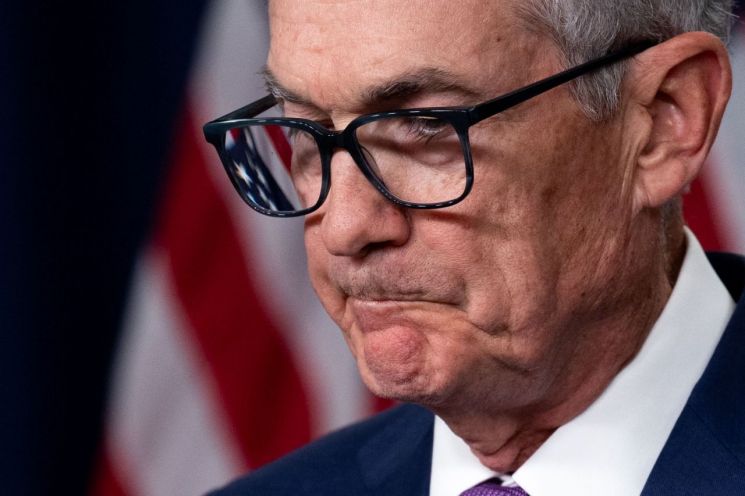
According to the January FOMC minutes released by the Fed on the 21st (local time), the members reaffirmed a cautious stance that the current rates should be maintained until inflation clearly slows down.
The minutes stated, "Most participants pointed out that moving too quickly to ease monetary policy is risky," and emphasized that "it is important to carefully evaluate incoming data to determine whether inflation is persistently declining toward 2%."
This aligns with the Fed's policy statement after the January FOMC, which indicated the need for additional evidence of slowing inflation.
According to the minutes, members showed differing views on the risks of 'too quick' cuts and 'too long' tightening. While caution against early rate cuts was predominant, some members warned of the risks of restrictive monetary policy. However, only two members mentioned the risk of "maintaining an excessively restrictive stance for too long," representing a minority. The majority of members appeared more concerned about the possibility that early rate cuts could entrench high inflation.
Some members judged that the recent improvement in inflation might be temporary. They noted that consumer spending was stronger than expected and that if financial conditions become excessively accommodative in the future, the downward trend in inflation could halt or reverse. In fact, the Consumer Price Index (CPI) for January, released last week, rose 3.1% year-over-year, exceeding the market expectation of 2.9%. However, members agreed that there had been solid progress toward bringing inflation back to the Fed's 2% target.
The possibility that the current benchmark interest rate of 5.25-5.5% has reached its peak was also confirmed through the minutes. The minutes stated, "In discussing the policy outlook, participants judged that it is likely that the policy rate has peaked in this tightening cycle." Although some on Wall Street have mentioned the possibility of further rate hikes, the likelihood appears slim.
The minutes also hinted at the possibility of slowing the pace of quantitative tightening. They noted, "Some participants mentioned that the pace of quantitative tightening could be slowed or that the Fed could maintain balance sheet reduction for a longer period."
The minutes released on this day are in line with remarks made by Fed officials, including Fed Chair Jerome Powell, following the FOMC meeting on the 31st of last month. Chair Powell repeatedly emphasized in his post-FOMC press conference and an interview with CBS that "he wants to see more evidence that inflation is persistently declining toward 2%."
The market has already dismissed expectations of a rate cut in March and is now anticipating the first cut in June or July. According to the Chicago Mercantile Exchange (CME) FedWatch tool, the federal funds futures market on this day reflected nearly a 70% chance that the Fed will cut rates by at least 0.25 percentage points at the June FOMC. The probability of maintaining the current rate until July was only around 11%.
Kim Rupert, Global Bond Managing Director at Action Economics, said, "I don't think the FOMC minutes said anything new," adding, "The market has basically already priced in the possibility of a March cut and several subsequent cuts."
© The Asia Business Daily(www.asiae.co.kr). All rights reserved.













![The Special Connection Between the Statue of Martyr Lee Jun in Jangchungdan Park and Mayor Oh Sehoon ③ [Current Affairs Show]](https://cwcontent.asiae.co.kr/asiaresize/319/2026012110001599450_1768957215.jpg)
