President-led Public Discussion on Livelihood Issues
Ministry of Agriculture, Food and Rural Affairs Announces Plan to Rationalize Farmland Use Regulations
The government has decided to initiate the process of lifting restrictions on small leftover farmlands within agricultural promotion areas, known as 'absolute farmland,' which are designated solely for agricultural production. In cases where these lands have been fragmented and lost their function due to roads or industrial complex development, they will be released from agricultural promotion area status and repurposed for cultural welfare facilities, sports facilities for residents, or convenience facilities for nearby industrial complexes. Additionally, the installation of farmland for vertical farms will be permitted to promote smart agriculture.
On the 21st, the Ministry of Agriculture, Food and Rural Affairs announced these measures as part of the 'Rationalization Plan for Farmland Use Regulations' at a public discussion chaired by President Yoon Seok-yeol in Ulsan.
Han Hoon, Vice Minister of the Ministry of Agriculture, Food and Rural Affairs, explained, "This initiative aims to overcome the crisis of rural extinction caused by depopulation and aging, improve local living conditions, and revitalize the regional economy through industrial attraction. We plan to gradually lift restrictions on leftover farmlands with low agricultural utility so that hospitals or gymnasiums can be established, and allow the installation of smart farms and rural stay-type rest areas on farmland without conversion procedures, thereby responding to rural extinction and increasing farm household income."
A total of 21,000 hectares of leftover farmland to be released for building hospitals and gymnasiums
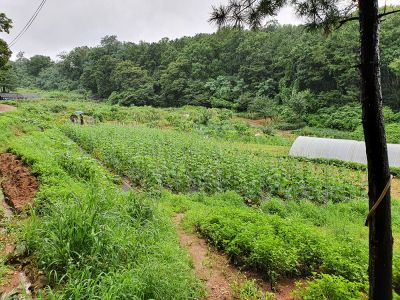
According to the Ministry of Agriculture, Food and Rural Affairs, leftover farmland refers to farmland remaining after agricultural promotion areas have been developed into roads, residential sites, or industrial complexes, currently estimated at a total of 21,000 hectares nationwide. Compared to clustered farmland within agricultural promotion areas, leftover farmland has lower mechanized farming efficiency and agricultural productivity, making it more effective to utilize it for cultural welfare facilities, sports facilities, or convenience facilities for nearby industrial complexes. However, there have been restrictions preventing its use for purposes other than farming.
Accordingly, the government plans to announce a small-scale agricultural promotion area maintenance plan within the first half of the year and accept development demand applications for leftover farmland from local governments. After feasibility reviews, the process of lifting restrictions will be pursued.
'Apartment-style farms' now allowed on farmland
The installation of vertical farms on farmland will also be permitted. Vertical farms are next-generation plant production systems that enhance crop yield and quality through advanced environmental control and automated production processes within indoor multi-tiered structures, gaining attention as a promising future industry.
However, unlike greenhouses or vinyl houses that can be installed on farmland without separate restrictions as container-type or building-type structures, vertical farms require farmland conversion procedures to change the land category or temporary use procedures for other purposes to be installed on farmland for a limited period.
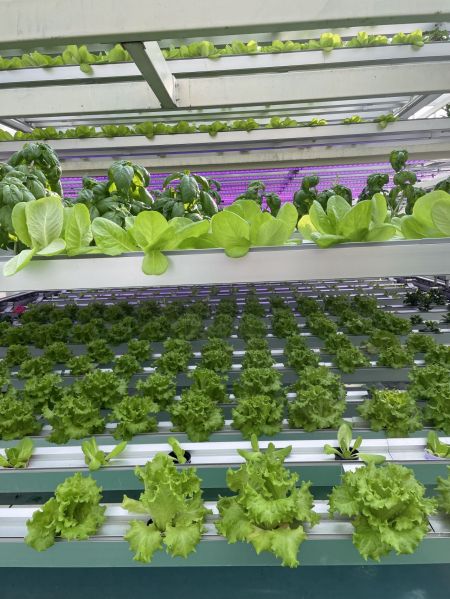
This has led to criticism that prohibiting the installation of vertical farms producing agricultural products on farmland is an unreasonable regulation. In particular, for container-type vertical farms, the temporary use period is limited to a maximum of 8 years (initial 5 years plus 3-year extension), making it difficult to recover the initial investment costs, leading to strong demands for extending the temporary use period.
In response, the government plans to gather opinions from stakeholders and revise the Enforcement Decree of the Farmland Act to extend the temporary use period for vertical farms starting in July and improve the system so that all vertical farms can be installed on farmland within certain areas without separate restrictions.
Introducing 'rural stay-type rest areas' to increase resident population
As a measure to increase the rural resident population, the government will introduce 'rural stay-type rest areas' (tentative name), which serve as an intermediate form between rural houses and farm sheds. A Ministry of Agriculture, Food and Rural Affairs official explained, "Farm sheds are basically intended for temporary rest or storage and are not residential facilities. The purpose is to introduce a concept different from farm sheds, such as experiential houses or stay-type rest areas targeting non-farmers."
The government will further collect stakeholder opinions and then determine specific scales before proceeding with amendments to the Farmland Act and its Enforcement Decree.
The Ministry of Agriculture, Food and Rural Affairs drew a clear line regarding concerns that lifting restrictions on small leftover farmland and introducing rural stay-type rest areas might lead to land speculation. Vice Minister Han said, "There are various factors determining the official land price, and it is influenced more by the surrounding area's land use than by whether it is an agricultural promotion area, so we believe the risk of land speculation due to lifting agricultural promotion area status is low. Also, even if the land is released from agricultural promotion area status, it will be converted to farmland outside the agricultural promotion area, so it will not lead to an overall direct decrease in farmland area."
© The Asia Business Daily(www.asiae.co.kr). All rights reserved.
![Clutching a Stolen Dior Bag, Saying "I Hate Being Poor but Real"... The Grotesque Con of a "Human Knockoff" [Slate]](https://cwcontent.asiae.co.kr/asiaresize/183/2026021902243444107_1771435474.jpg)

















