Global Automakers Catching Up with Tesla's R&D Strategy
Implementing Centralized E/E Architecture
Developing Proprietary Operating Systems and Popularizing OTA
Developing Everything from Semiconductors to Software and Cloud
Strengthening Core Component Localization Strategy
When Hyundai Motor Group announced its strategy to develop an in-house operating system (OS) for software-defined vehicles (SDV) at last month's CES, the world's largest electronics and IT exhibition, the industry interpreted it as an "official declaration to catch up with Tesla." Having elevated hardware (HW) quality to a world-class level through quality management, the group appears to be benchmarking Tesla to target the software (SW) market. Hyundai Motor revealed that it will apply a 'centralized architecture' that allows high-performance computers to control all hardware through software. The full deployment of the SW platform is scheduled for 2025, with mass production application set for 2026.
As the global automotive industry accelerates its transition to SDVs, Tesla's research and development (R&D) approach is gaining attention. Tesla created the prototype of SDVs over a decade ago. Strategies such as adopting centralized electrical and electronic architecture, developing proprietary OS, and internalizing key components, which are now being attempted by established automakers including Hyundai Motor Group, were formulated at that time.
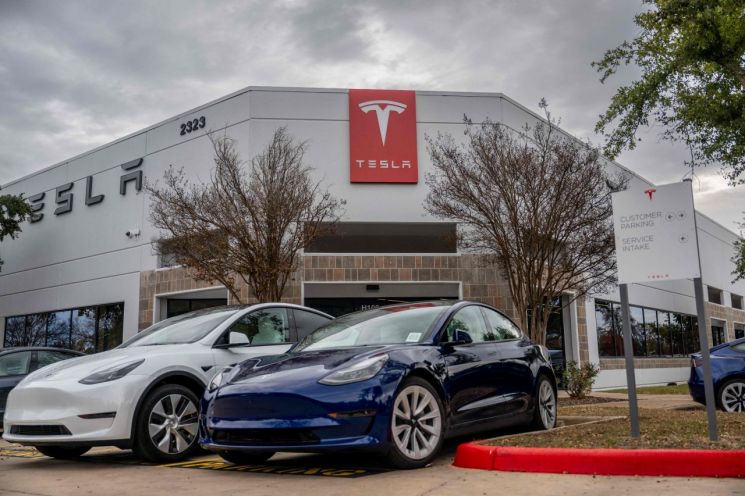
Vehicles Applying Over-the-Air (OTA) Updates Like Smartphones
The starting point revealing Tesla's R&D capabilities dates back to 2012. Tesla applied the industry's first over-the-air (OTA) wireless software update to the Model S launched that year. This allows vehicle software updates without visiting a service center, using wireless networks like Wi-Fi, similar to a smartphone.
The true value of OTA emerged when the Model S faced a crisis due to a series of fire incidents within a year of its release. The vehicle's low body and battery pack positioned at the bottom made it vulnerable to road debris puncturing the battery pack, leading to fire risks. Tesla engineers modified the suspension control software code to raise the vehicle body by about 2 cm. The updated code was distributed via real-time wireless communication. Traditional automakers would have contacted each owner individually and called them to nearby service centers for manual suspension replacement. Established automakers only began introducing OTA in new vehicles around 2021, about ten years later. Even now, OTA updates are limited to areas like navigation and infotainment, and they have not applied driving-related OTA updates across all models like Tesla.

Of course, Tesla is not called the leader in SDVs simply because it implemented OTA first. OTA is just one condition for realizing SDVs. The industry highly values Tesla because it was the first to build a centralized electrical and electronic architecture. This architecture enables running various software functions such as autonomous driving, infotainment, and connected services.
Tesla first introduced centralized architecture with the Model 3 launched in 2019. This was possible because it had its own designed vehicle semiconductor (FSD chip). Through this, the number of electronic control units (ECUs), which act as the vehicle's brain, was reduced to four (one for driving and three for body control). Tesla created an innovative revenue model by equipping the highest-spec firmware and hardware and unlocking additional functions via software as customers paid.
Conventional internal combustion engine vehicles can have over 100 ECUs. This is like having a brain attached to each arm, leg, internal organ, and finger joint. This is due to the vertically integrated supply structure of traditional automakers. Original equipment manufacturers (OEMs) receive modularized parts from first-tier suppliers. Each module is packaged with hardware and an ECU controlling it. Manufacturers assemble these modules and inspect their operation.
However, Tesla, as a startup, took charge of everything from parts design to production and inspection. From Tesla's perspective, the traditional automakers' supply method, where each limb has its own brain, seemed rather abnormal. Tesla not only reduced the number of ECUs but also shifted the control method from function-based to domain-centered. This simplifies the wiring harness work of electronic devices. Reducing manual wiring processes lowers labor costs and production costs, and also enables vehicle weight reduction. As a result, Tesla actually halved the wiring length of the Model 3 to 1.5 km compared to previous models and further shortened it to 1 km in the subsequent Model Y.
From Semiconductors to Vehicle OS, Software, and Cloud
Another competitive edge of Tesla is its full-stack development approach, encompassing semiconductor design, electrical and electronic architecture, software operating system, user-centric software, and cloud services. Hyundai Motor Group's recently announced 'chip-to-factory' strategy can be seen as following Tesla's lead in a broad sense.
Tesla established its own OS early on. According to Global Market Insights, the vehicle OS market exceeded $5 billion in 2022 and is expected to grow at an average annual rate of 13% to reach $19.5 billion by 2032. Developing a proprietary vehicle OS is crucial not only for market size but also for securing market leadership. Apple's rise as the smartphone standard in the early smartphone market was largely due to its proprietary OS, iOS.
Recently, automakers have been intensifying efforts to develop their own OS to catch up with Tesla. However, the key issue is how much of the OS implementation is developed in-house. Developing everything from scratch like Tesla requires significant time and cost, while relying on existing big tech companies means sharing profits and increasing costs.
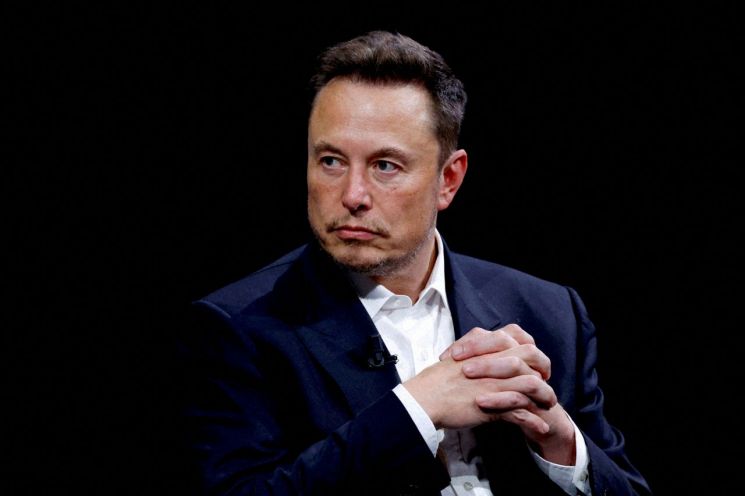
Tesla's competitiveness is also attributed to the determination of CEO Elon Musk regarding design and functionality. Walter Isaacson's biography of Musk describes a conflict during the early days of the company over the Model S design. Engineers argued that making the battery pack thinner, which is placed under the car floor, would reduce safety, while Musk strongly insisted on making it as thin as possible for design purposes. Ultimately, this debate led to the innovation of integrating the battery pack with the vehicle body. By setting optimal challenges and tackling seemingly impossible technical tasks, Tesla was able to pioneer new methods.
© The Asia Business Daily(www.asiae.co.kr). All rights reserved.
![Clutching a Stolen Dior Bag, Saying "I Hate Being Poor but Real"... The Grotesque Con of a "Human Knockoff" [Slate]](https://cwcontent.asiae.co.kr/asiaresize/183/2026021902243444107_1771435474.jpg)

















