Exclusive 76㎡ 2.378 Billion KRW
Dropped About 100 Million KRW in One Month
Gyeonggi Cold Wave, High Interest Rates, Additional Charges
Have Greater Impact Than Regulatory Easing
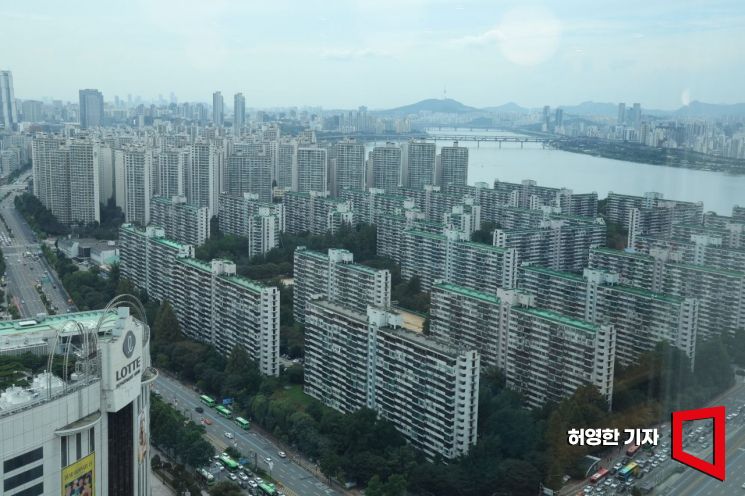
Although it has been a month since the 1·10 measures were announced to accelerate housing maintenance projects, including exemptions from safety inspections for houses over 30 years old, prices of prime reconstruction properties have fallen further. House prices are declining mainly in areas with high expectations such as Songpa-gu, Nowon-gu, and Yangcheon-gu in Seoul. It is analyzed that the market is more influenced by the economic downturn and fears of increased additional contributions than by the government's determination to revitalize housing maintenance projects.
Reconstruction Complexes Expected to Benefit See Further Declines
According to the Ministry of Land, Infrastructure and Transport's real transaction price disclosure system on the 15th, the 76㎡ unit of Jamsil Jugong Complex 5, a major reconstruction project in Songpa-gu, was traded at 2.378 billion KRW on January 24, after the announcement of the 1·10 measures. Compared to the previous transaction on January 18 at 2.408 billion KRW, the price dropped by 30 million KRW in just one week. Compared to the December transaction price of 2.468 billion KRW last year, it fell by nearly 100 million KRW in a month. Jamsil Jugong Complex 5, preparing for reconstruction, consists of 41 buildings up to 70 floors with a total of 6,303 households.
Homeowners here are concerned about the increase in additional contributions.
One resident said, "There is a lot of noise among union members about whether additional contributions of several hundred million KRW are required for 40-pyeong units or not," adding, "It depends on how much the construction cost increase is reflected and how the general household sale price is set, so we are watching closely." He continued, "It has been 10 years since the union was established in 2013, but due to delays in permits and internal conflicts within the union, there are still doubts about whether the reconstruction will proceed at its proper pace."
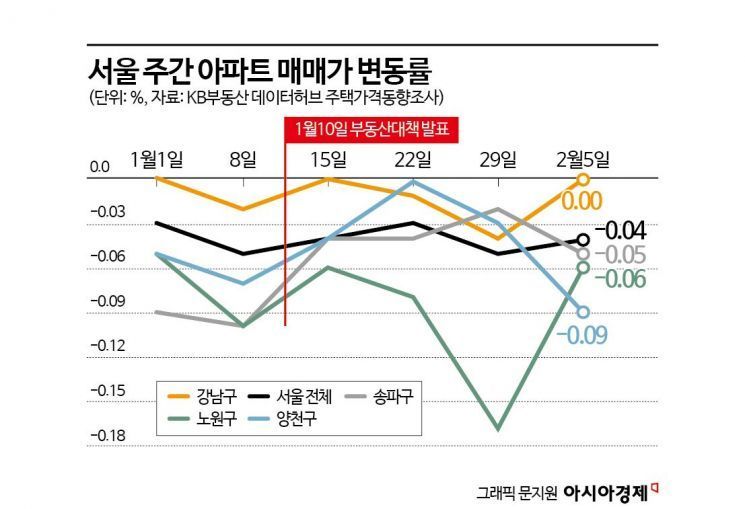

In Nowon-gu, one of the representative reconstruction complexes, Sanggye Jugong Complex 5 is suffering from the burden of a '5 billion KRW contribution.' Although there was a brief wave of hope after the 1·10 measures were announced, the number of people putting their homes on the market increased as additional contributions of 500 million KRW per household were required to enter an 84㎡ unit.
All apartments in Sanggye Jugong Complex 5 are composed of 31㎡ units, and the actual transaction price on the 2nd of this month was 460 million KRW. In August 2021, when the real estate market peaked, the transaction price soared to 800 million KRW. Those who bought at that time have seen their asset value halved. A nearby real estate agent said, "The additional contributions are higher than the current house prices, which is a case of the tail wagging the dog," adding, "Who can take out such a large loan in this high-interest rate period? The idea that house prices rise just by mentioning reconstruction is now a thing of the past."
The same applies to Shinyoung Siyoung Apartments (59㎡) in Sinwol-dong, Yangcheon-gu. It was traded for 600 million KRW on the 27th of last month, down 70 million KRW compared to 670 million KRW for the same size in May last year.
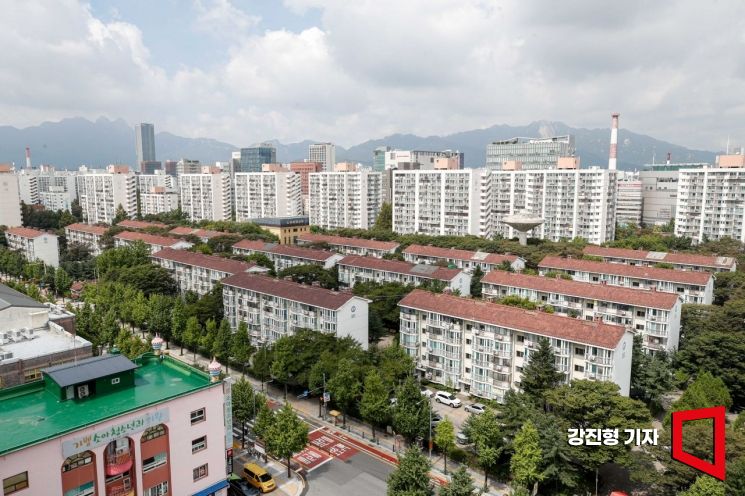 Seoul City approved the architectural plan for the reconstruction project of Sanggye Jugong Complex 5 at the 15th Architecture Committee meeting. The photo shows Sanggye Jugong Complex 5 in Nowon-gu, Seoul, on the 31st. Photo by Jin-Hyung Kang aymsdream@
Government Says "Speed Up Reconstruction and Redevelopment"
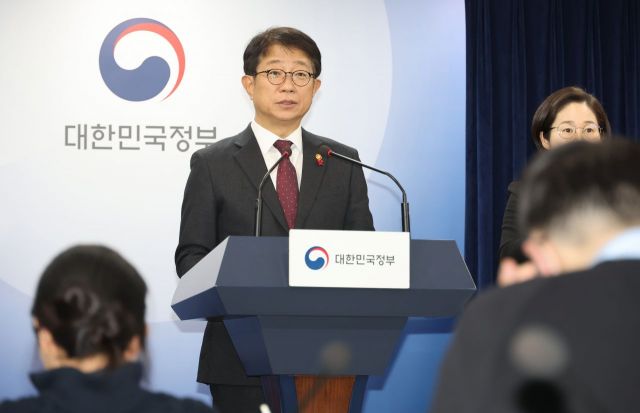 Minister of Land, Infrastructure and Transport Park Sang-woo is announcing the major policy plans related to the transportation sector reported at the "Public Livelihood Discussion with the People" held on the 25th at the Government Seoul Office in Jongno-gu, Seoul. Photo by Jo Yong-jun jun21@
The situation is similar in the first-generation new towns. In December last year, the Special Act on the Maintenance of Aging Planned Cities was passed by the National Assembly, and at the end of last month, the Ministry of Land, Infrastructure and Transport decided to increase the redevelopment target areas from the existing 51 to 108 under this law. However, house prices in the first-generation new towns are on a downward trend. For example, the 59㎡ unit of the Shibeom Samsung Apartments in Seohyeon-dong, Bundang-gu, Seongnam-si, Gyeonggi Province, was traded for 1.1 billion KRW on the 16th of last month, which is 50 million KRW lower than the real transaction price in December last year.
A KB Real Estate official explained, "Even after the 1·10 measures, a depressed market atmosphere is felt in most areas," adding, "With the continued rise in construction raw material prices, construction and labor costs are expected to increase, which will increase the burden on union members, leading to a contraction in buying sentiment."
Despite such market reactions, the government seems determined to further accelerate the 'speed race' for reconstruction and redevelopment. On the 14th, Park Sang-woo, Minister of Land, Infrastructure and Transport, said at the Emergency Economic Ministers' Meeting, "We plan to open a public contest for leading districts in the first-generation new towns with high resident interest in May," adding, "In the second half of this year, we plan to designate leading districts in all five new towns." He continued, "We are opening future city support centers in nine locations nationwide, including the first-generation new towns, to conduct resident briefings and project consulting," emphasizing, "We will speed up follow-up measures so that the results of the 1·10 livelihood discussion can be felt."
© The Asia Business Daily(www.asiae.co.kr). All rights reserved.
![Clutching a Stolen Dior Bag, Saying "I Hate Being Poor but Real"... The Grotesque Con of a "Human Knockoff" [Slate]](https://cwcontent.asiae.co.kr/asiaresize/183/2026021902243444107_1771435474.jpg)

















