Briefing by 'Medical Group Action Joint Headquarters' on the 8th
"Medical school quotas should have been gradually increased over 19 years"
"Please do not be swayed by collective action" appeal
On the 8th, the government urged the medical community, which has announced collective action after the Lunar New Year holiday in opposition to the expansion of medical school quotas, to "stay by the patients' side." Actively refuting claims that the increase in medical school quotas is an unscientific and political decision, the government stated that concerns about the acceleration of the concentration in medical schools would be alleviated, saying, "If the supply increases, the excess demand for medical personnel will be resolved, which will actually ease the concentration phenomenon."
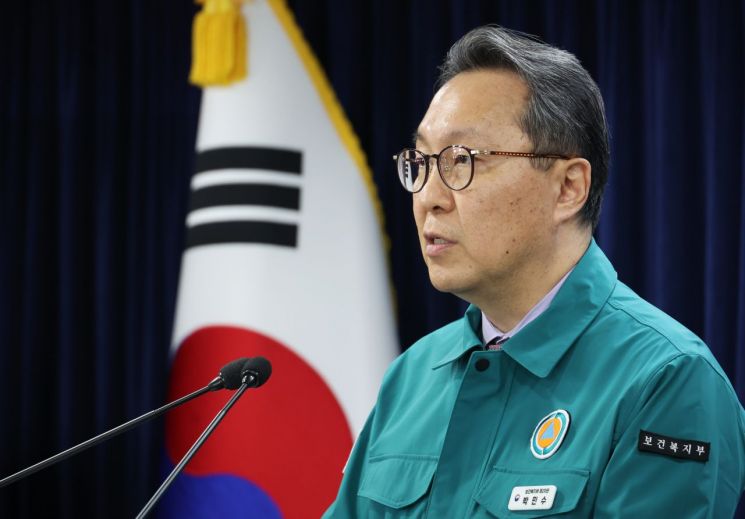
Park Min-su, Vice Minister of Health and Welfare, explained this during a briefing held after the 'Central Accident Response Headquarters for Doctors' Collective Action' meeting at the Government Seoul Office in the afternoon.
Vice Minister Park said, "Since the announcement of the plan to increase the number of doctors, medical organizations and some doctors have expressed their intention to go on a total strike, and claims that contradict the government's initiatives and are completely untrue have been raised," and he refuted the main claims made by medical organizations point by point.
First, regarding the claim that the increase in doctors is a political decision, Vice Minister Park said, "It was precisely political considerations that prevented previous governments from increasing the number of doctors despite knowing the necessity."
He added, "After the reduction of quotas due to opposition from doctors during the separation of prescribing and dispensing medicines, the quota remained stagnant for 19 years, and even after that, political considerations prevented any progress. During the same period, major countries increased the number of doctors to prepare for future medical demand. There is regret that the medical school quotas should have been gradually increased over the past 19 years."
Regarding the claim that the scale of the increase is 'unscientific,' he said, "The results were researched by top domestic experts from government policy research institutions such as KDI and the Korea Institute for Health and Social Affairs," and challenged, "If the scale proposed by the government is not scientific, then what would be scientific?"
Some have expressed concerns about the 'decline in education quality' due to the increase in medical school quotas. Vice Minister Park said, "We will not spare policy support to increase professors in subjects such as basic medicine and to strengthen essential medical and practical education," and added, "As announced on the 1st, we will also improve the training system so that sufficient clinical experience can be gained during the training process."
Regarding the 'concentration in medical schools,' he assessed, "The increase of 2,000 medical students accounts for only 1.6% of the total 124,000 students in engineering and natural sciences, so the concentration will not accelerate." He further stated, "If the supply of doctors increases, the excess demand for medical personnel will be resolved, easing the concentration phenomenon in medical schools," and predicted, "Once the shortage of doctors is resolved, the public will receive timely medical care, thereby improving public health."
Vice Minister Park emphasized, "Lastly, the claim that the government's decision to increase quotas was unilateral is completely untrue." He explained, "The government has held over 130 consultations with various sectors and 28 discussions within a consultative body composed only of the government and the Korean Medical Association," and added, "The demands raised by medical organizations, such as fee increases, alleviation of medical accident burdens, and improvement of working conditions, were included in the essential medical measures announced." He also said, "Although the government requested medical organizations by official letter to propose the scale of medical school quotas, they did not respond and only repeated claims that there is no shortage of doctors," and refuted, "It is unacceptable to call it 'unilateral promotion' just because there was no agreement with medical organizations."
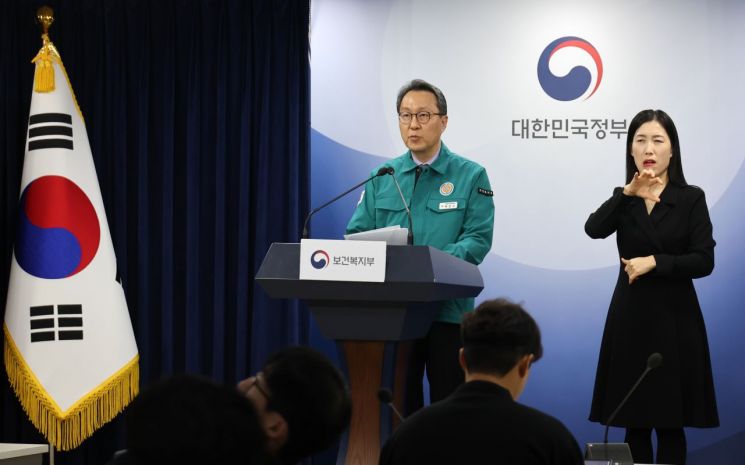
After the government announced the increase in doctors on the 6th and medical organizations declared a total strike, the government raised the health care crisis level to 'alert' and established the Central Accident Response Headquarters for Doctors' Collective Action within the Ministry of Health and Welfare. Up to this day, three meetings of the headquarters have been held, and 'Emergency Medical Response Situation Rooms' have been set up in central and local governments to prepare against any medical service gaps.
Vice Minister Park said, "The government will mobilize all means stipulated by law to protect the lives and health of the people and will promote a whole-of-government response," urging medical staff to cooperate once again.
He appealed, "We understand well the dedication and efforts to protect public health despite difficult field conditions," and said, "We will discuss unreasonable medical systems with the medical community and change them through bold reforms. Please do not be swayed by some collective action movements and continue to stay by the patients' side as you are now."
© The Asia Business Daily(www.asiae.co.kr). All rights reserved.
![Clutching a Stolen Dior Bag, Saying "I Hate Being Poor but Real"... The Grotesque Con of a "Human Knockoff" [Slate]](https://cwcontent.asiae.co.kr/asiaresize/183/2026021902243444107_1771435474.jpg)
















