On the 2nd, the Supreme Court carried out a regular personnel reshuffle effective on the 19th, involving 908 judges including district court chief judges and other judges.
154 judges were newly appointed as district court chief judges, and 24 branch court presidents were newly appointed. The number of full-time judges at the Court Administration Office increased by 7, and 4 additional deliberators were added to support judicial work.
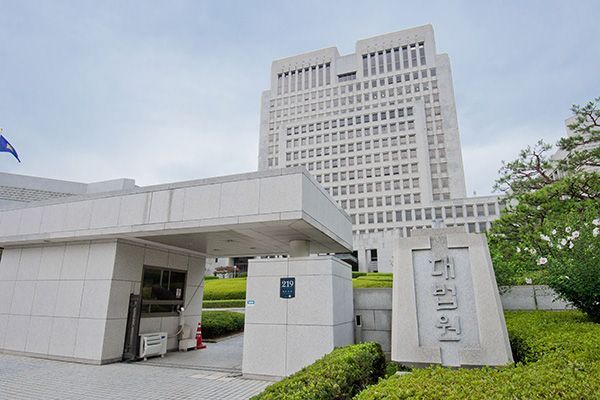
On this day, the Supreme Court conducted a regular personnel reshuffle for 908 judges, including 471 district court chief judges and 437 district court judges.
In this reshuffle, judges from the 38th Judicial Research and Training Institute class were appointed as district court chief judges for the first time. Among the 154 judges newly appointed as district court chief judges, the proportion of female judges was 42.2% (65 judges), and the proportion of experienced judges was 13% (20 judges). Experienced judges refer to those who, after completing the Judicial Research and Training Institute or passing the bar exam, worked as lawyers, prosecutors, etc., before being appointed as judges.
Judges newly appointed as of October 5 last year are scheduled to be assigned to courts at various levels on the 26th through a separate personnel reshuffle in early February to minimize the vacancy period of their respective trial divisions.
The Supreme Court stated, "Judges who have been appointed as branch chiefs are those who have long faithfully performed judicial duties based on excellent character and profound legal knowledge, earning deep trust from colleagues, senior and junior judges, and court staff."
Additionally, the Supreme Court announced, "To successfully address the judiciary's pressing challenges and prepare for the future of advanced judiciary, the number of full-time judges at the Court Administration Office has been increased by 7."
Furthermore, "With the establishment of the Judicial Informatization Office to formulate long-term and future-oriented informatization policies, the head of the Judicial Informatization Office and the Informatization Planning Deliberator were appointed as judges. Also, to accurately inform the public about various policies and institutional improvements promoted by the judiciary and to strengthen communication and continuous feedback with the public, a judge was appointed as the Public Relations Officer." It is the first time in four years since 2020 that a judge has taken the role of Public Relations Officer at the Court Administration Office.
Moreover, to provide thorough support for judicial work, the number of deliberators was increased by 4, including one Civil Support Deliberator, one Criminal Support Deliberator, one Special Support Deliberator, and one Personnel Deliberator.
Meanwhile, 57 judges, including 46 district court chief judges, 1 Judicial Research and Training Institute professor, and 10 district court judges, will retire effective on the 19th.
© The Asia Business Daily(www.asiae.co.kr). All rights reserved.
![Clutching a Stolen Dior Bag, Saying "I Hate Being Poor but Real"... The Grotesque Con of a "Human Knockoff" [Slate]](https://cwcontent.asiae.co.kr/asiaresize/183/2026021902243444107_1771435474.jpg)
















