On the 30th, 'Minsheng Discussion with the People' Held
Ministry of Health and Welfare Announces Digital Innovation in Medical Field
Activation of Non-face-to-face Medical Care and Health Information Highway
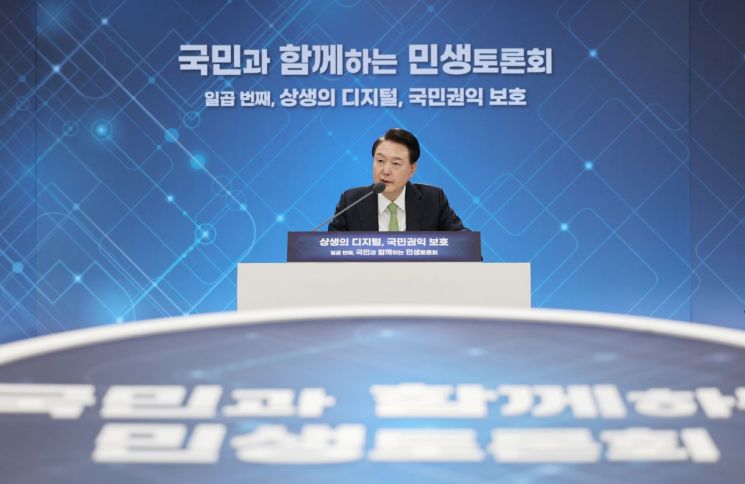
On the 30th, the government announced the 'Digital Innovation Strategy in the Medical Field' at a public discussion on livelihood chaired by the President held at Bundang 2nd Technovalley. The strategy includes plans to promote 'non-face-to-face medical treatment' that allows access to medical services regardless of time and place, and to expand the platform 'Health Information Highway' where individuals can check their medical information.
The Ministry of Health and Welfare has improved the system so that patients living in medically vulnerable time zones such as holidays and nighttime during the Lunar New Year holiday, or in areas with limited emergency medical services, can use non-face-to-face medical treatment even without prior experience of face-to-face treatment.
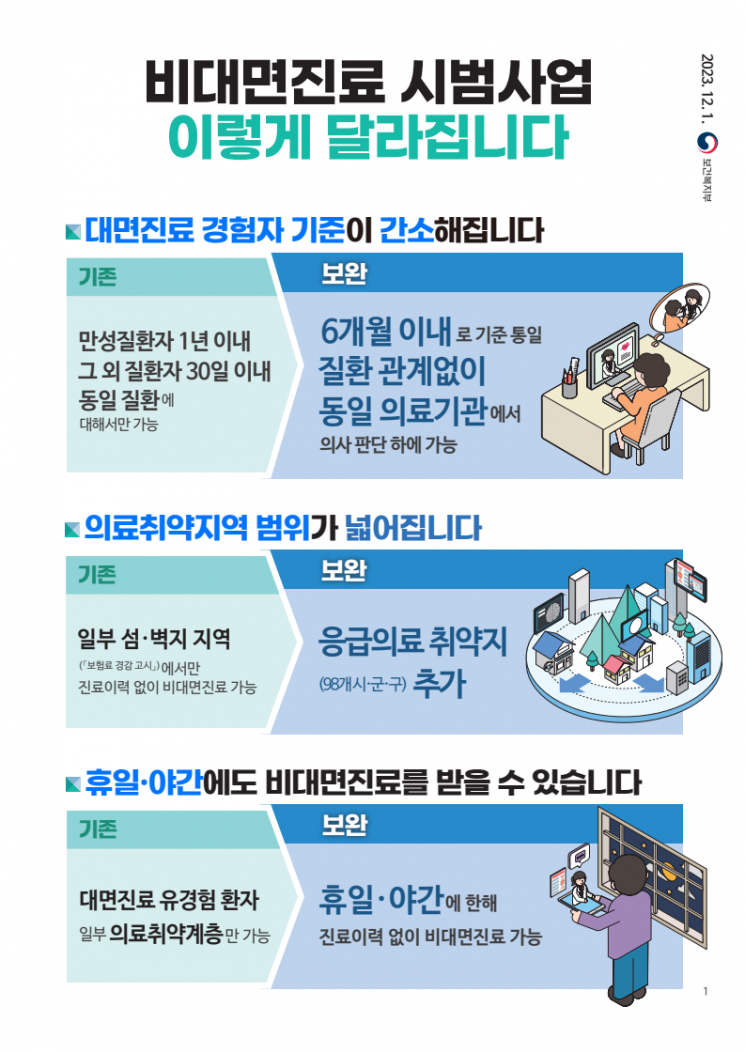
Non-face-to-face medical treatment was temporarily permitted during the COVID-19 pandemic in 2020 but was discontinued afterward. However, to enable more citizens to receive timely medical services, a pilot project for non-face-to-face medical treatment has been conducted since June last year. After a three-month guidance period, the pilot project officially started in September last year and was supplemented from December by reflecting field opinions and issues raised during the National Assembly audit.
The key point of the supplemented non-face-to-face medical treatment currently being implemented is that patients who have received at least one face-to-face treatment at the same medical institution within six months can receive non-face-to-face treatment. Previously, chronic patients needed to have at least one face-to-face treatment for the same disease within one year at the same institution, and other patients within 30 days.
While the principle is to provide non-face-to-face treatment to those with prior face-to-face treatment experience, exceptions are made for patients in medically vulnerable areas such as islands and remote regions, during medically vulnerable time zones such as holidays and nighttime, and for patients with low medical accessibility, allowing them to receive non-face-to-face treatment even without prior face-to-face experience. Additionally, whereas previously only children under 18 could receive non-face-to-face treatment during holidays and nighttime, now all patients can receive non-face-to-face treatment during these vulnerable time zones without restrictions. Video consultations are the standard, but voice calls are allowed exceptionally.
However, medical institutions are not allowed to provide only non-face-to-face treatment and non-face-to-face prescriptions without offering face-to-face treatment. The proportion of non-face-to-face treatment and prescriptions is limited to 30%. Prescriptions for narcotics, drugs prone to abuse or misuse, and emergency contraceptives are also restricted.
Alongside this, the Ministry of Health and Welfare plans to enhance convenience in using medical institutions and enable citizens to receive personalized health management anytime and anywhere by expanding the 'Medical Information Exchange System' and the 'Health Information Highway,' which began full operation in September last year.
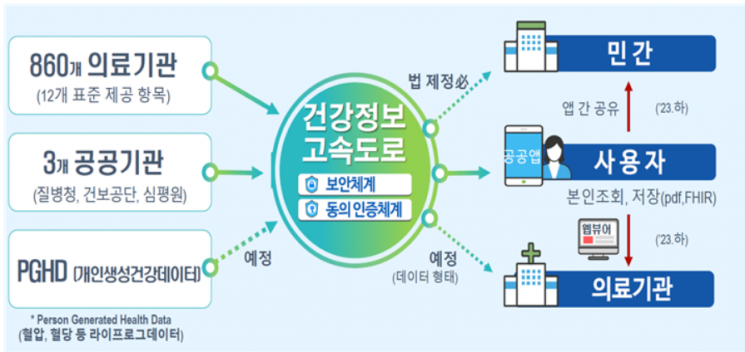
The Medical Information Exchange System connects patients' medical information between medical institutions. Currently, 8,605 institutions participate, including 61 base medical institutions, cooperating medical institutions, public health centers, the Korea Workers' Compensation and Welfare Service, and the Military Manpower Administration. Using the Medical Information Exchange, patients can electronically share medical records and imaging information such as CT scans quickly and accurately when transferring hospitals, instead of submitting paper or CDs. The Ministry plans to expand the number of medical institutions connected to the system to 9,400 this year.
Additionally, the 'Health Information Highway,' a medical data intermediary platform that allows individuals to easily view, store, and transfer their health information such as treatment, medication, and health checkup results scattered across different medical institutions, will also increase participating institutions. Currently, the Health Information Highway is linked with three public institutions?the National Health Insurance Service, the Health Insurance Review & Assessment Service, and the Korea Disease Control and Prevention Agency?as well as 860 medical institutions. This year, 143 more institutions will be added, expanding the total to 1,003, with plans to extend to all large hospitals with high data utilization value by 2026.
Park Min-su, Vice Minister of Health and Welfare, stated, "We will institutionalize non-face-to-face medical treatment to balance patient safety and convenience, and promote data utilization policies that enhance public health through strengthened investment in health and medical data and the enactment of the Digital Health Care Act."
© The Asia Business Daily(www.asiae.co.kr). All rights reserved.
![Clutching a Stolen Dior Bag, Saying "I Hate Being Poor but Real"... The Grotesque Con of a "Human Knockoff" [Slate]](https://cwcontent.asiae.co.kr/asiaresize/183/2026021902243444107_1771435474.jpg)

















