"Each Ordered to Pay 100 Million Won in Compensation"
Victims of the female labor corps who were forcibly mobilized to the Japanese military supply company Fujikoshi in the 1940s can now receive compensation from the company.
As in previous lawsuits against Mitsubishi Heavy Industries and Nippon Steel, the Supreme Court ruled that the claim for individual damages does not expire due to the Korea-Japan Claims Agreement, and that until the 2018 Supreme Court plenary session ruling, there was a de facto obstacle preventing the exercise of the right to claim damages, so the statute of limitations for the claim had not been completed.
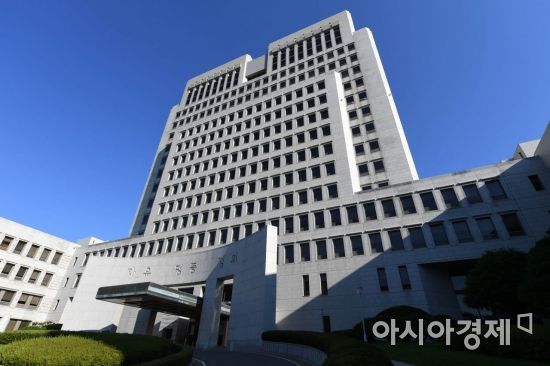
On the 25th, the Supreme Court's First Division (Presiding Justice No Tae-ak) affirmed the appellate court's partial ruling in favor of the plaintiffs in the appeal trial filed by five female labor corps victims or their bereaved families, including the late Kim Ok-soon, who claimed 100 million won each in damages and delayed interest from the military supply company Fujikoshi during the Japanese colonial period, ordering the defendant to pay each plaintiff 100 million won and delayed interest after the conclusion of the trial.
Founded in 1928, Fujikoshi forcibly took about 1,000 Korean girls aged 12 to 18 to its Toyama factory in Japan during the Pacific War and subjected them to harsh labor. The five plaintiffs in this lawsuit were also mobilized to the female labor corps against their will at the ages of 12 to 15, or were deceived into joining the labor corps by being told that they could study and earn wages if they went to the factory.
However, they endured military-style training and worked 10 to 12 hours daily. Despite this, they received no wages, lived in poor dormitories, and were restricted from going out and constantly monitored.
The victims filed a lawsuit for damages against Fujikoshi at the Toyama District Court in 2003, but the court ruled against the plaintiffs based on the Korea-Japan Claims Agreement. The Japanese Supreme Court also dismissed their appeal in 2011.
However, in May 2012, when the Korean Supreme Court ruled in a damages lawsuit filed by victims against Shin Nippon Steel that individual claims against Japanese war crime companies could not be considered extinguished and that the domestic effect of Japanese court rulings was not recognized, the victims filed lawsuits again in domestic courts.
The first-instance court ruled that Fujikoshi must pay consolation damages to the victims in accordance with the Supreme Court's ruling. However, the court stated, "Since more than 71 years have passed from around 1945, the end of the illegal act, to September 21, 2016, the conclusion date of this trial, and there have been significant changes in currency value and other factors, and considering these changed circumstances in determining the amount of consolation damages, delayed damages will only accrue for the period after the conclusion date of this trial," thus rejecting the claim for delayed damages from the day after the service of the complaint copy.
The subsequent appellate court awaited the final outcome of the lawsuit against Shin Nippon Steel. Ultimately, in October 2018, the Supreme Court issued a final ruling in favor of the plaintiffs, and the appellate court, after waiting four years, dismissed Fujikoshi's appeal in accordance with the Supreme Court's ruling.
On this day, the Supreme Court issued similar rulings in two other cases with similar issues.
In one case where the issue of recognition of foreign judgments was contested, the Supreme Court stated, "Even if some of the female labor corps members, including the plaintiffs, filed lawsuits against the defendant in Japan and lost with final judgments, since the Japanese judgment is based on the normative recognition that Japan's colonial rule over the Korean Peninsula and Koreans was lawful, and evaluated the application of Japan's 'National Mobilization Law,' 'National Labor Service Order,' and 'Female Mental Labor Order' to the Korean Peninsula and the plaintiffs as valid, approving such Japanese judgments as they are would violate the good morals or other social order of the Republic of Korea. Therefore, the appellate court's ruling that there was no error in law or precedent in refusing to recognize and enforce the Japanese judgment on the grounds of violation of public order and good morals as a requirement for recognition of foreign judgments is correct."
© The Asia Business Daily(www.asiae.co.kr). All rights reserved.
![Clutching a Stolen Dior Bag, Saying "I Hate Being Poor but Real"... The Grotesque Con of a "Human Knockoff" [Slate]](https://cwcontent.asiae.co.kr/asiaresize/183/2026021902243444107_1771435474.jpg)















