"South Korean Companies' Competitiveness Weakens... Risks Expected to Increase"
Korean commercial banks operating in China identified "delays in the real estate market recovery and the potential spread of risks" as the major economic risks in China for the first quarter of this year, and have established a policy to expand lending primarily to high-quality state-owned enterprises. Korean companies operating locally are expected to face increased management risks due to weakened market competitiveness and decreased sales.
The Bank of Korea Beijing Office disclosed the results of the "Survey on Credit and Fund Management of Korean Commercial Banks" on the 23rd, which contained these findings. The quarterly survey involved Korean commercial banks based in Beijing, including Woori, Shinhan, Hana, Kookmin, Industrial Bank of Korea, NongHyup, and Korea Development Bank. The Bank of Korea has been conducting quarterly surveys targeting Korean commercial banks in China since the first quarter of last year. Although the survey results were previously confidential, they have been made public from this year onward in consideration of expanded external exchanges and information demand.
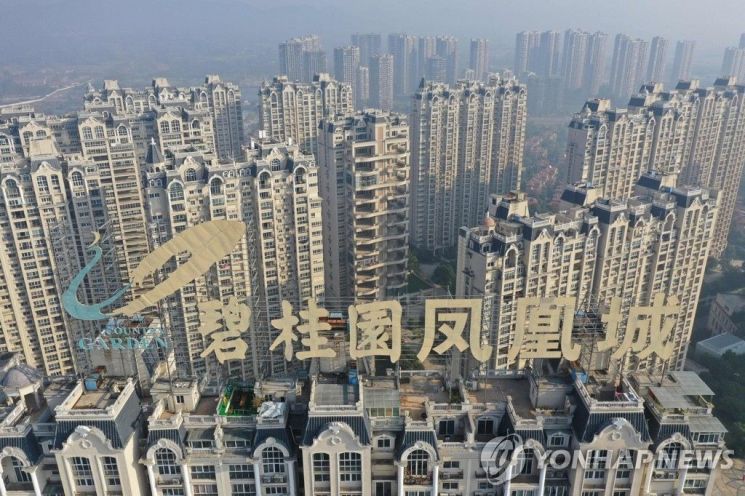
The survey results showed that banks identified the main financial and economic risks in China for the first quarter as delays in the real estate market recovery, the potential spread of financial risks stemming from real estate companies, US-China conflicts, and local government debt. Despite the Chinese government's real estate market stabilization measures in the first quarter, it is expected that demand for mortgage loans from Chinese customers at Korean banks will somewhat decrease due to falling housing prices and reduced transaction volumes.
On the other hand, state-owned enterprises in China are expected to see increased loan demand due to expanded funding needs from government stimulus measures and the necessity to secure low-interest surplus funds. The attitude of Korean commercial banks toward mortgage lending in China for the first quarter was surveyed as "neutral," reflecting future judgments on loan demand and the direction of the real estate market.
The willingness to lend to Chinese state-owned enterprises was surveyed as "somewhat relaxed (increased)." Since government support for economic recovery is anticipated, loan demand is expected to increase mainly for government-supported industries and high-quality state-owned enterprises.
Banks predicted that while demand for low-interest funds from Chinese private enterprises is increasing, overall economic conditions such as the slowdown in real estate will limit this demand, resulting in a "neutral" stance on loan operations. Additionally, banks expected that risks for Chinese state-owned enterprises will increase due to delays in the real estate market recovery and local government debt issues in the first quarter, and that risks for private enterprises will also somewhat increase due to the overall economic situation, including the real estate slowdown and export declines.
Korean companies operating in China are forecasted by banks to face increased risks due to weakened market competitiveness and decreased sales.
© The Asia Business Daily(www.asiae.co.kr). All rights reserved.
![Clutching a Stolen Dior Bag, Saying "I Hate Being Poor but Real"... The Grotesque Con of a "Human Knockoff" [Slate]](https://cwcontent.asiae.co.kr/asiaresize/183/2026021902243444107_1771435474.jpg)















