Physical and Mental Fatigue Accumulate... Many Elderly Deaths
Government Orders "Priority Hotel Evacuation for 10,000 Elderly"
Ten days after a strong earthquake struck the Noto Peninsula in Ishikawa Prefecture, Japan, Japanese media expressed concerns that the number of 'disaster-related deaths (災害?連死)' could significantly increase in the future. Disaster-related deaths refer to fatalities caused by injuries or the hardships of evacuation life in shelters following an earthquake, accounting for 80% of total earthquake deaths according to some statistics. Given the high proportion of elderly residents, the government and local authorities have urgently begun preparing countermeasures.
On the 11th, NHK reported that out of 206 deaths in Ishikawa Prefecture, 8 are estimated to be disaster-related deaths, highlighting the need for countermeasures. One of the deceased was an elderly man in his 80s who suffered cardiac arrest while evacuating to a nearby junior high school after the earthquake and was transported to a hospital but ultimately passed away.
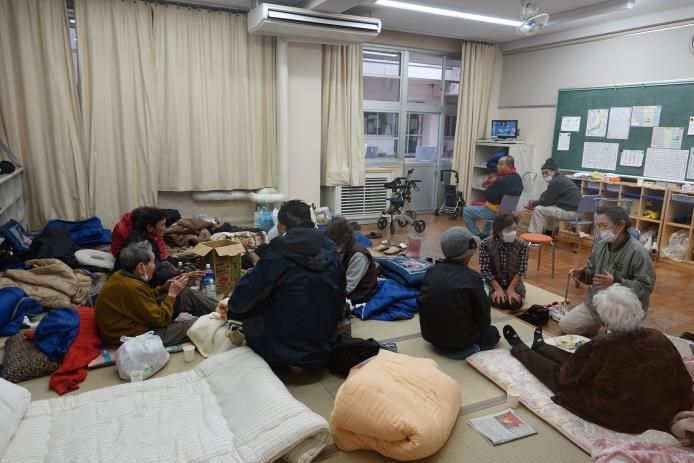
Disaster-related deaths are known to occur most frequently within one week to three months after an earthquake. Causes include physical and mental fatigue from living in shelters, shock from the earthquake, and fear caused by aftershocks. People with pre-existing conditions and the elderly are particularly vulnerable. NHK pointed out, "Not being able to obtain regular medication or enduring poor restroom conditions by refraining from drinking water or eating can lead to deteriorating health conditions."
In fact, during the 2016 Kumamoto Earthquake, 218 people died from disaster-related causes, accounting for about 80% of the total 273 victims. Approximately 80% of these were aged 70 or older. Among them, about 90% were taking medication for pre-existing conditions or had a medical history. Similarly, during the 2011 Great East Japan Earthquake, 3,794 people died from disaster-related causes. The Reconstruction Agency, responsible for recovery from the Great East Japan Earthquake, reported that 90% of the deceased were elderly aged 70 or above. NHK's analysis of the period from disaster occurrence to death showed that 24.3% died within one week after the earthquake, 32.6% within one month, and 24.3% within three months.
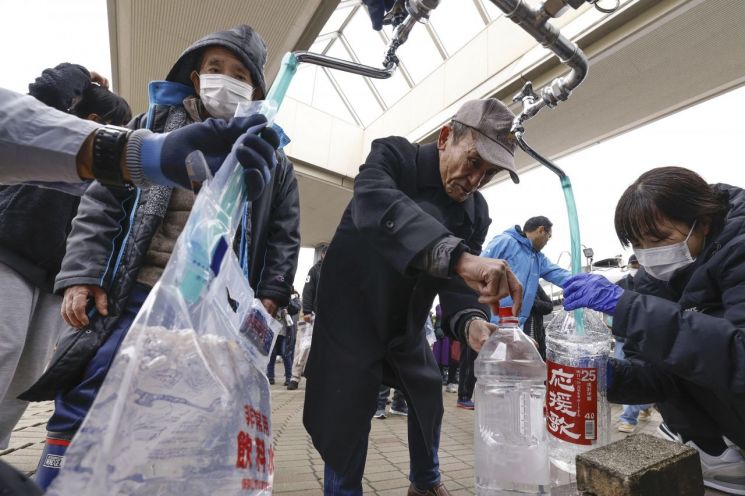
The Japanese government has quickly begun preparations. Currently, 26,000 people in Ishikawa Prefecture are unable to return home and continue to live in evacuation shelters such as nearby junior high schools and gymnasiums. Ishikawa Prefecture announced plans to designate hotels and inns as 'secondary shelters' and prioritize relocating 10,000 elderly people, pregnant women, and those with pre-existing conditions.
Hajime Kagiya, a disaster countermeasure expert and professor at Atomi University, stated, "A system must be established to move elderly people to appropriate shelters before their physical strength declines. It is also important to reduce the number of times evacuees have to move to minimize stress." He added, "Especially elderly people often endure discomfort out of consideration for those around them. It is necessary to frequently engage with them and regularly check for changes in their condition."
© The Asia Business Daily(www.asiae.co.kr). All rights reserved.
![Clutching a Stolen Dior Bag, Saying "I Hate Being Poor but Real"... The Grotesque Con of a "Human Knockoff" [Slate]](https://cwcontent.asiae.co.kr/asiaresize/183/2026021902243444107_1771435474.jpg)
















