Taiwanese Chip Found in Recently Released Laptop
"Contrary to Opinions That Chinese Semiconductor Technology Has Advanced"
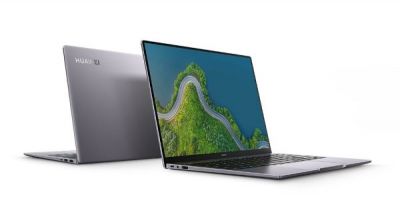
China's largest telecommunications equipment company, Huawei, recently manufactured and released a laptop incorporating advanced technology. However, upon disassembly, it was confirmed that the semiconductor chips powering the laptop were made in Taiwan.
This contradicts industry speculation that SMIC (Semiconductor Manufacturing International Corporation), Huawei's Chinese partner, has made a significant leap forward in advanced semiconductor manufacturing technology with the launch of this laptop.
On the 4th (local time), Bloomberg News disclosed the results of disassembling Huawei's recently released business laptop, the Qingyun L540, commissioned to semiconductor consulting firm TechInsights.
The 5nm (nanometer, one billionth of a meter) process processor 'Kirin 9006C' installed in this laptop was manufactured using the assembly and packaging methods of Taiwan's TSMC, the world's largest foundry (semiconductor contract manufacturer), in the third quarter of 2020, when Huawei's access was blocked due to U.S. sanctions, according to Bloomberg's analysis.
Huawei has been on the U.S. Department of Commerce's Entity List since 2019, making it subject to export restrictions. However, the trade ban between TSMC and Huawei was only possible in 2020 after export controls were tightened. It is unclear how Huawei procured this processor, but Chinese companies hurriedly stockpiled key semiconductor products as the U.S. began globally restricting access to semiconductor components and equipment.
In preparation for U.S. export controls, Huawei has invested billions of dollars over the past few years in semiconductor research and stockpiling, and has built a domestic supplier and manufacturing partnership network. Some of these efforts have received government support.
Earlier in August, Huawei attracted industry attention by unveiling the Mate 60 Pro smartphone equipped with a 7nm processor made by SMIC. Upon disassembly, it was revealed that this smartphone's cutting-edge technology was only a few years behind what the U.S. aims to block through trade regulations. This revelation sparked praise for China's technological achievements and raised debates about the effectiveness of U.S. export controls against China.
When the Qingyun L540 was launched at the end of last month, industry experts analyzed that "SMIC has developed advanced technology circumventing U.S. sanctions, delivering China's second technological victory following the smartphone."
Meanwhile, Huawei and TSMC reportedly did not respond to Bloomberg News' requests for confirmation regarding this matter.
© The Asia Business Daily(www.asiae.co.kr). All rights reserved.
![Clutching a Stolen Dior Bag, Saying "I Hate Being Poor but Real"... The Grotesque Con of a "Human Knockoff" [Slate]](https://cwcontent.asiae.co.kr/asiaresize/183/2026021902243444107_1771435474.jpg)















