National Health Insurance Health Screening Data
3 out of 10 Men, 2 out of 10 Women Have 'Abdominal Obesity'
Over the past five years, the average waist circumference of men in South Korea has increased by nearly 1 cm. In contrast, women's waist circumference has slightly decreased. The abdominal obesity rate showed a similar pattern, rising in men and falling in women.
According to data recently released by the National Health Insurance Service on the 1st, the average waist circumference based on health checkup standards in 2021 was 86.0 cm (33.9 inches) for men and 76.6 cm (30.1 inches) for women. Compared to 2017, men's waist circumference increased by 0.9 cm, while women's decreased by 0.3 cm. By age group, men in their 30s had the largest waist circumference at 86.8 cm, while women aged 80 and above had the largest waist circumference at 82.5 cm.
The pattern between men and women was similar in abdominal obesity rates. Abdominal obesity is defined as excessive fat accumulation in the abdomen, diagnosed when waist circumference is 90 cm (35.4 inches) or more for men and 85 cm (33.5 inches) or more for women. In 2022, the abdominal obesity rate was 31.7% for men and 19.2% for women.
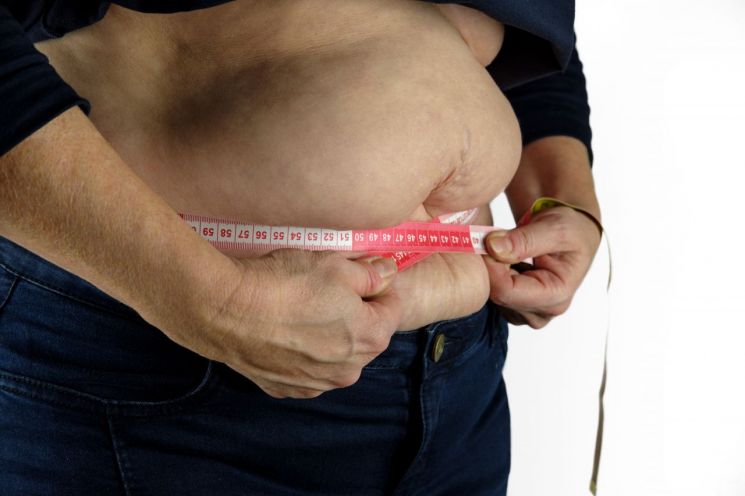
Approximately 3 out of 10 men and 2 out of 10 women have abdominal obesity. Compared to one year ago, there is little change, but men’s rate increased by 0.2 percentage points, while women’s decreased by 0.4 percentage points.
However, when compared to data from 10 years ago, the change is more pronounced. In 2012, the abdominal obesity rate was 22.1% for men and 17.3% for women. Over the past decade, men’s abdominal obesity rate rose by 9.6 percentage points, whereas women’s increased by only 1.9 percentage points.
Abdominal fat is divided into subcutaneous fat and visceral fat (fat accumulated inside the body cavity surrounding internal organs). Among these, visceral fat is particularly problematic. Excessive accumulation of visceral fat interferes with the body's insulin function and increases inflammatory substances, which can lead to various diseases such as diabetes, coronary artery disease, and dyslipidemia.
As the abdominal obesity rate increased, metabolic syndrome?which includes various diseases such as obesity?also rose. Metabolic syndrome refers to an individual having multiple conditions such as hypertension, hyperlipidemia, and impaired glucose tolerance simultaneously. According to an analysis by the Korean Society for the Study of Obesity based on data from the Korea Disease Control and Prevention Agency, the prevalence of metabolic syndrome increased from 24.9% in 2012 to 29.0% in 2021. Although the prevalence increased in both men and women, men showed a 1.3 times higher rate of increase. To improve abdominal obesity, regular exercise, carbohydrate intake restriction, and alcohol consumption control are necessary.
© The Asia Business Daily(www.asiae.co.kr). All rights reserved.
![Clutching a Stolen Dior Bag, Saying "I Hate Being Poor but Real"... The Grotesque Con of a "Human Knockoff" [Slate]](https://cwcontent.asiae.co.kr/asiaresize/183/2026021902243444107_1771435474.jpg)















