The Supreme Court has ruled that it was illegal to recognize guilt for the offense of property damage caused by professional negligence under the Road Traffic Act, which is a crime that cannot be prosecuted against the victim's will ('han-ui-sa-bul-beol-jwe'), even though the victim withdrew their intention to seek punishment by reaching a settlement with the perpetrator before the first trial verdict was announced.
'Han-ui-sa-bul-beol-jwe' refers to crimes for which prosecution cannot be initiated against the explicit will of the victim.
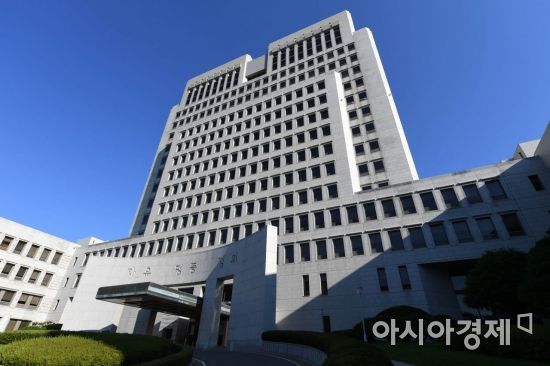
According to the legal community on the 18th, the Supreme Court's Third Division (Presiding Justice Oh Seok-jun) overturned the original sentence of six months imprisonment in the appeal trial of Mr. A, who was indicted on charges including violation of the Special Act on the Treatment of Traffic Accidents (professional negligence causing injury), violation of the Road Traffic Act (drunk driving, property damage caused by professional negligence), and violation of the Automobile Damage Compensation Guarantee Act (failure to subscribe to mandatory insurance), and remanded the case to the Incheon District Court.
The court stated, "The original judgment misapplied the law concerning cases where prosecution cannot be initiated against the explicit will of the victim, failed to conduct necessary investigations, and this error affected the verdict," as the reason for overturning and remanding.
On November 22, 2021, in the afternoon, Mr. A, with a blood alcohol concentration of 0.077%, was driving his Rexton passenger car and collided with the right side of a Sonata taxi that was waiting at a signal in the first lane on a road in Bupyeong-gu, Incheon. The driver of the damaged vehicle suffered injuries requiring two weeks of medical treatment, and the repair cost for the damaged vehicle was approximately 2.5 million KRW.
The prosecutor indicted Mr. A on charges of professional negligence causing injury under the Special Act on the Treatment of Traffic Accidents, drunk driving and property damage caused by negligence under the Road Traffic Act.
The first trial court found all charges against Mr. A guilty and sentenced him to six months imprisonment. Mr. A's offenses under the Special Act on the Treatment of Traffic Accidents (injury) and property damage caused by professional negligence under the Road Traffic Act were considered 'ideal concurrence' of two crimes committed by a single act, and under Article 40 of the Criminal Act, the heavier sentence for the Special Act on the Treatment of Traffic Accidents (injury) was applied.
Before the first trial verdict was announced, Mr. A paid the victim 1.2 million KRW, submitted a settlement agreement to the court, and paid 2.56 million KRW in subrogation costs to the mutual aid association the victim was enrolled in for vehicle repair costs. The court considered these as favorable circumstances in sentencing.
The second trial court also found Mr. A guilty but overturned the first trial verdict on the grounds that the first trial court did not consider the concurrent offense relationship when determining the sentence. However, the second trial court also sentenced Mr. A to six months imprisonment.
The Criminal Act stipulates that when sentencing for crimes committed before the final judgment of imprisonment or higher is confirmed, the sentence should be determined considering fairness with cases judged simultaneously. Even if the crime was discovered late and tried separately later, the sentence should not be disadvantageous compared to if tried together at the time of the earlier judgment.
However, the Supreme Court found problems with the second trial verdict.
Despite the victim expressing a 'non-punishment' intention by settling with Mr. A before the first trial verdict, indicating they did not want punishment, the court recognized guilt for property damage caused by professional negligence under the Road Traffic Act, which was deemed incorrect.
Article 327, Clause 5 of the Criminal Procedure Act states that in cases where prosecution requires a complaint and the complaint is withdrawn, the court must dismiss the prosecution by judgment.
Article 3, Paragraph 2 of the Special Act on the Treatment of Traffic Accidents states that prosecution cannot be initiated against the explicit will of the victim for offenses under Article 151 of the Road Traffic Act.
Article 151 of the Road Traffic Act stipulates that if a driver of a vehicle or streetcar negligently or through gross negligence damages another person's building or other property in the course of their duties, they shall be punished by imprisonment for up to two years or a fine of up to 5 million KRW.
In conclusion, if a driver negligently damages another person's vehicle, prosecution cannot be initiated if the victim does not want punishment, and if the victim explicitly expresses a non-punishment intention after prosecution, the court should have dismissed the prosecution. Recognizing guilt was therefore incorrect according to the Supreme Court.
Article 232, Paragraph 3 of the Criminal Procedure Act states that in cases where prosecution cannot be initiated against the explicit will of the victim, withdrawal of the intention to seek punishment can be made until before the first trial verdict is announced.
On the other hand, Article 3, Paragraph 2 of the Special Act on the Treatment of Traffic Accidents prohibits prosecution against the explicit will of the victim in cases of professional negligence causing injury by vehicle traffic but provides exceptions in the proviso for cases where the driver fled without providing aid or was driving under the influence.
The court noted, "The defendant's lawyer submitted to the first trial court on March 13, 2023, before the first trial verdict on May 11, 2023, a settlement agreement signed by the victim stating 'the victim does not want the defendant to be criminally punished.' A copy of the victim's driver's license was attached to the settlement agreement."
Furthermore, the court stated, "The first trial court found the defendant guilty on this charge and cited the victim's non-punishment intention as one of the reasons for sentencing. The appellate court also overturned the first trial verdict ex officio due to the defendant's prior concurrent offenses, held a hearing, and again found the defendant guilty, considering the settlement with the victim as a favorable circumstance for the defendant."
It added, "However, according to the aforementioned legal principles, since the settlement agreement signed by the victim expressing non-punishment intention was submitted to the first trial court before the first trial verdict, the appellate court should have overturned the first trial verdict and dismissed the prosecution on this charge."
© The Asia Business Daily(www.asiae.co.kr). All rights reserved.
![Clutching a Stolen Dior Bag, Saying "I Hate Being Poor but Real"... The Grotesque Con of a "Human Knockoff" [Slate]](https://cwcontent.asiae.co.kr/asiaresize/183/2026021902243444107_1771435474.jpg)















