US-China Competition Intensifies, Red Lines Blur
US Faces Trial and Error Against Strong Rival China
China's Diplomatic Uncertainty After Bestfalen
Middle-Income Countries Face Anmigyungjung Dilemma
Resilience and Soda Jaju Important for Internal Recovery
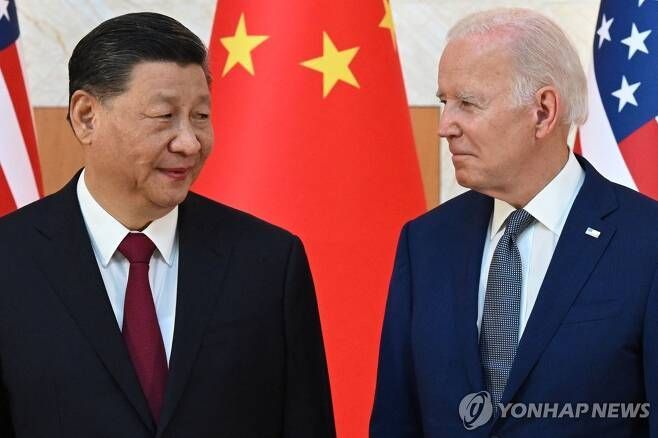
In the context of intensifying competition between the U.S. and China, it has been diagnosed that minilateral cooperation in various forms?such as bilateral, trilateral, and quadrilateral cooperation with like-minded countries?can be the key to resolving complex crises.
Minilateral cooperation refers to a strategic partnership that replaces multilateralism, describing a close cooperative relationship among a small number of countries in trade and diplomacy. It is explained as a cooperative mechanism sharing interests to solve specific issues within a limited timeframe. Examples include the Korea-U.S.-Japan security consultative body, AUKUS?a trilateral security partnership among Australia, the U.S., and the U.K.?and the Quad, a security consultative body involving the U.S., Japan, India, and Australia.
Such claims were made at the seminar titled “Strategic Risk Mitigation of Global Complex Crises” held on the 11th by the National Security Strategy Institute at the InterContinental Seoul COEX Hotel.
Professor Lislot Odgaard of the Norwegian Defence Research Institute diagnosed that in the ambiguous situation of the competition boundary between the U.S. and China, the strategic alliances of other countries are becoming unclear. He said, “We are at a stage testing how far conflicts can go in the Taiwan Strait and the South China Sea,” adding, “This increases uncertainty in alliance patterns, making it impossible for other countries to choose either side.” Professor Madison Leach of Hankuk University of Foreign Studies viewed, “This is the first time the U.S. has faced such a rival, and China is also experiencing trial and error as it conducts diplomacy as an equal counterpart within the ‘sovereign state’ system established after the Peace of Westphalia.”
In this situation, minilateral cooperation involving U.S. allies and partners?such as AUKUS, the Quad, and the trilateral security cooperation systems of Korea-U.S.-Japan and U.S.-Japan-Australia?also sends a message that China cannot exploit disorder to provoke conflicts, according to Professor Leach. He noted, “This will act as a responsibility and burden for the world order’s stability amid the increasing number of minilateral cooperative bodies,” but also pointed out, “In the short to medium term, it can be the best cooperative tool to prevent U.S.-China crises.”
From the perspective of middle powers, to resolve the dilemma of ‘Anmi-Gyeongjung’ (security with the U.S., economy with China), it was mentioned that they have no choice but to strengthen national power and adopt a strategy to reinforce minilateral cooperation. Professor Thomas Wilkins of the University of Sydney said, “Minilateral cooperation can vary in its level, and the announcement of deploying Japan’s Air Self-Defense Forces on a rotational basis to Australia is an example of seriously enhancing the level of strategic cooperation,” adding, “Such examples have implications for middle powers like Korea.”
Professor Odgaard of the Norwegian Defence Research Institute cited the EU as a successful case of minilateral cooperation strategy. He also presented the case of the Atlanta Strategy, which was carried out to combat Somali piracy. The Atlanta Strategy was an EU anti-piracy military operation conducted off the Horn of Africa and the western Indian Ocean coast. He said, “Maritime diplomacy is unrelated to densely populated political centers, so it is not detected by radar networks and is flexible. It can quickly scale up according to changes in political priorities.” He added, “In a situation where the red lines of U.S.-China competition are ambiguous and unstable alliance patterns may emerge, minilateral cooperation can be effective for rapid decision-making.”
© The Asia Business Daily(www.asiae.co.kr). All rights reserved.
![Clutching a Stolen Dior Bag, Saying "I Hate Being Poor but Real"... The Grotesque Con of a "Human Knockoff" [Slate]](https://cwcontent.asiae.co.kr/asiaresize/183/2026021902243444107_1771435474.jpg)















