NYT Criticizes Working Conditions of US Air Traffic Controllers
High Salary of $130K but Worst Work Environment
Staff Shortages Due to Retirements... Increased Complaints of Depression
In the United States, where airplanes are used as routinely as cars, it has been revealed that air traffic controllers suffer from overwork, working more than 10 hours a day, six days a week, leading to a significant increase in serious mistakes during their duties. Although it is a high-paying job with an annual salary exceeding 130 million won, the workforce is severely understaffed, and many controllers endure extreme pressure, resulting in the worst working conditions.
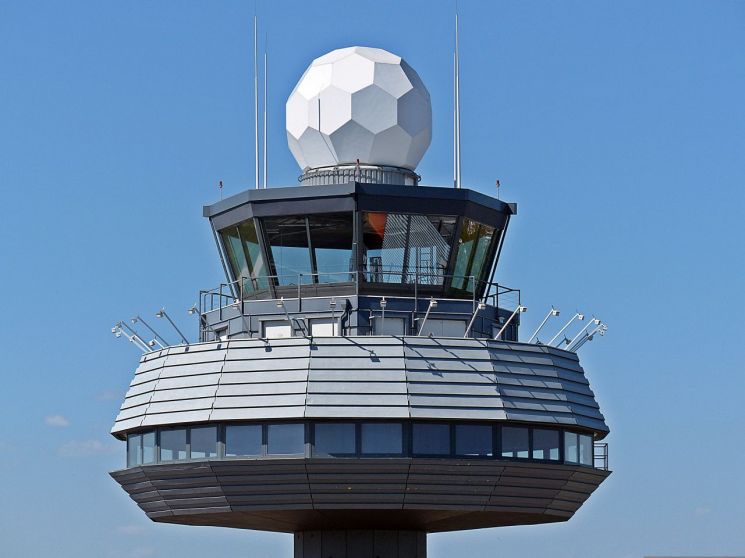
The New York Times (NYT) recently interviewed dozens of current and former air traffic controllers and government officials, citing data from the Federal Aviation Administration (FAA), reporting that "air traffic controllers are in crisis." Over the past two years, U.S. air traffic controllers have raised concerns with the FAA about staff shortages and mental health issues, but the situation remains unresolved.
According to a report from U.S. aviation authorities, from October last year to September this year, the FAA recorded 503 incidents preliminarily classified as 'significant' air traffic control failures, a 65% increase compared to the previous year. During this period, aviation accidents increased by about 4%. The NYT analyzed that these accidents were caused by mistakes made by overworked air traffic controllers.
There have been cases where controllers mistakenly instructed specific aircraft to take different flight routes or directed them to fly too low, causing problems. In both cases, the controllers excused their errors by citing extreme fatigue from overwork. One controller expressed concern in a document submitted to NASA, stating, "If small mistakes can happen, then big mistakes can also occur."
Air traffic controllers in the U.S. are among the high-paying professions earning over $100,000 (approximately 132 million won) annually. Additional work hours result in significantly increased wages.

However, with airports operating 24/7 and frequent shift work, combined with a significant reduction in personnel due to retirements and increased turnover in recent years, the workload burden on controllers is worsening. The FAA anticipates a loss of about 14,000 controllers over the next decade.
NYT cited FAA data, reporting that "overtime hours for controllers have nearly tripled over the past 10 years."
Neil Burke, who worked as a controller near New York for over 10 years, revealed that he had been working six days a week, 10 hours a day in recent years. He quit last year due to health issues. He explained the working conditions of controllers by saying, "What happens if you stretch a rubber band too much? It breaks," noting that both he and other controllers made mistakes while fatigued.
Ashley Smith, who worked as a controller in Atlanta, reported that controllers, exhausted and irritable, sometimes made dangerous mistakes and even got into physical altercations. Michelle Hager, who retired in June after 26 years as a controller, said, "Controllers are human too. They get tired and make mistakes," adding, "They not only get exhausted but also become depressed. There was no time for mental recovery."
A currently active controller who requested anonymity explained that they often eat, use the restroom, and take breaks within 30 minutes. They also told the NYT that it is common to be asked to work overtime on holidays and that there are quite a few days when rest periods between shifts are only 8 to 9 hours.

This controller said that due to irregular rest times, they suffered from insomnia despite feeling fatigued and had to visit a hospital. They were told to quit work but found it difficult due to financial reasons. They sometimes took sleeping pills and drank up to 10 cups of coffee a day because of extreme tiredness. In this situation, they confessed that recently, due to a mistake, two aircraft came dangerously close to colliding, but fortunately, no accident occurred.
Although rare, some controllers have worked under the influence of alcohol or drugs. The NYT reported that in the past two years, there have been at least seven confirmed cases of controllers caught sleeping on duty and five cases of working while intoxicated or under the influence of drugs.
There appears to be little prospect of improvement in the shortage of controllers and worsening working conditions in the U.S. Retirements are rapidly increasing, but due to the COVID-19 pandemic, training for new controllers has not been properly conducted, hindering replacements.
The controllers' union stated that 99% of air traffic control centers in the U.S. suffer from staff shortages. As a result, 40% of controllers had to work six days a week at least once a month last year, according to the union. In some control centers, controllers worked six days a week every week.
The NYT pointed out, "Air traffic controllers, who spend several hours a day monitoring the skies in situations where thousands of passengers' lives are at stake, are the last line of defense to prevent collision accidents," adding, "Even under the best working conditions, the risk is high and the pressure intense, but the current working conditions are far from ideal."
© The Asia Business Daily(www.asiae.co.kr). All rights reserved.
![Clutching a Stolen Dior Bag, Saying "I Hate Being Poor but Real"... The Grotesque Con of a "Human Knockoff" [Slate]](https://cwcontent.asiae.co.kr/asiaresize/183/2026021902243444107_1771435474.jpg)


















