Next year, an export recovery trend is expected across major industries, but detailed forecasts suggest mixed outcomes depending on the sector.
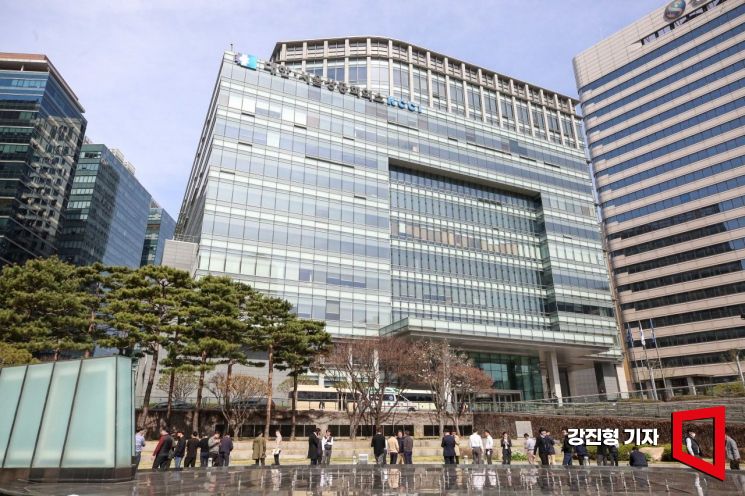
The Korea Chamber of Commerce and Industry (KCCI), together with 10 major industry associations, conducted the '2024 Industry Weather Forecast Survey' and announced the results on the 7th. The pharmaceutical and bio sectors were forecasted as 'Clear', semiconductor, automobile, shipbuilding, machinery, and display sectors as 'Partly Cloudy', steel, petrochemical, and secondary battery sectors as 'Cloudy', and the construction sector as 'Rainy'. This survey comprehensively analyzed positive and negative factors for the next year and expressed them as weather conditions. The order is Clear (very good), Partly Cloudy (good), Cloudy (difficult), and Rainy (very difficult).
Pharmaceutical and Bio Sectors See Increase in New Drug Candidates... Semiconductor and Automobile Exports Expected to Recover
With the rapid increase in new drug pipelines (candidate substances leading to new drugs), the pharmaceutical and bio sectors were forecasted as 'Clear'. Currently, over 1,800 new drug candidates are under development domestically, and with aggressive R&D investments by companies, the number of new drug candidates is expected to continue rising in 2024. Accordingly, Korea's new drug development speed is accelerating, and the number of Korean new drugs receiving FDA approval is also expected to increase. Alongside this, the launch of the Biohealth Innovation Committee, the establishment of the K-Bio Vaccine Fund, and the promotion of a Korean-style ARPA-H reflect strengthened government industrial promotion policies, which are expected to further invigorate the pharmaceutical and bio sectors.
Semiconductor, automobile, shipbuilding, machinery, and display sectors are all forecasted as 'Partly Cloudy' supported by export recovery trends.
The semiconductor industry is expected to see a clear improvement in business conditions. Semiconductor industry experts predict that the global semiconductor market will grow by 13.9% next year compared to this year, driven by recovery in IT front-end demand such as mobile and servers. Supported by efforts from semiconductor suppliers to cut production and adjust supply-demand, memory prices are expected to rise, leading to an anticipated export growth of around 15% next year compared to this year. However, the Semiconductor Industry Association emphasized that, given the astronomical incentives major countries are offering to foster their semiconductor industries, continuous policy efforts such as support for essential infrastructure construction are necessary to maintain domestic semiconductor competitiveness.*
For the automobile sector, exports are projected to increase by 1.9% to approximately 2.75 million units compared to this year, due to demand normalization in major markets like the US and Europe and consumer sentiment recovery from interest rate cuts in the second half of the year. Additionally, increased exports of high-priced vehicles such as eco-friendly cars and SUVs are expected to positively impact export values. However, China's aggressive low-price electric vehicle competition and Japan's strong hybrid electric vehicle (HEV) presence are likely to pose challenges to the domestic automobile industry's global market penetration. Domestically, sales are expected to decline by 1.7% compared to this year due to a base effect from improved semiconductor supply last year, economic downturn leading to reduced household disposable income, and high interest rates.
Shipbuilding is benefiting from strengthened global environmental regulations, with additional orders for eco-friendly vessels such as LNG (liquefied natural gas) ships seen as a positive factor. As of November this year, Korea accounted for 45.3% of global eco-friendly ship orders, and LNG ship orders have more than tripled in the past two years, demonstrating Korea's competitiveness in the global eco-friendly ship market. However, uncertainties in the global economy and slow recovery in shipping market conditions are considered downside risks.
Steel and Petrochemical Sectors Face Oversupply Concerns, Secondary Battery Sector Faces Demand Contraction Concerns as 'Cloudy'
With sluggish demand in domestic front-end industries expected to continue next year and ongoing inflow of Chinese steel into the domestic market, the steel industry is forecasted as 'Cloudy'. China accounts for more than half of global steel production and has actively exported overseas due to domestic demand slowdown. Imports of Chinese steel into Korea surged by 34.6% year-on-year from January to October 2023. Additionally, domestic demand stagnation due to sluggish front-end industries such as construction and intensified export competition in markets with high demand growth like India and ASEAN, where Korea and other competitors focus their exports, raise concerns about intensified competition in export markets.
The petrochemical sector is also forecasted as 'Cloudy'. Persistent oversupply centered on China has led to the global ethylene oversupply reaching the highest level in the past decade. Ethylene is a basic raw material often called the 'rice' of the petrochemical industry, used to manufacture PET bottles, tires, plastics, etc. The global ethylene production capacity in 2023 is expected to reach 230 million tons, a 50% increase compared to 2013. This is largely due to China's large-scale investments over the past 4-5 years to increase self-sufficiency. While rising international oil prices and normalization of domestic production facilities are positive factors, oversupply and slowing economic growth rates make a dramatic industry recovery difficult.
The secondary battery sector, which has shown high growth, is forecasted as 'Cloudy'. The combination of high interest rates, economic recession, higher prices of electric vehicles compared to internal combustion engine vehicles, and domestic and international moves to reduce or eliminate electric vehicle subsidies are expected to slow electric vehicle demand. In fact, automakers such as Ford, GM, and Volkswagen have recently withdrawn or postponed electric vehicle investment plans. Although battery price declines due to falling metal prices may have negative short-term effects, this could lead to lower electric vehicle prices, which in turn may drive demand growth, producing positive effects.
Dr. Hwang Kyung-in of the Korea Institute for Industrial Economics & Trade said, "The recently concerning oversupply of batteries in China is also likely to exert downward pressure on battery prices directly and indirectly," adding, "However, even if battery price declines stimulate electric vehicle demand, demand for affordable electric vehicles using LFP batteries is expected to increase more significantly, requiring strategic moves by our companies."
The construction industry, which continues to suffer from a real estate market downturn, is forecasted as 'Rainy'. Construction activity remains sluggish due to falling real estate prices, with order volumes expected to decline, especially in private construction. In fact, construction orders, a leading economic indicator, decreased by about 26% year-on-year through September this year. The Korea Construction Association anticipates continued industry downturn due to increased construction financing costs amid high interest rates and difficulties in securing construction funds caused by liquidity tightening in real estate project financing (PF). However, there is some hope that increased major SOC budgets next year could expand public sector construction orders and provide relief.
Kim Moon-tae, head of the Industrial Policy Team at KCCI, said, "Although an export recovery trend is expected across major industries, global competition is likely to intensify further due to China's production capacity improvements and major countries' efforts to protect their domestic industries," adding, "Along with corporate R&D and innovation efforts, policy support such as deregulation and investment subsidies is necessary to strengthen the recovery momentum in the private sector."
© The Asia Business Daily(www.asiae.co.kr). All rights reserved.
![Clutching a Stolen Dior Bag, Saying "I Hate Being Poor but Real"... The Grotesque Con of a "Human Knockoff" [Slate]](https://cwcontent.asiae.co.kr/asiaresize/183/2026021902243444107_1771435474.jpg)















