Strengthening English Public Education Using Edutech
Supporting Customized Education for Domestic Multicultural Students
Expanding Native English Assistant Teachers in Schools
The Seoul Metropolitan Office of Education is promoting the internationalization of Seoul education in line with the era of globalization. To expand overseas exchange classes, pilot models such as international joint classes and global citizenship innovation schools will be increased. To strengthen public English education, measures such as introducing 'English tutor robots' in schools and expanding the placement of native English assistant teachers will also be applied.
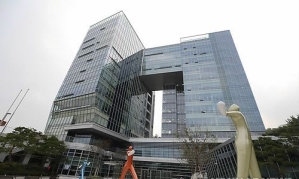
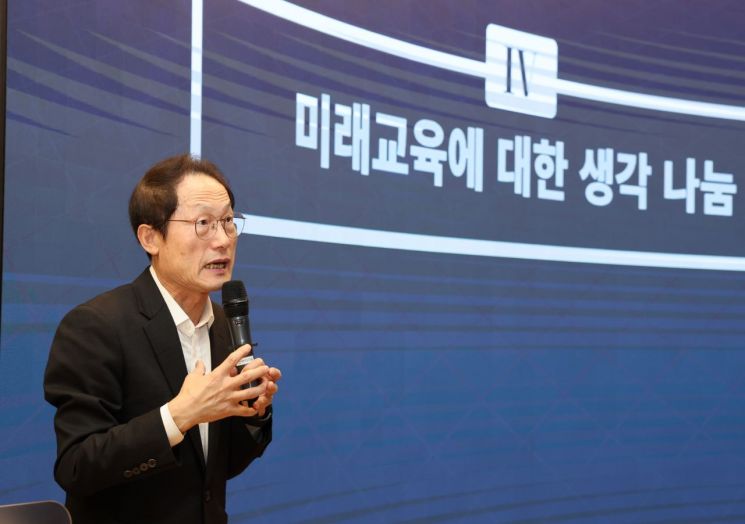
Cho Hee-yeon, Superintendent of the Seoul Metropolitan Office of Education, stated on the morning of the 29th at the Seoul Metropolitan Office of Education, "We must move toward an 'open multicultural era' where people from diverse cultural, ethnic, and racial backgrounds live together. We will strive intensely for coexistence starting from education."
The 'Seoul Education Internationalization Promotion Plan' announced by the Seoul Metropolitan Office of Education aims to integrate the previously departmentally operated internationalization policies into a new unified system. First, the Seoul Metropolitan Office of Education plans to expand international joint classes to activate overseas exchanges. This involves planning international joint classes with overseas students and expanding mutual visits. Additionally, the 'Global Citizenship Innovation School' model, which focuses on curricula that cultivate global citizenship, will be expanded from the current three schools.
The Seoul Metropolitan Office of Education will also strengthen customized support policies for multicultural students. For multicultural students aged 3 to 6 months before school enrollment, there is a plan to allow them to complete intensive Korean language education at Korean language institutions. Within schools, support will be provided for special multicultural classes, bilingual classrooms, and multicultural language instructors, while outside of school, after-school Korean language classes and university-linked programs will be established. Furthermore, a 'Multicultural Student Support Officer' capable of supporting multicultural students will be assigned.
To widely promote Seoul education, the plan includes expanding ODA (Official Development Assistance) projects targeting partner countries and establishing a support system for Korean language education overseas. The Seoul Metropolitan Office of Education intends to create a network with local education offices. In addition, a 'Seoul Education Internationalization Support Officer' will be assigned to support overseas promotion and advisory activities.
The Seoul Metropolitan Office of Education also proposed measures to strengthen public English education. This was promoted to enhance students' English communication skills amid rapidly changing international domestic and foreign environments.
In particular, edutech technologies such as AI (artificial intelligence) will be utilized. The Seoul Metropolitan Office of Education plans to pilot the introduction of English tutor robots that assist learning in collaboration with private companies. Additionally, a voice-type chatbot (app) will be piloted in cooperation with universities. This will be used in regular English classes and after-school activities and is expected to be introduced as early as March next year. Furthermore, this year, the AI English learning mate 'AI PengTok' will also be piloted in elementary schools that wish to participate.
Moreover, 'multimodal English reading education' based on edutech will be implemented. Multimodal learning is a method of learning information using tools that engage multiple senses, including visual and auditory. Leading schools for AI-based English class models will be operated to develop edutech-based English teaching methods.
The workforce of dedicated English teachers will also be strengthened. Intensive training will be conducted for elementary English subject teachers in February next year, and an edutech support team will be formed for English teachers specializing in edutech utilization. Along with this, native English assistant teachers will be expanded and placed in elementary schools that wish to participate.
© The Asia Business Daily(www.asiae.co.kr). All rights reserved.