Deepening US Export Controls on China Lead to Withdrawal
From 'Unicorn Companies' to 'Zero-Valuation' Groups
Graphcore, a UK semiconductor startup once considered a potential rival to Nvidia, has withdrawn from the Chinese market. This appears to be due to weakened profitability amid intensified US export controls against China.
Graphcore's Sales in China Account for 25%... Collapses Due to US Export Controls on China
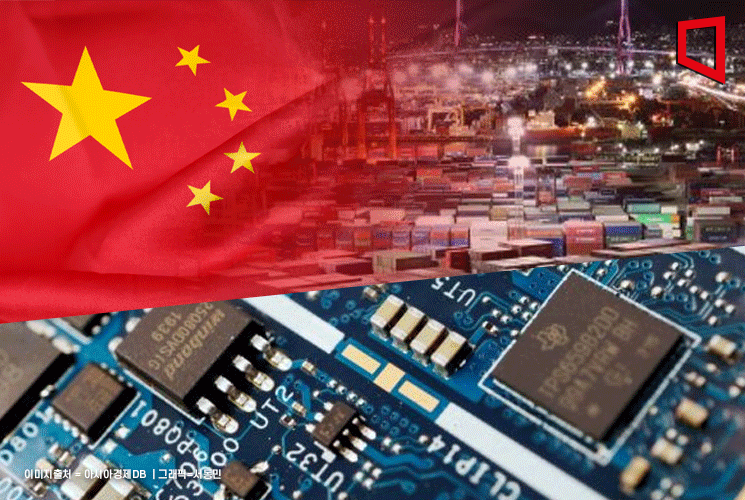
According to Bloomberg on the 22nd (local time), UK semiconductor design startup Graphcore announced in a statement that it will withdraw from the Chinese market. Graphcore plans to stop sales in China and lay off all employees there.
The reason for Graphcore's withdrawal from the Chinese market is presumed to be US export controls against China.
The US government's push for advanced semiconductor export regulations targeting China has reportedly increased losses. According to the media, China accounts for 25% of Graphcore's sales.
A Graphcore spokesperson told the media, "Due to US export regulations, we have been continuously scaling down our China business."
However, the spokesperson added, "AI computing demand continues to grow in other regions besides China, and we are developing new products to replace Nvidia's graphics processing units (GPUs). We will introduce cost-effective alternatives to Nvidia and increase demand."
From 'Potential Rival to Nvidia' to a Company with an Effective Valuation of Zero
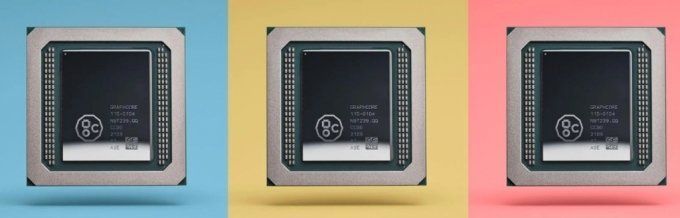 AI processor from UK semiconductor design company Graphcore, recognized as a 'potential rival to NVIDIA.'
 [Photo by Graphcore website capture]
Founded in the UK in 2016, Graphcore is a startup designing customized semiconductors that support artificial intelligence (AI) software. It has focused on developing AI semiconductors through aggressive research and development (R&D) investments. Last year, it introduced an intelligent processing unit (IPU) capable of performing 3.5 quintillion operations per second.
The market expected Graphcore to become a unicorn (a private company valued at over $1 billion) from its early days. Investors seeking alternatives to Nvidia, which has high equipment demand, poured funds into Graphcore. As a result, it raised $50 million from Silicon Valley venture capitalists (VCs) in its founding year and received a total of $730 million in investments by last year. In the 2020 funding round, its valuation reached $2.5 billion.
Graphcore was recognized by investors as a "potential rival to Nvidia."
However, according to the UK Companies House, Graphcore's revenue last year was $2.7 million, down 46% from the previous year. Losses also increased by 11%.
This is analyzed to be due to major customers stopping purchases of Graphcore's semiconductors. At the end of 2020, Microsoft ceased transactions with Graphcore and began pursuing in-house development. Last year, with the start of US export restrictions on China, sales in the key Chinese market also sharply declined.
Facing a capital erosion crisis, Graphcore announced last month that it would launch a new funding round to cover operating expenses. However, unlike before, market response has been lukewarm.
Sequoia Capital, a major investor in Graphcore, recently recorded Graphcore's valuation as effectively "zero."
© The Asia Business Daily(www.asiae.co.kr). All rights reserved.
![Clutching a Stolen Dior Bag, Saying "I Hate Being Poor but Real"... The Grotesque Con of a "Human Knockoff" [Slate]](https://cwcontent.asiae.co.kr/asiaresize/183/2026021902243444107_1771435474.jpg)
















