Landfill as a Negotiation Card, No Authority for Gimpo City
If Included, Seoul City Faces Additional Costs for Line 5 Connection
Over 200 Annual Rural Special Admissions Disappear
The issue of incorporating Gimpo City in Gyeonggi Province into Seoul is snowballing, complicating the calculations of related local governments. Many matters affect not only Gimpo but also Seoul and Incheon, such as metropolitan area landfill use, the extension cost of Seoul Subway Line 5, and changes in high school and university districts, leading to disagreements among local governments.
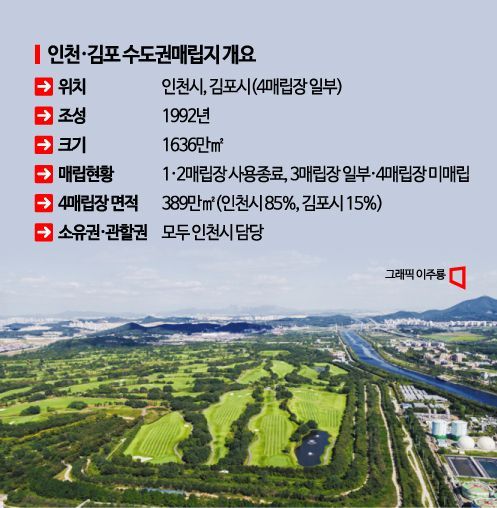
◆Landfill Site and Incineration Plant= The first issue to resolve in the process of merging Gimpo City into Seoul is the authority to use the landfill site. From Seoul’s perspective, if Gimpo joins Seoul, Seoul’s waste can be processed at the metropolitan area’s 4th landfill site located in Gimpo. However, Incheon, which holds the key authority, strongly opposes this.
Mayor Kim Byung-su of Gimpo said on the 13th of last month, "Since the 4th landfill site of the metropolitan landfill is on Gimpo land, it can solve Seoul’s waste problem." However, after meeting with Seoul Mayor Oh Se-hoon on the 6th, Mayor Kim stated, "Gimpo has no authority related to the metropolitan landfill." The mayor’s position changed 180 degrees within a few days.
The metropolitan landfill consists of four landfill sites totaling 16.36 million square meters. The disputed 4th landfill site is divided 85% by Incheon and 15% by Gimpo. However, although administrative districts are separated, according to a four-party agreement in 2015 among the Ministry of Environment, Seoul, Gyeonggi Province, and Incheon, Incheon holds both ownership and jurisdiction over the metropolitan landfill. There is also a clause that prohibits landfill use without Incheon’s consent. Incheon opposes Seoul’s waste being sent to the metropolitan landfill.
Incheon also strongly opposes the metropolitan incineration plant that Gimpo is promoting. In line with the ‘ban on direct landfill of waste from 2026,’ Gimpo selected three candidate sites for a metropolitan incineration plant to be used jointly with Goyang City, located in Daegot-myeon and Yangchon-eup adjacent to Incheon. Gimpo held an explanatory meeting about the metropolitan incineration plant in Incheon on the 1st, but it ended in disruption due to strong opposition from Incheon citizens.
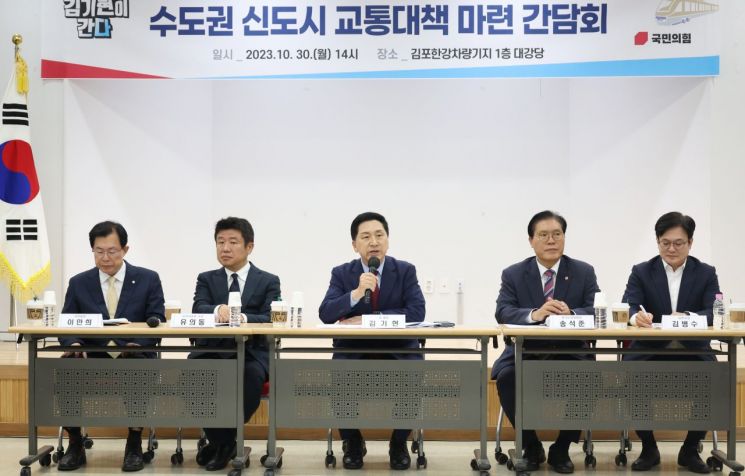 Kim Ki-hyun, leader of the People Power Party (second from the left), is speaking at a meeting held on the 30th of last month at the Gimpo Hangang Vehicle Base, which manages the Gimpo Gold Line, to discuss transportation measures for new towns in the metropolitan area. Photo by Yonhap News
◆Extension of Seoul Subway Line 5= The extension of Seoul Subway Line 5 to Gimpo is a long-standing wish of the area. On the 6th, Minister of Land, Infrastructure and Transport Won Hee-ryong said, "The extension of Line 5 to Gimpo will proceed unchanged regardless of Gimpo’s incorporation into Seoul." However, if Gimpo is incorporated into Seoul, Seoul may have to bear construction costs amounting to several hundred billion won that it originally did not have to pay.
The Line 5 extension is a new 23.89 km section connecting Banghwa Station in Seoul, Geomdan New Town in Incheon, and Hangang New Town in Gimpo. Gimpo and Incheon propose different route plans. Although construction costs vary significantly depending on the plan, they are generally expected to be around 3 trillion won. About half of this will be borne by the Korea Land and Housing Corporation (LH) and others, while the rest will be covered by the national treasury and local governments including Seoul, Gyeonggi Province, Incheon, and Gimpo.
According to the ‘Railway Work Guidelines’ published by the Ministry of Land, Infrastructure and Transport, metropolitan railways are funded 70% by the national treasury and 30% by local governments, but for Seoul sections, the local government share increases to about 50%. If Gimpo is incorporated into Seoul and becomes Gimpo-gu, Seoul and Gimpo-gu must share the construction costs for the sections outside Incheon’s jurisdiction. The local government’s share will increase from 30% to 50%. Although exact estimates are difficult at present, this cost could reach several hundred billion won. The exact cost will vary greatly depending on the timing of Gimpo’s incorporation and the start of construction. However, last year, Gimpo predicted in materials submitted to the city council that 349.4 billion won would be needed for the Line 5 extension.
◆Loss of ‘Rural and Fishing Village Admission’ Benefits for Gimpo Students= If Gimpo is incorporated into Seoul, college applicants from Gimpo will no longer be eligible for the rural and fishing village special admission quotas. Currently, more than 200 students annually from the town and township areas of Gimpo, including Tongjin, Gochon, Yangchon-eup, and Daegot, Wolgot, Haseong-myeon, apply under rural and fishing village special admissions and other equal opportunity selection categories.
If Gimpo becomes Gimpo-gu in Seoul, only administrative districts called ‘dong’ will remain, making it impossible to apply for rural and fishing village special admissions, which are limited to eup and myeon areas. According to data on ‘Rural and Fishing Village Admission Status in Gimpo’ obtained by Representative Park Sang-hyuk of the Democratic Party, 228 students from Gimpo entered universities through rural and fishing village special admissions last year.
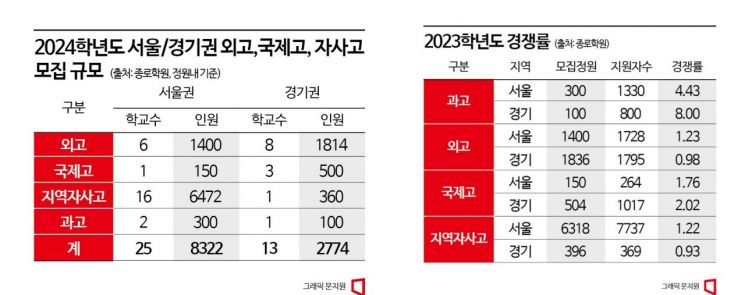
On the other hand, middle school students in Gimpo will be able to apply to Seoul’s special-purpose high schools and autonomous private high schools, which recruit based on metropolitan local government residency. This may increase competition rates for autonomous private high schools in Seoul. Currently, Seoul has two science high schools, six foreign language high schools, one international high school, and 16 regional autonomous private high schools. This year’s recruitment numbers are 300 for science high schools, 1,400 for foreign language high schools, 150 for international high schools, and 6,472 for autonomous private high schools, totaling 8,322. About 4,000 to 5,000 third-year students from 24 middle schools in Gimpo enter high school annually, so Gimpo’s incorporation into Seoul is expected to be a significant factor in increasing competition rates.
If Gimpo’s upper-level jurisdiction changes to Seoul, the local education finance grants provided to the city and province after the change must be recalculated based on the education grants originally planned for the previous city and province. The scale of the change can be estimated through the operating expenses of the Gimpo Office of Education and the budgets allocated to each school. According to the Gyeonggi Provincial Office of Education, this year’s budget for the Gimpo Office of Education is 103 billion won, and the basic operating expenses for public schools in Gimpo amount to 48.7 billion won. Including personnel and other expenses, a total of more than 151.7 billion won is expected to be transferred from the Gyeonggi Provincial Office of Education to the Seoul Metropolitan Office of Education budget.
© The Asia Business Daily(www.asiae.co.kr). All rights reserved.
![Clutching a Stolen Dior Bag, Saying "I Hate Being Poor but Real"... The Grotesque Con of a "Human Knockoff" [Slate]](https://cwcontent.asiae.co.kr/asiaresize/183/2026021902243444107_1771435474.jpg)

















