Interview with CEO Lee Sohyeong of Craver
Transition from Cosmetics Distributor to Beauty Aggregator
Record Highest Sales from Q1 to Q3
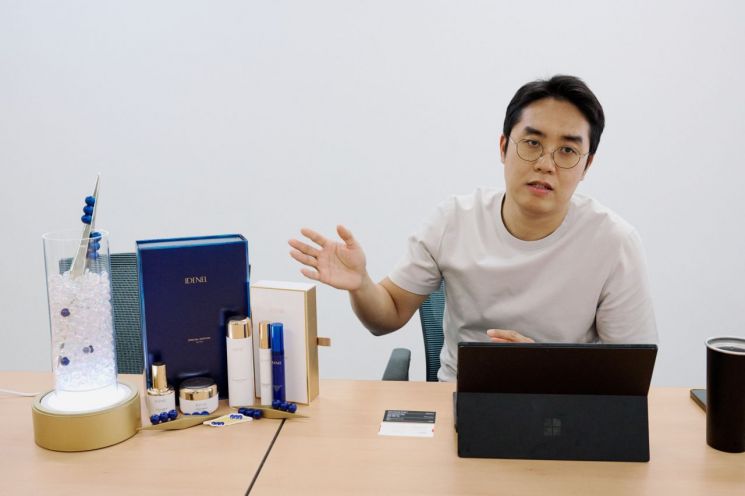
"The biggest characteristic of the recently spotlighted '3rd generation K-Beauty' brands is their decoupling from China."
At the Craver headquarters located in Yeoksam-dong, Gangnam-gu, Seoul, CEO Lee So-hyung said, "The reason why most of the 1st and 2nd generation cosmetic brands that gained attention in the 2010s disappeared except for a few was because their dependence on the Chinese market was excessively high." Since the THAAD (Terminal High Altitude Area Defense) crisis in early 2017 and China's localization policies following COVID-19, existing Korean cosmetic companies have been struggling in the Chinese market. Amid this, the so-called 3rd generation K-Beauty brands, which are gaining popularity in Vietnam, Japan, North America, and Europe, are experiencing another heyday.
Craver is a cosmetics company that changed its name and business model last July from Bitolink, established in 2014. It started as a cosmetics distribution business and rapidly grew after acquiring the skincare brand 'Skin1004' in 2016. CEO Lee introduces Craver as a 'beauty aggregator.' An aggregator is a business model that acquires brands with high growth potential and operates and manages them in an integrated manner to rapidly expand the overall scale.
Craver shifted its business direction to an aggregator due to painful experiences in China. In the past, Craver operated a distribution platform handling more than 100 K-Beauty brands in China, mainly acting as a distributor and marketing agent. Sixty percent of its sales came from China. In 2018, sales reached 67.5 billion KRW, growing 80 times compared to its first year, showing strong business performance. However, from 2019, the business environment was heavily influenced by international affairs, leading to bitter experiences. In 2021, it recorded a loss of 9.4 billion KRW. CEO Lee said, "Even though we worked hard enough to become a top player in China, the market was greatly shaken by macro variables, and no matter how much effort we put in, it didn't work. So, we narrowed down the number of brands and overhauled our business model to create our own business that is not swayed by macro factors."
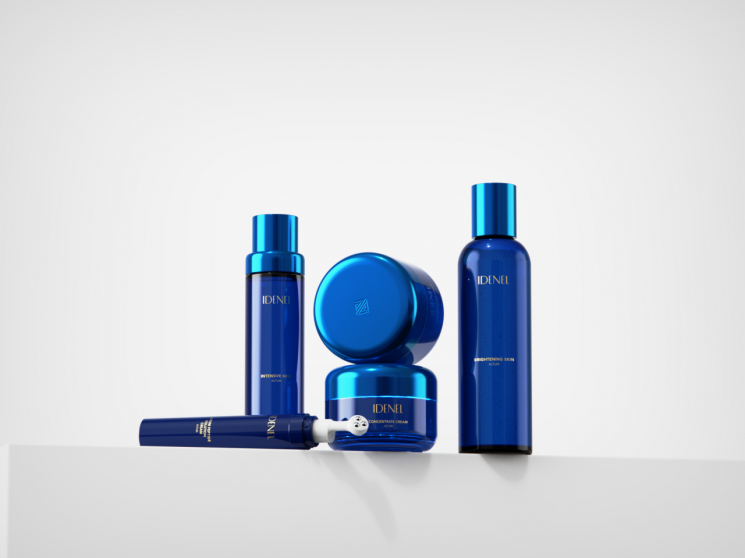
CEO Lee contemplated what kind of business could be self-sustaining despite external factors, rather than a short-sighted business that yields quick results. Inspired by the successful case of acquiring Skin1004 when it was in deficit and turning it profitable in a short period, the focus was placed on nurturing strong small and medium beauty brands globally. A representative example is the high-functional skincare brand 'Edenel,' launched last year with an investment of 3 billion KRW in research and development. Edenel incorporates 'Altum,' the latest technology from SR Biotech, which Craver acquired in 2020. Altum is a new material that increases cosmetic absorption rates by 60 times, effectively delivering active ingredients to the dermis layer of the skin. Craver currently owns five skincare and color cosmetic brands, including Skin1004 and Edenel.
Currently, Craver's sales proportion from China has dropped to about 15%. Sales are evenly distributed with 10-20% each from the U.S., Indonesia, Japan, and Europe. Sales in the third quarter of this year reached approximately 21.5 billion KRW, a 46% increase compared to the same period last year. The cumulative sales for the first three quarters of this year are about 64.7 billion KRW, a 61% increase compared to the same period last year, surpassing last year's total sales of 56.2 billion KRW. CEO Lee said, "Sales grew significantly in Japan, Europe, and the southern regions this year," adding, "With diversified sales, we are no longer heavily affected by macro variables as in the past."
Craver also operates 'UMMA,' an online beauty B2B (business-to-business) platform. Launched in 2020, UMMA has over 18,700 buyers from about 190 countries worldwide as members. It has a broad B2B network covering major K-Beauty demand countries as well as African countries like Ghana and Tanzania, and European regions such as Kosovo and Poland. CEO Lee explained, "By observing how many buyers on UMMA conduct transactions, we can see global trends," and added, "We formulate business strategies using these market trends and our own big data."
CEO Lee plans to grow Craver into the 'Hive' of the cosmetics industry. He said, "We plan to house trendy and attractive K-Beauty brands like label companies within us," and stated, "We will nurture 4th generation K-Beauty idols and grow them into global brands."

© The Asia Business Daily(www.asiae.co.kr). All rights reserved.
![Clutching a Stolen Dior Bag, Saying "I Hate Being Poor but Real"... The Grotesque Con of a "Human Knockoff" [Slate]](https://cwcontent.asiae.co.kr/asiaresize/183/2026021902243444107_1771435474.jpg)

















