Partial Leasing Up 41% This Year Compared to 2019
Exclusive and Jeonse Units See Usage Decline Over the Past Year
The dedicated aircraft previously used for overseas business trips by global company CEOs and executives have recently disappeared amid the economic downturn, while the market for 'partial leasing' of aircraft is expanding. The reason companies are investing in fractional ownership of private jets is believed to be because it significantly reduces both purchase and maintenance costs, and is also perceived as advantageous from a security perspective.
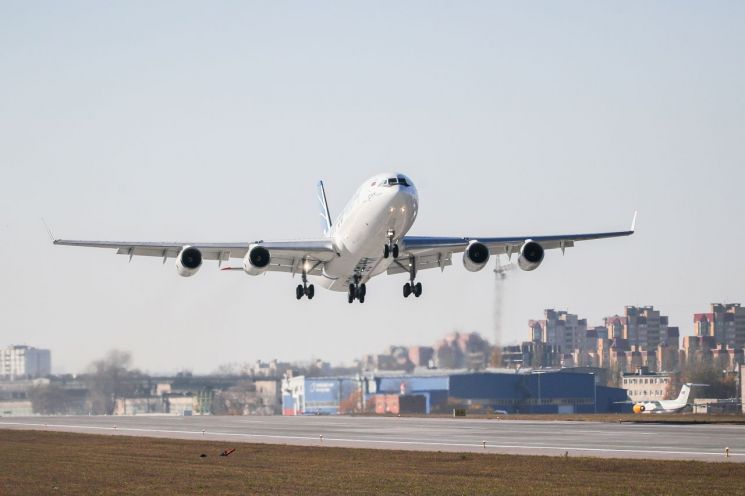
On the 1st (local time), Bloomberg cited data from WingX, a market data and analysis firm related to the aviation industry, reporting that the use of flights through partial leasing by companies increased by 41% in September this year compared to 2019. Over the past year, corporate use of flights through partial leasing increased by 5%.
This contrasts with the decrease in the use of charter flights, which companies fully lease by owning and operating private jets or contracting with airlines, over the past year. While the use of charter flights increased by 26% as of September this year compared to 2019, it decreased by 6% in the past year. Private jet usage increased by 1% between 2019 and September this year but showed an 8% decline compared to last year.
Partial leasing of flights refers to a contract where companies rent a portion of an aircraft rather than the entire plane. The aircraft is divided into 1/16 units, and companies hold partial ownership, paying monthly maintenance fees and operating costs per occupied hour for their share.
Many companies provide aircraft so that CEOs and key executives can save time on overseas business trips and maintain security while discussing business matters. Some global companies even restrict senior executives from using commercial airlines for business trips. Accordingly, many companies have acquired private jets or charter flights and have disclosed related expenses in their filings.
Recently, this trend has changed due to several factors, including concerns about carbon emissions, pilot shortages, and increased attention to information security.
First, growing global concern about climate change has raised calls to reduce the use of aircraft, which have large carbon emissions. As ESG (Environmental, Social, and Governance) has become a major focus in corporate management, the perception has spread that fractional leasing is more beneficial than consuming energy and generating carbon emissions through private jets or charters just to save executives' time.
The practical issue of pilot shortages, highlighted during the pandemic, has also prompted companies to change their views.
The advancement of aircraft flight path tracking systems is also cited as a reason for the increase in partial leasing. Unlike private jets and charters, whose owners are clearly identifiable, partially leased aircraft are owned by the operator, making them more advantageous from a security standpoint.
In particular, with public attention heightened to the extent that social media accounts have been created to update the flight paths of Tesla CEO Elon Musk's aircraft, partial leasing is being used to prevent business information from being disclosed.
Ken Rich, chairman of Flexjet, a U.S. aircraft leasing company, said, "The business is expanding mainly among new members and existing customers who have leased before, while the private jet business segment is shrinking." He added, "Many Fortune 500 companies have their own private jet departments and work with us. When they want anonymity, they have such means."
© The Asia Business Daily(www.asiae.co.kr). All rights reserved.
![Clutching a Stolen Dior Bag, Saying "I Hate Being Poor but Real"... The Grotesque Con of a "Human Knockoff" [Slate]](https://cwcontent.asiae.co.kr/asiaresize/183/2026021902243444107_1771435474.jpg)















