KCGS 'ESG Evaluation and Ratings' Released
Pharmaceuticals and Bio Sector Shows More Lower Grades Compared to Overall
Samsung Biologics, Only Industry Player to Achieve 'A+'
Companies with 'C' and 'D' Vulnerable Ratings Account for 61% of Industry
As the importance of ESG (Environmental, Social, and Governance) expands globally, an ESG boom is also sweeping through the domestic pharmaceutical and bio industries, which had been relatively untouched until now. While Samsung Biologics, boasting a global top-tier Contract Development and Manufacturing Organization (CDMO), received the highest grades, smaller biotech companies showed relatively weaker ESG performance.
According to the 2023 ESG evaluation and ratings recently announced by the Korea Corporate Governance Service (KCGS), the ESG scores of domestic pharmaceutical and bio companies lag somewhat behind the overall industry sectors. Among the total 791 companies evaluated for ESG ratings this time, pharmaceutical and bio companies, including healthcare and diagnostic devices, are estimated to number 106 (13.4%).
However, among pharmaceutical and bio companies, only Samsung Biologics received an A+ (very excellent) rating. Although the highest ESG rating set by KCGS is the S (outstanding) grade, no company has received this rating in the past three years, making A+ effectively the highest grade.
While 2.4% of all surveyed companies received an A+ rating, only Samsung Biologics in the pharmaceutical and bio industry earned an A+, accounting for a mere 0.9%. SK Chemicals also operates a pharmaceutical business among the A+ rated companies, but since the pharmaceutical division's sales accounted for only about 16.7% last year, it is difficult to classify it as a pharmaceutical and bio company.
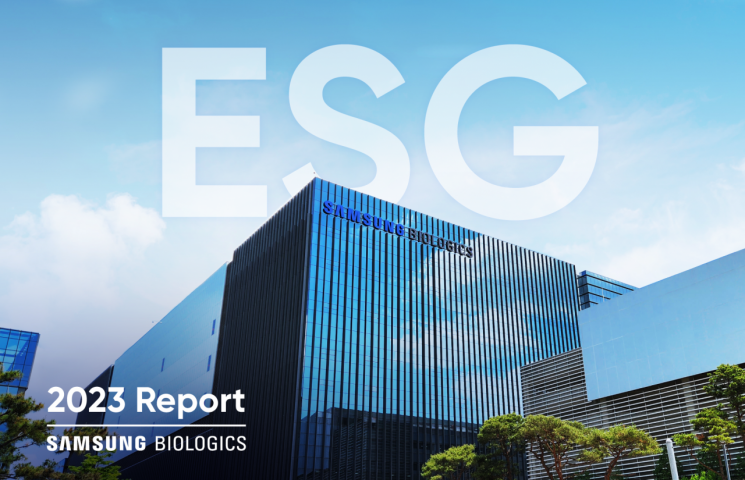
Samsung Biologics received an integrated A+ rating by earning an A grade in Environment (E), an A grade in Social (S), and an A+ grade in Governance (G). This marks an improvement from last year's integrated A grade. Notably, the company formed a dedicated ESG team to establish an ESG management system and strengthen accountability, and also reorganized its board and committees centered on outside directors, efforts that were highly evaluated for enhancing governance transparency.
In addition, many large pharmaceutical and bio companies received relatively favorable A (excellent) or B+ (good) ratings, reflecting the growing interest in ESG within the industry. The companies with A ratings include SK Bioscience, Dong-A Socio Holdings, Dong-A ST, ST Pharm, SK Biopharm, Yuhan Corporation, Ildong Holdings, Handok, and HK Inno.N, totaling nine companies. Those receiving B+ ratings include JW Life Science, JW Pharmaceutical, JW Holdings, Kyungbo Pharmaceutical, Green Cross and Green Cross Holdings, Daewoong and Daewoong Pharmaceutical, Boryung, Bukwang Pharmaceutical, Youngjin Pharmaceutical, Ildong Pharmaceutical, Chong Kun Dang, Chong Kun Dang Bio, Chong Kun Dang Holdings, Hanmi Science, Hanmi Pharmaceutical, Seegene, and Classys, totaling 19 companies.
Twelve companies received the mid-level B (average) rating, including Daewon Pharmaceutical, Celltrion, United Pharmaceutical, HanAll Biopharma, Hwanin Pharmaceutical, HLB Life Science, Amicogen, GC Cell, Caregen, PharmaResearch, Huons, and Hugel.
However, a striking 61.3% (65 companies) of the surveyed pharmaceutical and bio companies received ratings below this level, classified as C (weak) or D (very weak). Most of these are small to medium-sized companies with relatively low awareness of ESG management, resulting in insufficient response and improvement.
Companies rated C include Kwangdong Pharmaceutical, Kukje Pharmaceutical, Dongsung Pharmaceutical, Dong Wha Pharmaceutical, Myungmoon Pharmaceutical, Samil Pharmaceutical, Samjin Pharmaceutical, Ilyeon Pharmaceutical, Il Sung Shin Yak, Ilyang Pharmaceutical, Jeil Pharmaceutical and Jeil Pharma Holdings, Hana Pharmaceutical, Hyundai Pharmaceutical, CJ Bioscience, HLB, Dongkook Pharmaceutical, LegoChem Bio, Lutronic, MedPacto, Celltrion Healthcare, SillaJen, Alteogen, ABL Bio, L&C Bio, EoFlow, Cha Biotech, Komipharm, Kolon Life Science, and Helixmith, totaling 30 companies.
Even more companies, 35 in total, received the lowest D rating. These include Esmedi, Samsung Pharmaceutical, SD Biosensor, Yuyu Pharmaceutical, GeneOne Life Science, Pharmicell, PharmGen Science, NanoEnTek, Nature Cell, Medytox, Bioneer, Vaxcell Bio, Celltrion Pharmaceutical, ST Cube, Oscotec, UbioLogics, Genexine, and GemVax.
Among these, 18 companies including Hyundai Bio, Canaria Bio, Shinpoong Pharmaceutical, Korea BNC, HLB Global, Dentium, Cellmat Therapeutics, Aprogen and Aprogen Biologics, Orient Bio, Wellbiotech, Inbiogen, NanoEnTek, Mezzion, Vinex, Samchundang Pharmaceutical, Selivery, and NK Max received D ratings across all detailed areas of Environment, Social, and Governance.
Meanwhile, the Korea Corporate Governance Service conducts a comprehensive ESG management evaluation annually for domestic listed companies, assigning seven grades from S to D. This year, ESG evaluations were conducted on 987 listed companies, with ESG management grades assigned only to 791 companies listed on the Korea Exchange.
© The Asia Business Daily(www.asiae.co.kr). All rights reserved.
![Clutching a Stolen Dior Bag, Saying "I Hate Being Poor but Real"... The Grotesque Con of a "Human Knockoff" [Slate]](https://cwcontent.asiae.co.kr/asiaresize/183/2026021902243444107_1771435474.jpg)















