The amount raised through initial public offerings (IPOs) by U.S. companies has sharply declined to about one-third of the peak period. Due to the prolonged high interest rates, the IPO market is expected to struggle to recover for the time being.
According to U.S. financial data firm Dealogic on the 31st (local time), the total amount raised through U.S. IPOs this year reached $19 billion (approximately 26 trillion won) as of the end of October. This is about 32% of the recent 10-year annual average ($59 billion). The Wall Street Journal (WSJ) forecasted, "Although this year's IPO market is better than last year's record low in 20 years, it seems difficult to return to the boom period."
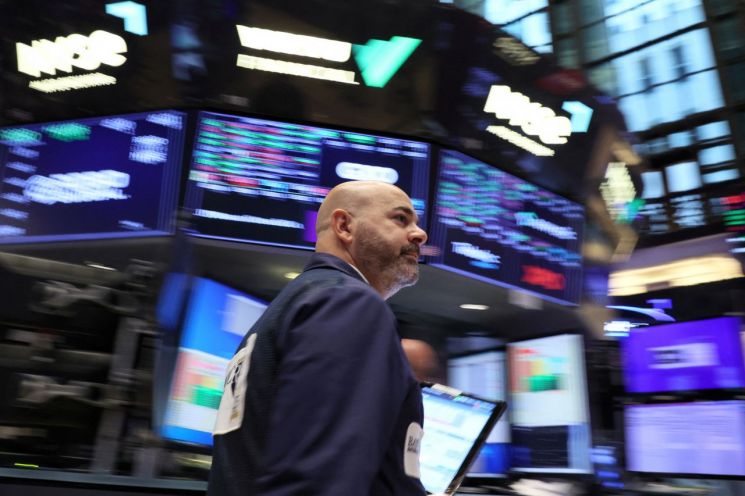
During the COVID-19 pandemic, governments worldwide supplied liquidity to stimulate the economy, leading to a record boom in U.S. IPOs in 2021. In addition to traditional IPOs, companies entering the stock market through mergers with SPACs (Special Purpose Acquisition Companies) led the IPO boom, and individual investors massively participated in SPAC investments, which offered high capital gains. However, as the pandemic ended and the era of high interest rates unfolded, liquidity began to dry up rapidly, and investor sentiment weakened.
The IPO downturn, which began in earnest last year, is expected to continue for the time being. WeStar, a healthcare platform company considered the last major IPO candidate this year, suddenly postponed its listing plan. WeStar, which submitted a securities registration statement to the U.S. Securities and Exchange Commission (SEC) for a Nasdaq listing on the 16th, had planned to hold investor presentations for institutional investors this month. WSJ noted, "WeStar's IPO postponement is evidence of how fragile the IPO market has been amid the downward trend over the past two years."
Earlier, British semiconductor design specialist ARM and the U.S.'s largest grocery delivery company Instacart, which both listed on the Nasdaq last month, have also struggled. Their stock prices closed at $49.29 and $24.63 respectively, below their offering prices (ARM $51, Instacart $30). On the 11th, German famous sandal brand Birkenstock, which listed on the New York Stock Exchange (NYSE), experienced an unusual 12% plunge in its stock price on the first day of trading. According to financial data firm LSEG, Birkenstock's decline from its opening price is the worst performance among companies valued at over $1 billion that have gone public in the past two years.
© The Asia Business Daily(www.asiae.co.kr). All rights reserved.
![Clutching a Stolen Dior Bag, Saying "I Hate Being Poor but Real"... The Grotesque Con of a "Human Knockoff" [Slate]](https://cwcontent.asiae.co.kr/asiaresize/183/2026021902243444107_1771435474.jpg)















