As the so-called 'MZ generation' labor union enters the board of directors, the highest decision-making body of Seoul Metro, attention is focused on whether it will take a different stance from the existing militant unions such as the Korean Confederation of Trade Unions (KCTU) in labor-management relations. The MZ union within Seoul Metro, Ollbareun Nojo, opposes the radical rallies and demonstrations of the existing unions, and it is expected to influence collective actions such as subway strikes in the future.
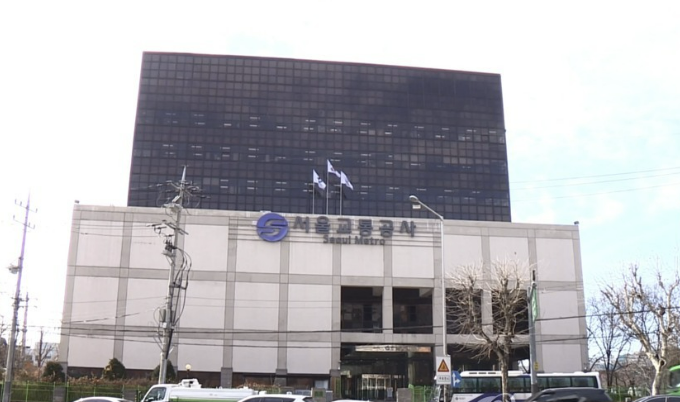
According to the Seoul Metropolitan Government and Seoul Metro on the 31st, Seoul Mayor Oh Se-hoon appointed No Gi-hyeon, a candidate from the Seoul Metro Union under the KCTU, and Jo Eun-ho, a candidate from Ollbareun Nojo, as labor directors of Seoul Metro the day before. Labor directors represent workers and belong to the board of directors, exercising voting rights on overall company operations. Mayor Oh selected No, who ranked first, and Jo, who ranked third among the top four candidates, as labor directors according to Seoul city ordinances.
Seoul Metro has a total of 17,000 employees and operates under a multiple union system with three unions. Among them, the 'Seoul Metro Union' affiliated with the KCTU Public Transport Union is the largest with 10,000 members. It generally has a militant character, leading the total subway strike scheduled for the 9th of next month. Next is the 'Seoul Metro Integrated Union' affiliated with the Federation of Korean Trade Unions (FKTU) Public Federation, with 2,700 members, which is considered more moderate than the Seoul Metro Union. However, the two unions under the two major trade union federations often show solidarity by conducting joint strikes.
In contrast, Ollbareun Nojo, established in 2021 as the 'third union,' is centered on the so-called 'MZ generation,' with 90% of its members under their 30s at the time of establishment. Currently, about 2,000 members have joined, and it operates independently without affiliation to either the KCTU or FKTU. Regarding the upcoming Seoul subway strike next month, it stated, "While respecting the strike, the worsening management of Seoul Metro was caused by the existing unions' (hardline stance) choices," generally opposing the militant rallies and demonstrations conducted by the existing unions. In April, a member of Ollbareun Nojo was elected as the workers' representative on the Industrial Safety and Health Committee of Seoul Metro's Operations Headquarters, surpassing members from the two major trade unions.

In line with this atmosphere, Mayor Oh is interpreted as attempting to weaken the power of the two major unions and empower the new union. In the Seoul Metro labor director election last August, the first and second places were Jang Gi-hyeon, a candidate from the Seoul Metro Union under the KCTU, with 4,599 votes, and No Gi-hyeon, also from the same union, with 3,769 votes, respectively. However, Mayor Oh chose Jo Eun-ho, who ranked third with 3,530 votes, as the labor director instead of the first and second place candidates.
Conflict between the MZ union and the existing unions is also anticipated. The KCTU Public Transport Union stated in a press release, "There has never been a case where Mayor Oh ignored the voting results and arbitrarily appointed directors," and added, "As long as the labor director system stipulated by law and ordinance is manipulated, we will protest and fight back." In response, Song Si-young, chairman of Ollbareun Nojo, said, "The selection of labor directors this time did not violate the ordinance that the mayor of Seoul determines among the top four candidates," and rebutted, "One person from the KCTU side was also elected as a director, and monopolizing both positions would be closer to dictatorship."
© The Asia Business Daily(www.asiae.co.kr). All rights reserved.
![Clutching a Stolen Dior Bag, Saying "I Hate Being Poor but Real"... The Grotesque Con of a "Human Knockoff" [Slate]](https://cwcontent.asiae.co.kr/asiaresize/183/2026021902243444107_1771435474.jpg)
















