Court: "Support obligation not valid until age 40"
'Kangaroo tribe' is a global phenomenon, not just in the West
Rising youth unemployment leads to more young people unable to become independent
A 70-year-old mother in Italy won an eviction lawsuit to kick out her sons who have been living at home for over 40 years.
On the 26th (local time), the British daily The Guardian reported that a 75-year-old woman living in Pavia, Lombardy, northern Italy, won a lawsuit seeking to evict her two sons in their 40s who were living off her. The two sons are 42 and 40 years old, respectively.
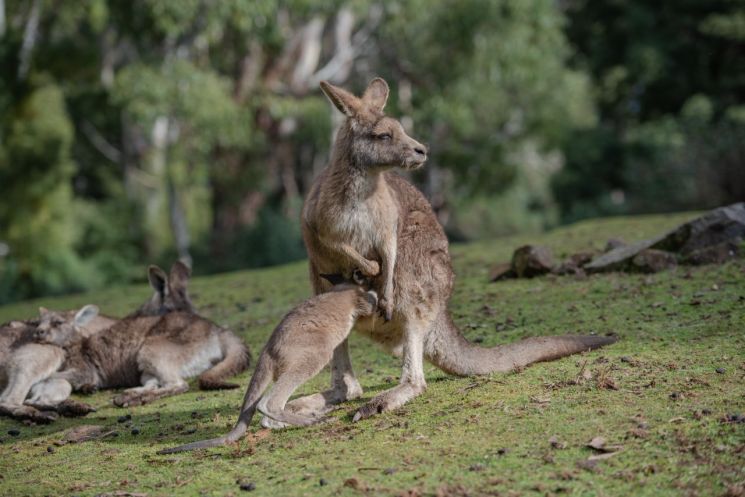 A mother in her 70s from Italy won an eviction lawsuit to force her sons, who had been living at home for over 40 years, to move out.
 [Photo by Pixabay]
According to The Guardian, although the two sons each had jobs, they stayed at home without paying basic living expenses. Moreover, they did not do any housework. The mother said, "I persuaded my two sons several times to find a more independent lifestyle, but they did not listen."
Exhausted from supporting her two sons, the mother eventually decided to file a lawsuit. The court hearing the case sympathized with the difficulties the mother faced and issued an eviction order against the two sons.
The court ruled, "While parents have an obligation to support their children, it may have been permissible for the two sons to live at home until now, but it cannot be justified now that they are over 40 years old." According to the eviction order, the two sons must leave the house by December 18.
Italy has a high rate of young adults who do not become independent even after reaching adulthood
Italy has a high proportion of young adults who continue to live with their parents even after becoming adults. According to a survey last year, about 70% of the population aged 18 to 34 in Italy live with their parents, with the proportion of males (72.6%) higher than females (66%).
In particular, young people who have jobs but do not become independent for convenience are also called 'bamboccioni' (meaning 'uselessly big babies'). This term was first used in 2007 by an Italian politician to mock adults living with their parents. In France, such young people are referred to as the 'Tanguy generation,' named after a movie title, and in the UK, they are called 'kippers,' an acronym meaning 'kids in parents' pockets eating rental subsidies.'
 Young adults in Italy who have jobs but do not move out for convenience are also called "bamboccioni" (unnecessarily big babies). This term was first used in 2007 by an Italian politician to mock adults living with their parents. In France, such young people are referred to as the "Tangui generation," derived from a movie title, and in the UK, they are called "kippers," an acronym meaning "kids in parents' pockets."
 [Photo by Pixabay]
Italian parents who cannot tolerate the 'bamboccioni' are taking legal action. In 2020, a 35-year-old part-time musician who received an eviction order from his parents appealed, claiming it was difficult to live on his income of about 20,000 euros (approximately 28.62 million KRW). However, the Italian Supreme Court dismissed the appeal, stating, "It is difficult to see that adult children have the right to demand financial support from their parents."
The trend of increasing 'kangaroo kids' worldwide, including in Korea
Recently, due to the impact of COVID-19, many young people in Western societies, who were considered relatively independent, have returned to their parents' homes. The worsening employment situation among the 20s to 40s age group has become a global issue.
Not only in the West but also in Korea, the problem of kangaroo kids is causing concern.
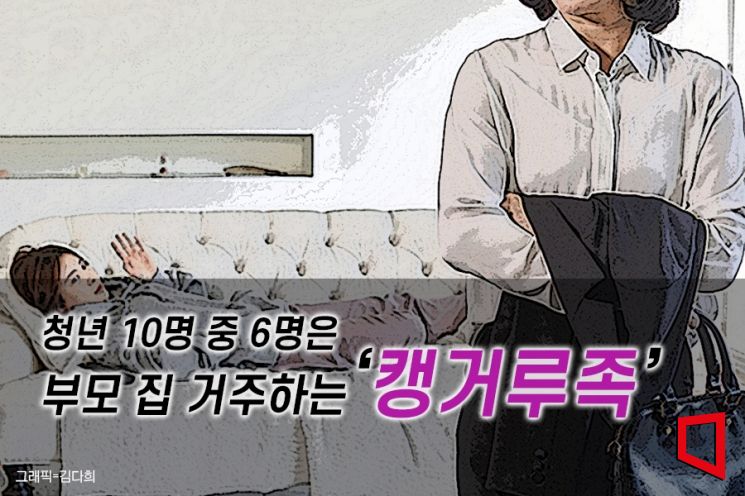
According to a 2020 survey by the job matching platform Saramin targeting 4,068 adult men and women about 'thoughts on kangaroo kids in the COVID-19 era,' 62.8% of respondents viewed kangaroo kids as a natural phenomenon due to employment difficulties and economic downturns.
They recognize kangaroo kids as a social problem that cannot be solved by individual efforts alone.
When asked if they consider themselves kangaroo kids, 32.1% answered yes, and among them, 53.3% said that the life of kangaroo kids would be prolonged due to COVID-19 and real estate policies. Nearly 20% (19.9%) responded that they would not be able to escape being kangaroo kids.
The main reason they consider themselves kangaroo kids was 'living with parents' (77.2%, multiple responses allowed). This was followed by 'lack of ability to be independent' (38.7%), 'receiving allowance from parents' (20.7%), 'having economic ability but not becoming independent' (14.1%), and 'relying on parents for important decisions' (12.2%).
The area where they rely most on their parents or receive support is 'housing' (70.9%), ranked first. This was followed by 'living expenses' (16%) and 'emotional comfort and stability' (5.4%).
The causes of becoming kangaroo kids differed by generation: for those in their 20s, the biggest reason was 'unable to find a job' (26.4%, multiple responses allowed), while for those in their 30s, it was 'housing costs are too high' (20.2%). Severe youth unemployment is linked to housing problems.
Meanwhile, according to the 'Youth Life Status Survey' conducted by the Korea Institute for Health and Social Affairs and the Korea Statistical Promotion Institute on August 28, the proportion of young people living with their parents was 57.5%. Among them, 67.7% said they had no plans to become independent yet. The most common reason was 'lack of economic conditions' (56.6%).
Regarding this 'kangaroo kids' phenomenon, The Guardian analyzed that unlike in the past when multiple generations living under one roof was influenced by culture, recently, due to worsening employment difficulties, the number of young people unable to become independent is increasing worldwide.
© The Asia Business Daily(www.asiae.co.kr). All rights reserved.
![Clutching a Stolen Dior Bag, Saying "I Hate Being Poor but Real"... The Grotesque Con of a "Human Knockoff" [Slate]](https://cwcontent.asiae.co.kr/asiaresize/183/2026021902243444107_1771435474.jpg)

















