Reward Halves Every 210,000 Blocks Mined
Halving Expected in April Next Year... Bitcoin Reward Drops to 3.125
Bitcoin Supply Decreases, Price Rise Anticipated
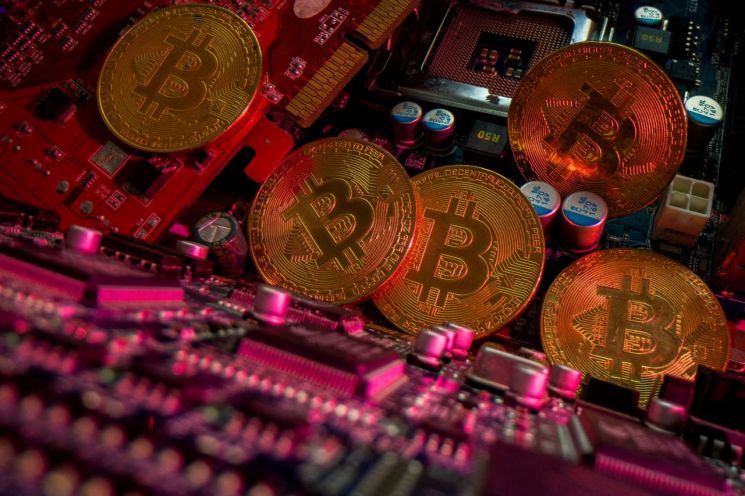
The price of Bitcoin, the leading virtual asset, is struggling to surpass the $30,000 mark, and the market remains stuck in a slump. Amid the prolonged so-called 'crypto winter,' investors' attention is turning to April next year. With the Bitcoin halving expected in April next year, there is growing anticipation that prices may rise afterward.
According to industry sources, the fourth Bitcoin halving is expected in April next year. The Bitcoin halving refers to the point when the number of Bitcoins rewarded for mining a block is cut in half. The halving does not occur on a specific date but happens when 210,000 blocks have been generated. Generally, the industry expects a Bitcoin halving approximately every four years. Bitcoin’s total supply is capped at 21 million, and it is predicted that no more Bitcoins will be mined after the year 2140.
When the halving occurs, the Bitcoin reward for mining a block is reduced by half. After the halving in April next year, the reward per block will decrease to 3.125 Bitcoins. This phenomenon is why there are forecasts of price increases as the halving approaches. Since the reward for mining decreases, the supply of Bitcoins entering the market is expected to decline compared to before. An industry insider said, "The market situation will be difficult until the halving, but afterward, investment sentiment is expected to revive due to the anticipation of price increases."
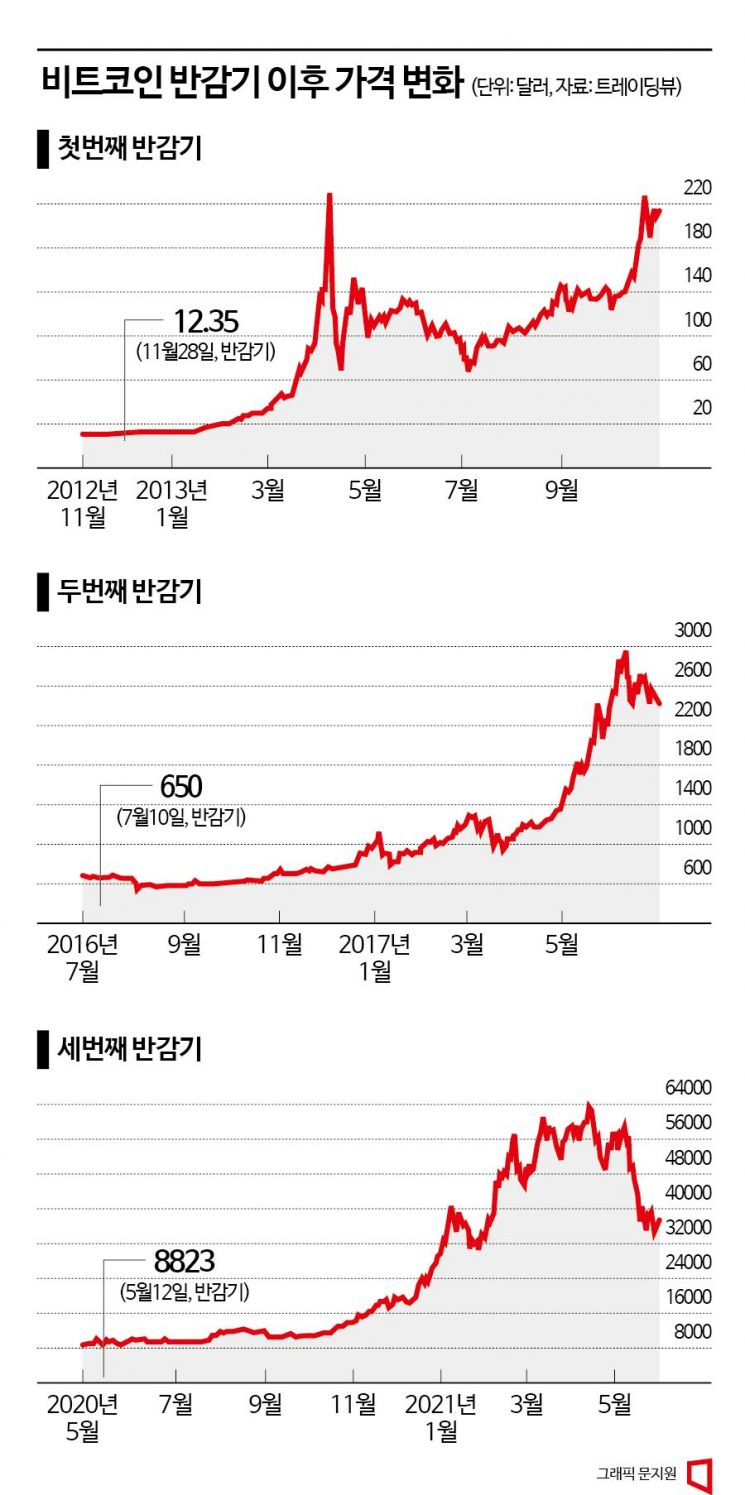
According to data from asset analysis site TradingView, on the day of the first halving on November 28, 2012, Bitcoin was priced at $12.35 (approximately 16,666 KRW). After the mining reward was cut from 50 to 25 Bitcoins per block, the price gradually rose, surpassing $20 in early February 2013, and then surged sharply. The price increase continued after the halving.
However, looking at past price trends after halvings, a price increase did not always occur immediately after the halving. At the time of the second halving on July 10, 2016, Bitcoin was priced at $650 (approximately 880,000 KRW), but by August 2 of the same year, it had dropped to $537. Also, at the third halving on May 12, 2020, Bitcoin was priced at $8,823, and after fluctuating up and down, a significant upward trend began about five months later. In the long term, price increases after halvings are clear, but in the short term, prices may decline depending on external factors such as the macroeconomy.
The Bitcoin halving is a concept designed by its creator, Satoshi Nakamoto. There is no clear explanation for why the halving was introduced. However, from his note stating, "Coins must be distributed somehow in the beginning, and a fixed rate seems to be the best format," we can infer the reason for applying the halving. Satoshi also believed that the halving would not necessarily lead to a price increase. He said, "The creation of new coins means that the money supply increases as planned, but it does not necessarily lead to inflation."
As the halving approaches and mining rewards are expected to decrease, competition among miners is becoming increasingly fierce. According to virtual asset mining information site CoinWars, on the 18th, Bitcoin’s hash rate was recorded at 451.74 exahashes per second (EH/s). Compared to 266.42 EH/s at the beginning of this year and 407.85 EH/s at the end of June, the hash rate has increased. The Bitcoin hash rate indicates the speed of Bitcoin mining. The higher this value, the more participants are mining, and the more intense the competition becomes.
© The Asia Business Daily(www.asiae.co.kr). All rights reserved.
![Clutching a Stolen Dior Bag, Saying "I Hate Being Poor but Real"... The Grotesque Con of a "Human Knockoff" [Slate]](https://cwcontent.asiae.co.kr/asiaresize/183/2026021902243444107_1771435474.jpg)
















