Popular Humanities Policies Including Chaek Ilneun Donggu
Shedding the Outdated Image of the Old Downtown Area
Dong-gu, Gwangju Metropolitan City is transforming into a humanities city. This is the result of discovering and implementing related policies over the past five years after establishing the nation's first Humanities City Policy Division.
As key projects such as 'Reading Dong-gu' have achieved their intended outcomes, the local community has followed with evaluations like "a vibrant and livable place, not a neglected old downtown," and "a place where residents feel happiness."
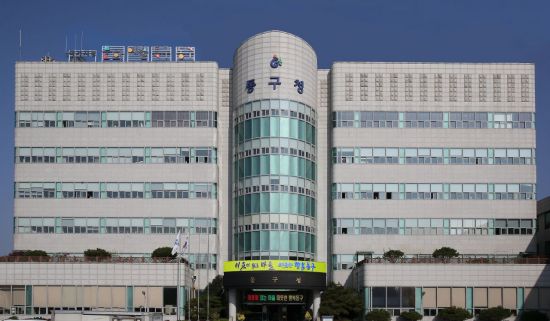
According to Dong-gu on the 25th, the representative humanities policy 'Reading Dong-gu' has gained high recognition and satisfaction among residents in its fourth year.
Recently, a survey was conducted online and offline with 1,066 participants, and an impressive 83.3% of respondents said it helps with emotional cultivation and is a policy that needs to continue.
Beyond selecting the book of the year for local residents to read and discuss together, the program's popularity is attributed to cultural events such as author invitations, reading concerts, and reading contests that help form a shared consensus.
Now in its fifth year, 'Dong-gu Humanities University' covers not only Eastern and Western philosophy and history but also topics related to daily life such as food culture and childcare, earning the love of residents.
It is said that the humanities spirit has permeated residents' lives, creating a mature civic culture and spreading an atmosphere of communication and harmony.
During the COVID-19 pandemic, it also extended support and comfort to many people who felt depression from social isolation and economic difficulties.
Even during times when people hesitated to go out due to infection concerns, the lecture rooms were reportedly more than half full, indicating great popularity.
By the first half of this year, the cumulative number of students reached about 5,100, which corresponds to approximately 9% of the economically active population (58,000 people).
The 'Life Publishing Project,' which compiles the memories and wisdom of the elderly into autobiographies, has also contributed to elevating Dong-gu as a 'people-centered humanities city.'
Though rough, the sincere and unadorned life stories are said to evoke emotions as valuable assets of the era beyond individual memories.
Dong-gu received the grand prize at the 'Korea Good Policy Competition' jointly hosted and organized by the National Association of Mayors, County Governors, and District Heads and MBN last year for this project.
The first-ever Mudeungsan Humanities Festival 'Humanities For:rest' held in June this year was also a huge success. The festival, themed 'Humanities Life in a Forest with Rest,' took place around the Jeungsimsa area of Mudeungsan and attracted a crowd of about 20,000 people.
It enhanced the brand value of Mudeungsan through five themes: 'Mind Walk,' 'Knowledge Walk,' 'Art Walk,' 'Nature Walk,' and 'Humanities City Walk.' In particular, the library established at Jangbuljae on Mudeungsan, nicknamed 'the highest humanities library in the world,' drew attention.
A Dong-gu official emphasized, "We will actively utilize the historical and cultural resources we possess to implement various policies that make humanities, which can feel difficult, easy and fun to access."
© The Asia Business Daily(www.asiae.co.kr). All rights reserved.
![Clutching a Stolen Dior Bag, Saying "I Hate Being Poor but Real"... The Grotesque Con of a "Human Knockoff" [Slate]](https://cwcontent.asiae.co.kr/asiaresize/183/2026021902243444107_1771435474.jpg)
















