Operating a 24/7 Customs Clearance System on Weekdays
As the ongoing economic downturn increases demand for cost-effective products (performance relative to price), the enthusiasm for overseas direct purchases (direct buying) is heating up. Ports such as Incheon Port and Pyeongtaek Port are experiencing a surge in direct purchase volumes, leading to a 'customs clearance crisis.' Domestic and international overseas direct purchase platforms and simple payment companies are also forming partnerships and actively investing to capture direct purchase consumers.
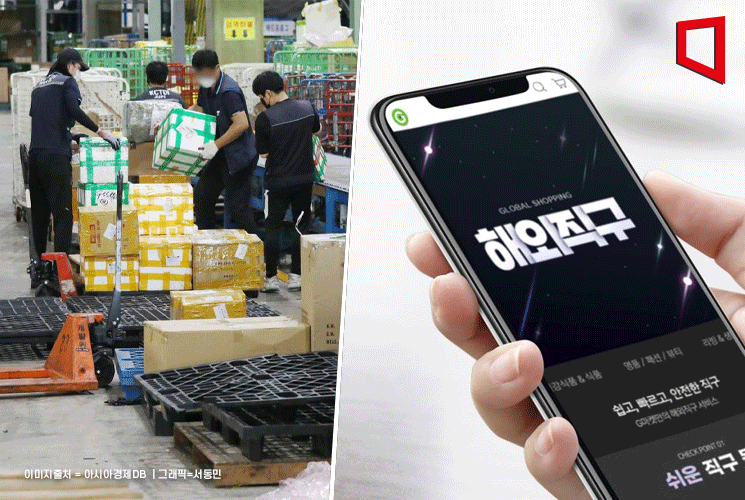
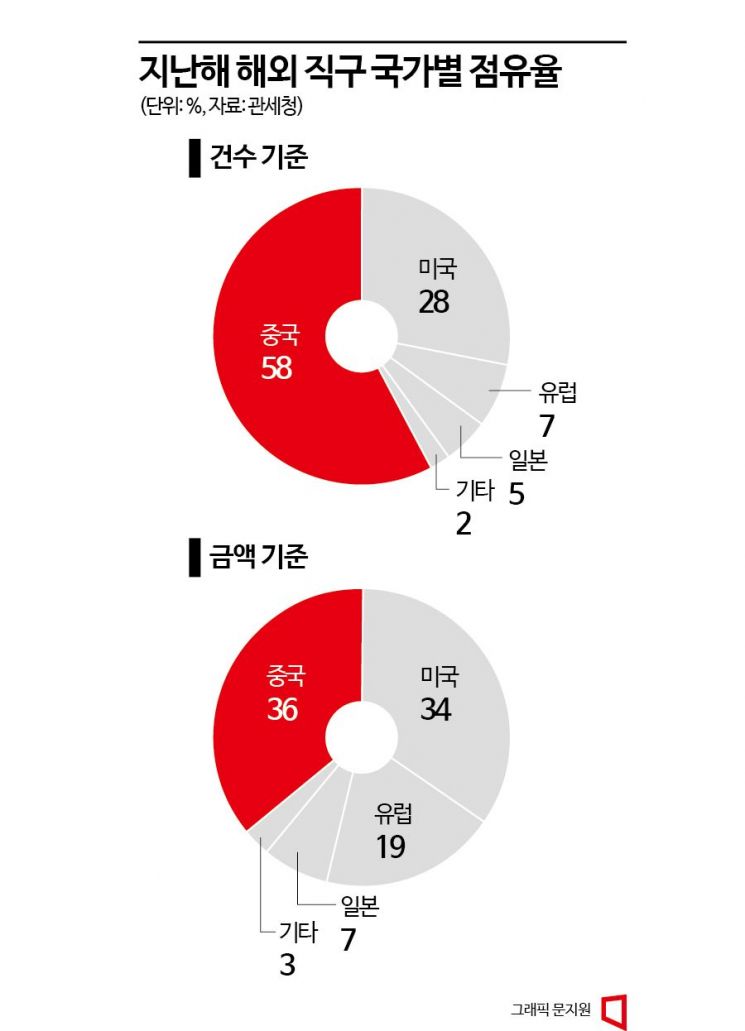
◆ Customs Clearance Crisis Amid Overseas Direct Purchase Boom = According to the '2023 Online Shopping Trends' data released by Statistics Korea on the 21st, the amount spent on online overseas direct purchases in the second quarter of this year reached 1.635 trillion KRW, a 25.6% increase compared to the same period last year. Of the total amount, 48% (777.8 billion KRW) originated from China. This growth is due to the diversification of purchasing agents and delivery platforms, making it easier for consumers to shop overseas directly. By using company-specific discount promotions, consumers can purchase products much cheaper than domestic market prices.
The overseas direct purchase boom has even caused a 'customs clearance crisis.' Logistics industry insiders explain that the customs clearance waiting time, which usually took a day, has extended to about 2 to 3 weeks due to the influx of cargo volume. It is also known that there are currently 700,000 items that have not even been shipped from overseas, including China.
In response, the Korea Customs Service has implemented a 24-hour customs clearance system on weekdays to resolve the 'customs clearance crisis' caused by the surge in overseas direct purchase volumes. Ninety-nine percent of domestic air and sea express cargo enters through three locations: Incheon Port, Pyeongtaek Port in Gyeonggi Province, and Incheon International Airport. The Korea Customs Service has expanded customs clearance hours at Incheon Port and Pyeongtaek Port from weekdays 9 a.m. to 6 p.m. (with overtime and Saturday clearance support as needed) to 24 hours on weekdays and 9 a.m. to 6 p.m. on Saturdays. Incheon International Airport is also currently operating a continuous customs clearance system.
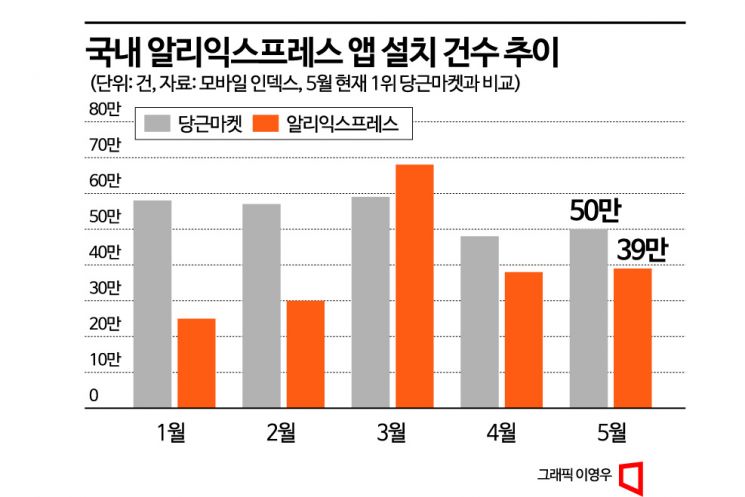
◆ Domestic Shopping and Simple Payment Markets Also Benefit = When naming the biggest beneficiary of the domestic direct purchase boom, the overseas direct purchase platform 'AliExpress' stands out. In April, AliExpress overtook Danggeun Market, which had held the number one spot in the shopping app category for 35 months, and has maintained its leading position since.
AliExpress's growth stems from the high market share of China-origin overseas direct purchases. According to the '2022 Overseas Direct Purchase Status' announced by the Korea Customs Service in February, AliExpress ranked first with 48.3% of transactions in 2020, increasing to 54.6% in 2021 and 57.7% last year, showing annual growth. Riding this momentum, AliExpress decided to invest 100 billion KRW in the Korean market earlier this year. It is conducting large-scale marketing and promotional events emphasizing cost-effectiveness and fast delivery services.
Recently, due to the customs clearance crisis in Korea, AliExpress decided to deploy six dedicated high-speed cargo ships between Korea and China. Each ship has an average transport capacity of about 200 FEU (1 FEU is a 12-meter container). It takes 13 hours from Weihai Port and Yantai Port in Shandong Province, China, to Pyeongtaek Port. Since the average customs clearance time at Pyeongtaek Port is 1 to 2 days, the plan is to enable delivery within three days at the earliest.
Domestic logistics and payment industries are also expected to benefit. In particular, CJ Logistics is responsible for AliExpress's deliveries in Korea. Currently, it delivers over one million boxes of AliExpress products per month. CJ Logistics plans to provide logistics services through strategic collaboration with AliExpress to ensure products departing from China can be delivered within 3 to 5 days.
Among domestic shopping platforms, Naver is benefiting. Naver has had a relationship with AliExpress since AliExpress first started its business in Korea. Even now, AliExpress products can be purchased through Naver search. In the simple payment market, Kakao Pay is noteworthy. Alipay is the second-largest shareholder of Kakao Pay, and Alipay's parent company is Alibaba Group, which operates AliExpress.
A Kakao Pay representative said, "Since launching the simple payment service in July 2020, we have been conducting various collaborations with AliExpress," adding, "We are planning and promoting product categories that meet customer demand and improving services."
© The Asia Business Daily(www.asiae.co.kr). All rights reserved.
![Clutching a Stolen Dior Bag, Saying "I Hate Being Poor but Real"... The Grotesque Con of a "Human Knockoff" [Slate]](https://cwcontent.asiae.co.kr/asiaresize/183/2026021902243444107_1771435474.jpg)

















