Court: "Lower court lacked sufficient examination of the circumstances regarding the land purchase stated in the business plan"
The Supreme Court has ruled that if false or misleading information was promoted during the process of signing a regional housing cooperative membership contract, it could be considered a fraudulent act.
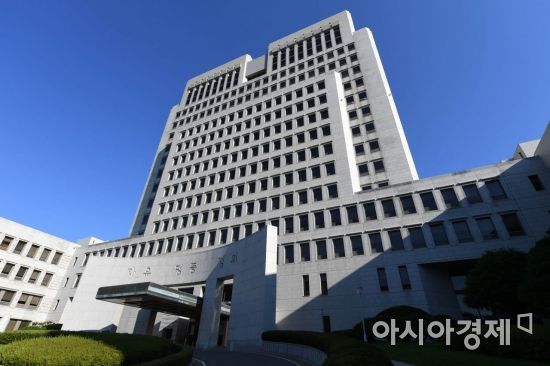
The Supreme Court's Second Division (Presiding Justice Min Yu-sook) announced on the 15th that it overturned the lower court's ruling, which dismissed Mr. A's claim for the return of unjust enrichment against a regional housing cooperative establishment promotion committee (hereinafter referred to as the Promotion Committee) in Seo-gu, Incheon, and remanded the case to the Seoul Southern District Court.
In December 2018, Mr. A signed a cooperative membership contract with the Promotion Committee and paid 41 million KRW as cooperative contribution and service agency fees. However, upon learning that the land usage rights ratio disclosed by the Promotion Committee during the contract process was not actually finalized, he filed a lawsuit in June 2021 demanding a refund.
The Promotion Committee argued in court that they only explained that the land area ratio to be secured in the future would be at least 85%, and denied having deceived Mr. A.
The first trial ruled in favor of Mr. A, but the second trial reversed the decision, stating that it was difficult to see that the Promotion Committee definitively explained the land acquisition rate and that the subject of the false advertisement was unknown. The second trial court judged, "It is difficult to find that the Promotion Committee deceived Mr. A regarding the securing of the project site or that Mr. A was mistaken about important parts of the contract."
However, the Supreme Court held that additional examination is necessary regarding whether follow-up actions were taken on the advertised content, the circumstances under which the advertisement was created and posted, and the details of the land acquisition recorded in the business plan.
The court stated, "The lower court should have examined whether the advertisements submitted by Mr. A were posted without the Promotion Committee's consent, as claimed by the Promotion Committee, and if so, what measures were taken regarding those advertisements. It should also have investigated the circumstances under which the Promotion Committee altered the land acquisition area in the business plan consent form, originally recorded as land for multi-family housing, to the land acquisition area."
© The Asia Business Daily(www.asiae.co.kr). All rights reserved.
![Clutching a Stolen Dior Bag, Saying "I Hate Being Poor but Real"... The Grotesque Con of a "Human Knockoff" [Slate]](https://cwcontent.asiae.co.kr/asiaresize/183/2026021902243444107_1771435474.jpg)















