Professor Jin-Kuk Kim's KAIST Research Team
Proposes Treatment Strategy Guidelines
Paper Published in International Journal Nature
Domestic researchers have presented guidelines for the development of personalized treatments for patients with rare diseases.
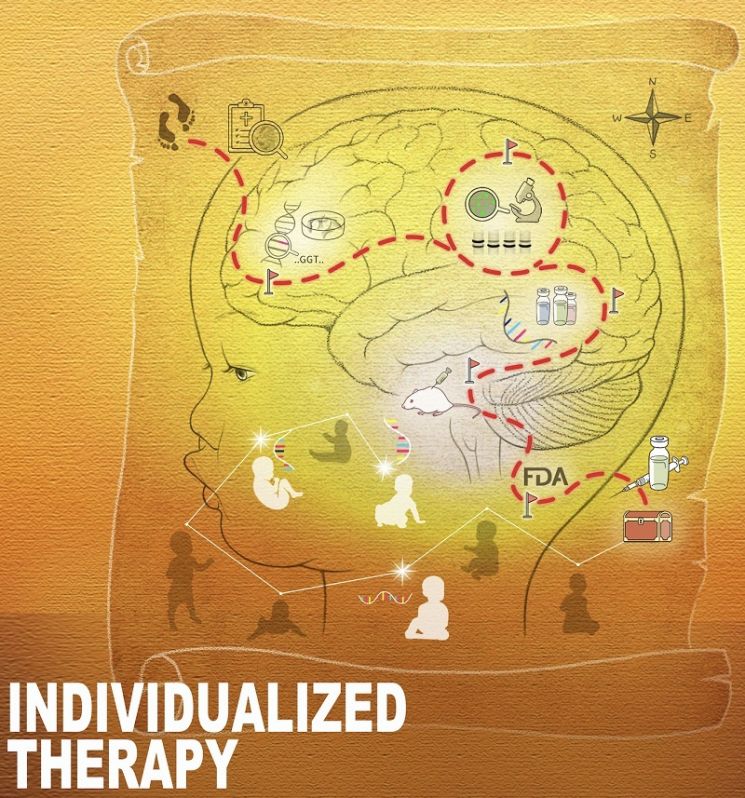
KAIST announced on the 13th that a research team led by Professor Jin-Kuk Kim from the Graduate School of Medical Science and Engineering presented guidelines for personalized treatment of rare disease patients in the international journal Nature.
Among rare diseases, those that damage non-regenerative tissues such as the brain or eyes are irreversible once symptoms begin, making it crucial to diagnose and start treatment before symptoms appear.
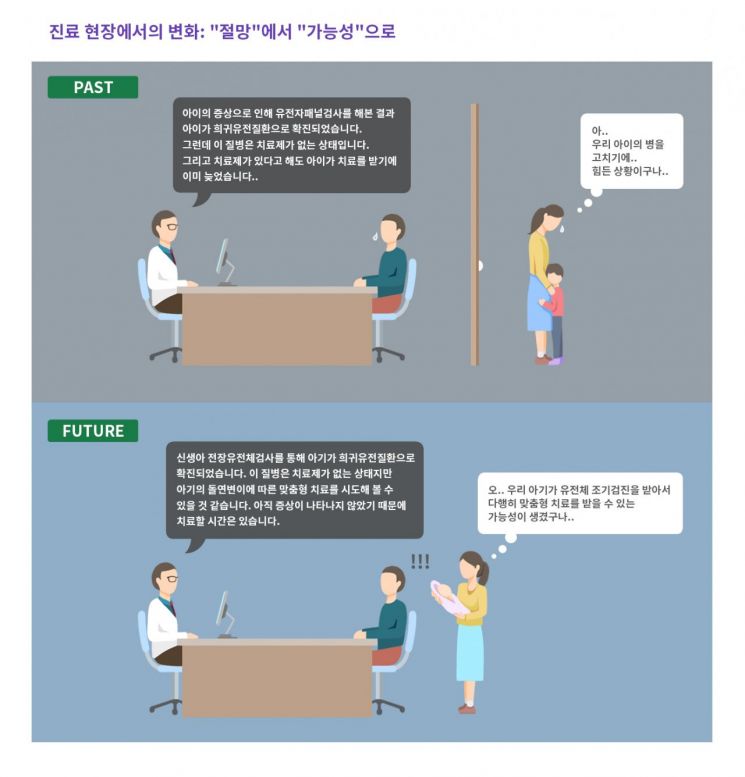
The research team discovered that personalized treatment development is possible for about 10% of these patients. They also proposed a method to quickly and systematically screen this 10% of patients using genome-based diagnostics even before symptoms start. Until now, even when diagnosed, most cases lacked treatments, leading patients and families to be reluctant about diagnosis. This study confirmed that personalized treatment can be possible depending on mutations even within the same disease. By actively participating in genome-based diagnostics, it is expected that patients can be diagnosed early and treatment can be considered.
In the future, as the cost of genome-based diagnostics significantly decreases and such diagnostics begin to be applied not only to patients but also to all newborns, it is expected that cases of diagnosis before symptom onset and initiation of personalized treatment will increase. In fact, the research team reported a case in this study where a patient diagnosed through genome analysis at the newborn stage underwent personalized treatment development and entered a personalized clinical trial.
Previously, Professor Kim developed the world’s first personalized treatment called milasen for a rare disease patient in 2019 using an RNA-based drug development platform while working as a postdoctoral researcher at Harvard Medical School in the U.S. This study is a follow-up conducted after Professor Kim joined KAIST as an assistant professor three years ago.
Through collaboration with a U.S. patient foundation for the rare disease ataxia-telangiectasia (A-T), Professor Kim demonstrated that personalized treatment is possible for about 10% of a large patient cohort through genome analysis. He proposed and validated a system to effectively identify such patients through genome testing. Furthermore, among the patients identified as candidates for personalized treatment, he confirmed the mutation most likely to succeed in treatment for one patient. After developing the personalized treatment atipeksen, he reported a case where a personalized clinical trial is underway for that patient.
The research results were published online in the international journal Nature on the same day.
© The Asia Business Daily(www.asiae.co.kr). All rights reserved.
![Clutching a Stolen Dior Bag, Saying "I Hate Being Poor but Real"... The Grotesque Con of a "Human Knockoff" [Slate]](https://cwcontent.asiae.co.kr/asiaresize/183/2026021902243444107_1771435474.jpg)
















