Amid recurring 'medical crises,' voices are growing within civil society calling for the expansion of the list of 'over-the-counter emergency medicines (safety OTC drugs)' sold at convenience stores. This is because it can improve access to medicines during weekends and nights when pharmacies are closed without additional financial burden, and it can serve as an alternative in areas lacking medical infrastructure. However, strong opposition from the medical community, including the Korean Pharmaceutical Association, and concerns about misuse due to the purchase of drugs without separate medication guidance are expected to spark intense debate.
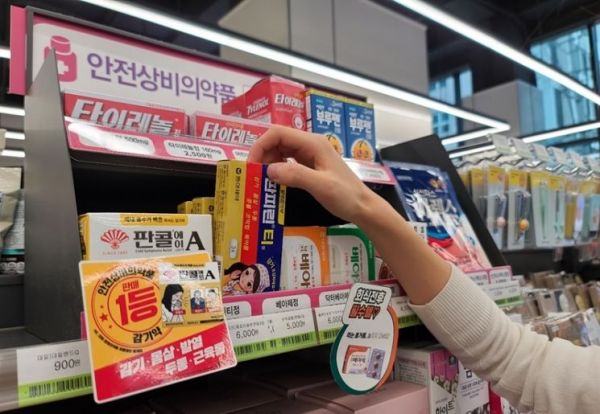
According to the health and medical community on the 7th, the 'Safety OTC Drug Citizens Network,' which includes health organizations, consumer groups, academia, and civic groups, issued a statement the day before officially requesting the Ministry of Health and Welfare to resume the designation review committee to expand the list of safety OTC drugs available at convenience stores. They argue that the safety OTC drugs, which have been limited to 13 items for over 10 years since the system was introduced in 2012, should be expanded to 20 items as stipulated in the Pharmaceutical Affairs Act.
Currently, the safety OTC drugs available for purchase at convenience stores include ▲antipyretic analgesics (Tylenol 160mg and 500mg) ▲children's antipyretic analgesics (Children's Brufen syrup, Children's Tylenol tablets, Children's Tylenol suspension) ▲cold remedies (Pancol A, Panpyrin) ▲patches (Shinshin Patch, Jeil Cool Patch) ▲digestive aids (Bea-Ze 2 types, Festal 2 types), totaling 13 items. The Ministry of Health and Welfare held several designation review committee meetings between 2017 and 2018 to discuss item readjustment but ultimately failed to reach a conclusion. As a result, no additional safety OTC drugs have been added since the initial designation.
Civil society argues that expanding safety OTC drugs can significantly improve access to medicines. In a survey conducted in March this year by the Consumer Public Interest Network targeting 1,000 citizens, 96.8% responded that they used convenience store safety OTC drugs during holidays or late-night hours, and 62.1% expressed the opinion that the number of safety OTC drugs is insufficient and should be expanded. Especially, demand for convenience store safety OTC drugs was higher in regions outside the metropolitan area where medical infrastructure is lacking. Kim Yeon-hwa, the operating committee chair of the Safety OTC Drug Citizens Network, said, "We are well aware of the inconvenience faced by vulnerable groups such as the elderly, disabled, and housewives raising young children who find it difficult to purchase safety OTC drugs in emergencies," adding, "The convenience store safety OTC drug system is currently the only system that complements pharmacies, yet it has been neglected in policy blind spots for 10 years. The Ministry of Health and Welfare should no longer ignore this system."
 The Citizen Network for Over-the-Counter Drugs is requesting the Ministry of Health and Welfare to expand the list of over-the-counter drugs.
 [Photo by Citizen Network for Over-the-Counter Drugs]
The core issue in expanding safety OTC drugs is drug safety. The medical community, including the Korean Pharmaceutical Association, opposes the expansion of safety OTC drugs on the grounds of safety. The legalization of 'public late-night pharmacies,' where pharmacists provide medication guidance allowing safer purchase of drugs during late-night hours, has somewhat filled the gap, and if patients who should visit emergency rooms use safety OTC drugs, it could lead to bigger problems. A consumer group's investigation showing that over 95% of safety OTC drug sellers violate sales compliance rules such as selling more than one item at a time supports this view. The expansion of safety OTC drugs is expected to lead to a clash between convenience and safety.
On the other hand, proponents of expanding safety OTC drugs argue that the system can be sufficiently supplemented institutionally. The Safety OTC Drug Citizens Network stated, "Since these items have already been approved for self-medication by the public based on the strict review process of the Ministry of Food and Drug Safety and the Ministry of Health and Welfare, if proactive administration and management systems are supported, this is a system with clear benefits," emphasizing, "Delaying the expansion of items under the pretext of concerns about misuse and safety denies the very purpose of a system introduced 10 years ago and disregards the public's benefits and demands."
© The Asia Business Daily(www.asiae.co.kr). All rights reserved.
![Clutching a Stolen Dior Bag, Saying "I Hate Being Poor but Real"... The Grotesque Con of a "Human Knockoff" [Slate]](https://cwcontent.asiae.co.kr/asiaresize/183/2026021902243444107_1771435474.jpg)
















