Financial Supervisory Service Improves Auto Insurance Surcharge System
Assigns Separate Scores for High-Value At-Fault Vehicles to Increase Premiums
Applies When Compensation to Victim Vehicle Exceeds Three Times or 2 Million Won
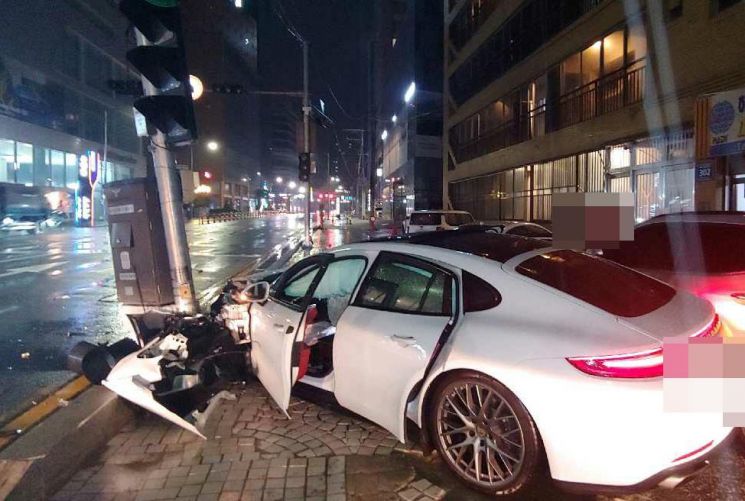
The financial authorities are reforming the automobile insurance surcharge system to prevent the high repair costs of expensive at-fault vehicles in traffic accidents from being passed on to low-value damaged vehicles. Even if the compensation amount is small, if the fault is significant, the insurance surcharge will be applied only to the high-value vehicle.
On the 7th, the Financial Supervisory Service announced that it will change the automobile insurance surcharge system in this way. The authorities took action as damages increased with the rise in expensive vehicles. Expensive vehicles refer to those with repair costs per case exceeding 120% of the average and whose average new car price exceeds 80 million KRW for luxury and large vehicle models. According to the Financial Supervisory Service, traffic accidents involving expensive vehicles increased from about 3,600 cases in 2018 to about 5,000 cases last year, and the average repair cost reached 4.1 million KRW, which is 3.2 times the 1.3 million KRW for non-expensive vehicles.
The current automobile insurance surcharge system (property damage) is based on the amount of compensation paid to the other party. Because of this, the damaged vehicle bearing the high repair costs of the expensive at-fault vehicle is surcharged, while the expensive at-fault vehicle itself is not surcharged, which has been pointed out as a problem.
For example, if the expensive vehicle is 90% at fault and the damage amount to the other party’s vehicle is 2 million KRW, the compensation amount for the at-fault vehicle is only 1.8 million KRW. On the other hand, if the damaged vehicle is 10% at fault but the at-fault vehicle’s damage amount is 100 million KRW, it must compensate 10 million KRW. Assuming the property damage surcharge threshold is 2 million KRW, only the damaged vehicle would be surcharged in this case.
From now on, if a mutual fault accident occurs, the insurance premium of the expensive at-fault vehicle will be surcharged, and the surcharge for the low-value damaged vehicle will be deferred. For the expensive at-fault vehicle, an additional separate point (1 point) will be added to the existing accident points to surcharge the insurance premium, while for the low-value damaged vehicle, only a separate point (0.5 points) will be applied instead of the existing accident points, deferring the surcharge. This applies only when the compensation amount for the low-value damaged vehicle exceeds three times that of the expensive at-fault vehicle and the compensation amount for the low-value damaged vehicle exceeds 2 million KRW. The revised criteria will be applied to automobile accidents occurring from the 1st of next month.
A Financial Supervisory Service official explained, "Improving the surcharge system will enhance fairness in insurance premium burdens between at-fault and damaged vehicles and increase public trust in the automobile insurance system. The newly established ‘property damage accident separate point’ acts as a penalty for drivers of expensive at-fault vehicles causing high repair costs, so together with the currently applied discount and surcharge system, it will contribute to preventing automobile accidents and reducing related damages."
© The Asia Business Daily(www.asiae.co.kr). All rights reserved.
![Clutching a Stolen Dior Bag, Saying "I Hate Being Poor but Real"... The Grotesque Con of a "Human Knockoff" [Slate]](https://cwcontent.asiae.co.kr/asiaresize/183/2026021902243444107_1771435474.jpg)















