Hana Financial Research Institute Report 'Revived Popularity of Housing Pension, Is It Sustainable?'
14,600 New Housing Pension Subscriptions Last Year, 35% Increase from Previous Year
Previously Centered on Seniors Aged 70 and Above, Recent Increase in Subscribers Under 65
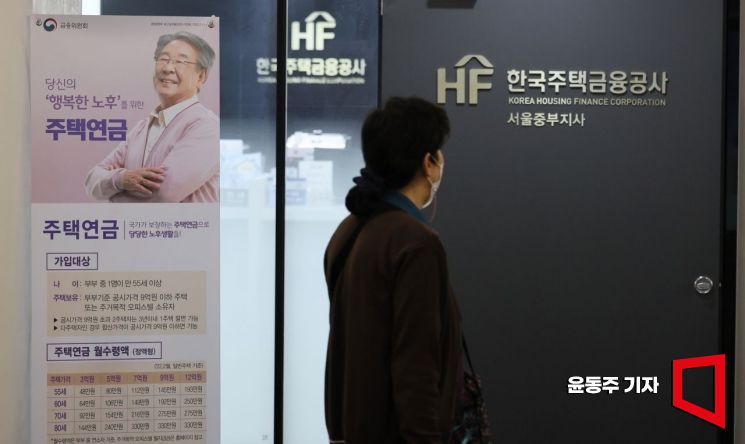
(House Pension subscriber Lee Bok-nam (66))
The number of elderly people joining the house pension, viewing their current home as a means of preparing for old age, is explosively increasing. The age of house pension subscribers is also trending younger.
The house pension is a system where elderly homeowners provide their house as collateral to a financial institution and receive a fixed monthly pension while living in the house until their death. When the borrower passes away, the financial institution sells the house to recover the loan principal and interest.
Real estate prices fall, subscription conditions ease, leading to a surge in sign-ups
According to the report "Revived Popularity of House Pension, Is It Sustainable?" released on the 5th by Hana Financial Management Research Institute, the number of new house pension subscriptions last year was 14,600, a 35% increase compared to 10,805 in 2021. The cumulative number of subscriptions rose from 71,791 to 82,941.
Senior Research Fellow Jung Yoon-young said, "Unlike in the past when mainly those over 70 subscribed, recently the number of subscribers under 65 has increased, showing a trend of lowering the average subscription age." In 2008, the average subscription age was 74.3 years, which dropped to 72.7 years in 2010 and 72 years this year. Subscribers under 65 accounted for 17% of all subscribers (as of 2021), and if this trend continues, their proportion is expected to increase over time.
The rapid increase in house pension subscriptions is influenced by government policy changes and the decline in real estate prices. Last year, as real estate prices fell and concerns about further price drops grew, demand for house pension subscriptions surged.
The Financial Services Commission also eased the subscription conditions for the house pension. After lowering the subscription age from 60 to 55 in 2020, a bill to expand the house pension target from a publicly announced price of 900 million KRW to 1.2 billion KRW is expected to pass the National Assembly soon. This measure aims to enable more elderly people to utilize the house pension.

Average monthly house pension payment: 1.16 million KRW
The demand for house pensions is expected to expand further. This is due to projections that the population aged 65 and over in Korea will increase 2.5 times within 30 years, coupled with a high elderly poverty rate.
According to Statistics Korea's "Elderly Population Trend Forecast," those aged 65 and over accounted for 15.7% of the total population in 2020 but are expected to rise to 46.4% by 2070. The poverty rate among those aged 75 and over was 52% in 2020, significantly higher than major OECD countries. Canada recorded 13.9%, the UK 16.0%, and the US 26.2%.
For couples in their 70s, the appropriate monthly living cost for old age is 2,513,000 KRW, but the average real household income for households in their 70s is 1,488,000 KRW, resulting in a gap of about 1,025,000 KRW (2021). Considering the average monthly house pension payment is 1,160,000 KRW (as of the end of February this year), the house pension can help cover the shortfall.
Senior Research Fellow Jung predicted, "Considering that the asset composition of households headed by those aged 65 and over is mostly concentrated in real estate assets rather than financial assets, and that most elderly people own homes, the demand for securing living expenses using the residence will increase."
© The Asia Business Daily(www.asiae.co.kr). All rights reserved.
![Clutching a Stolen Dior Bag, Saying "I Hate Being Poor but Real"... The Grotesque Con of a "Human Knockoff" [Slate]](https://cwcontent.asiae.co.kr/asiaresize/183/2026021902243444107_1771435474.jpg)
















