Secured 12.7% Stake for General Investment Purpose... Current Yield 12.7%
Utilizing Short-Term Sharp Drop as a Buying Opportunity... Possible Dividend Increase
Expecting Revaluation of Daol Investment & Securities Due to Eased Liquidity Concerns
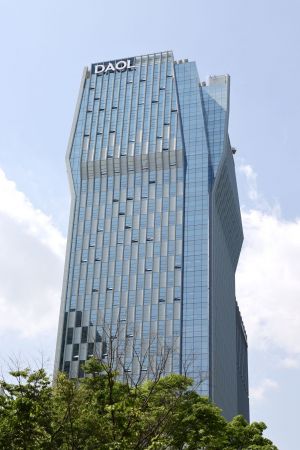
Super individual investor Kim Kisoo has quickly secured more than 10% of the shares in Daol Investment & Securities, which was caught up in the crash triggered by Soci?t? G?n?rale (SG) Securities, becoming the second-largest shareholder. The scale of the investment is too large to be seen merely as taking advantage of a short-term buying opportunity after a sharp drop. With an investment of 31.5 billion KRW in a single stock of Daol Investment & Securities, it seems unlikely that the investment capital will be recovered in the short term.
According to the Financial Supervisory Service's electronic disclosure system on the 26th, Kim Kisoo and his special related parties hold 14.34% (8,736,629 shares) of Daol Investment & Securities. Kim holds 7.07% (4,309,844 shares), while Choi Soonja and Sunsu Asset hold 6.40% (3,896,754 shares) and 0.87% (530,031 shares), respectively. Two weeks after disclosing that they secured 11.5% on the 9th, they purchased an additional 2.84% of shares.
Kim and Choi spent 15.2 billion KRW and 14.1 billion KRW, respectively, to acquire the shares. They explained that the funds were raised through business income and financial income. Sunsu Asset borrowed all 2.2 billion KRW of acquisition funds from Kim. The average purchase price per share was about 3,610 KRW, and the current estimated return based on the current stock price is 12.7%.
The largest shareholder of Daol Investment & Securities is Lee Byungchul, chairman of Daol Financial Group, holding 24.94% (15,117,755 shares). Including shares held by special related parties, the total is 25.37%. The difference in shareholding ratio with Kim’s side is 11.03 percentage points.
Acquisition of Shares for General Investment Purpose... Possible Demand for Dividend Increase
The financial investment industry is curious about why Kim secured more than 10% of the shares in a short period. Kim and others stated through the 5% shareholding disclosure that the shares were acquired for general investment purposes. They added that they could support or oppose proposals made by the company or other shareholders, including requests for dividend increases.
In an interview with a media outlet, Kim also said, "A large-scale forced sale occurred due to the stock price crash triggered by SG Securities, and I judged that I could acquire undervalued stocks in large quantities at attractive prices, so I proceeded with the purchase." Previously, the stock price of Daol Investment & Securities fell to the limit down on the 24th of last month. The decline continued, and within four days, it plunged 41.7%. The stock price, which was above 5,000 KRW, dropped to around 3,000 KRW.
A financial investment industry official said, "Since the acquisition purpose was stated as general investment, it is expected that efforts will be made to maximize investment returns by demanding measures such as strengthening dividends." A Daol Investment & Securities official said, "We have not yet been contacted by Kim," adding, "We do not yet know the reason for the concentrated purchase of shares in a short period."
According to the Capital Markets Act, investors who acquire 5% or more of a listed company's shares must disclose their shareholding and the purpose of holding the shares. Since the possibility of management rights disputes is important information for investors, the purpose is to help investors make rational decisions. The purposes of investment holding are divided into three categories: ▲simple investment ▲general investment ▲management participation. Both simple and general investments are considered not to intend to influence management rights. Simple investment means investing for exercising voting rights and realizing capital gains, while general investment is a slightly more active type than simple investment, allowing proposals such as increasing dividends. Management participation means having the intention to appoint or dismiss company executives and influence the company's governance.
The Financial Services Commission explains that even if there is no specific plan to influence management rights at the time of shareholding reporting, if there is an intention to participate in management, reporting obligations arise. There is no need to specify detailed plans in the holding purpose, but if a plan is established, it must be disclosed as a 'corrected disclosure' and recorded in the holding purpose. The Capital Markets Act stipulates that those who falsely report important matters or omit important information cannot exercise voting rights for the portion exceeding 5% of the total issued shares related to the violation. The period of voting rights restriction is determined by the Financial Services Commission within six months.
There have been cases where voting rights were restricted during past management rights disputes. During the 2020 Hanjin Group management rights dispute, Bando Construction was unable to exercise voting rights for 3.2% out of its 8.2% shareholding. The court judged that Bando Construction had the intention to participate in management even before disclosing the change in shareholding purpose to 'management participation.' Earlier, when acquiring 5.06% of Hanjin KAL shares in October last year, Bando Construction stated the holding purpose as simple investment. After securing 8.2% of shares as of the shareholder registry closure date (December 26), it changed the holding purpose to management participation on January 10 of the following year.
After the stock price crash triggered by SG Securities, regulatory authorities have emphasized that they will severely punish artificial price manipulation. Even if the stock price is raised by inducing a management rights dispute atmosphere, if there is a legal violation, recovering the investment capital will not be easy. Therefore, it is unlikely that the investment purpose will be changed and actions for management participation will be taken in the short term.
Expecting Capital Gains? ... Could Also Raise Concerns About Potential Selling Pressure
If there is no intention to participate in management, it can be seen as an investment to buy low during the sharp price drop and realize capital gains when the stock price rises. Daol Investment & Securities was shaken earlier this year due to concerns about real estate project financing (PF) defaults. By selling Daol Investment and securing 212.5 billion KRW, some market concerns were alleviated. The company is also improving its structure through restructuring.
Meanwhile, the stock market has continued a stronger-than-expected trend this year compared to last year. If the discount factors for Daol Investment & Securities disappear, a revaluation of corporate value is also possible. Daol Investment & Securities recorded operating revenue of 545.2 billion KRW and an operating loss of 11.5 billion KRW in the first quarter of this year. Operating revenue increased by 33.8%, but it turned to a loss. The slump in the real estate PF market weighed on the performance. As both stock price and performance hit bottom, it may have been judged as a buying opportunity at a low price.
A financial investment industry official analyzed, "The scale is large to be considered an investment for capital gains," adding, "Until Kim’s investment purpose is clearly identified, it could act as a concern for overhang (potential selling pressure)."
© The Asia Business Daily(www.asiae.co.kr). All rights reserved.
![Clutching a Stolen Dior Bag, Saying "I Hate Being Poor but Real"... The Grotesque Con of a "Human Knockoff" [Slate]](https://cwcontent.asiae.co.kr/asiaresize/183/2026021902243444107_1771435474.jpg)















