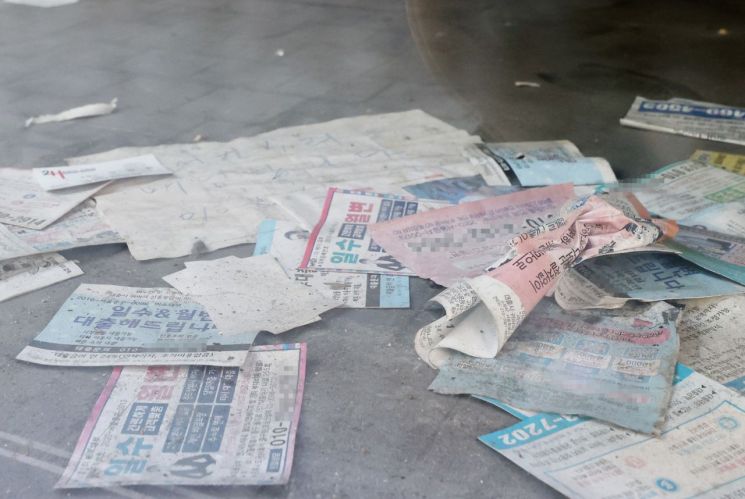
Amid a trend of rising delinquency rates across the financial sector, including commercial banks and savings banks, the delinquency rates of loan companies also surged, reaching 10%.
According to data submitted by the Korea Credit Finance Association to Oh Ki-hyung, a member of the National Assembly's Political Affairs Committee from the Democratic Party of Korea, as of February, the overall delinquency rate (delinquency over 30 days) of 25 major loan companies was 10%. This represents an increase of 3.5 percentage points compared to 6.5% in February last year. It also rose by 1.3 percentage points compared to the previous month. The association had previously calculated delinquency rates based on 'delinquency over 1 day' but recently changed the standard to 'over 30 days' to align with other financial sectors.
In particular, the delinquency rate for mortgage loans handled by loan companies showed a marked increase. The mortgage loan delinquency rate, which was 3% in January last year, rose to 9.6% as of last February. The delinquency rate for secured loans handled by the loan industry typically hovered around 5-6%, but asset quality sharply deteriorated from last year, and the delinquency rate has recently increased more steeply. Loans secured by collateral from loan companies are generally subordinate mortgage loans given to borrowers who already have bank mortgage loans. Therefore, when the value of the collateral declines, these loans face a greater risk of default than banks. It is also difficult to auction off the collateral because senior creditors such as banks take precedence.
The delinquency rate for unsecured loans was 9.8%, up 1.3 percentage points from the previous month and 2.6 percentage points from last year. A loan industry official said, "Due to the nature of the industry’s loans, which mainly target low-credit borrowers, the delinquency rate inevitably rises as the economic situation worsens." In fact, delinquency rates are increasing across all financial sectors, including banks, savings banks, and mutual finance institutions. According to the Financial Supervisory Service, the delinquency rate for won-denominated loans at domestic banks was 0.36% in February, the highest in two years and six months since August 2020 (0.38%). The delinquency rate for savings banks, which are frequently used by low-income individuals, also rose by 1.7 percentage points to 5.1% in the first quarter compared to the end of last year.
Unlike banks, whose soundness is managed by financial authorities, loan companies manage their own risk autonomously. However, if the soundness of loan companies deteriorates, the quick cash channels for low-income people could disappear, so this issue cannot be ignored. The increase in loan companies’ delinquency rates has also led to a rise in illegal debt collection damages. According to the Financial Supervisory Service, 271 complaints related to illegal debt collection were received in January and February this year, doubling compared to the previous year. In response, the Financial Supervisory Service held a compliance workshop for loan company protection supervisors yesterday. A Financial Supervisory Service official explained, "Although we do not impose soundness regulations, we monitor delinquency rates of loan companies and oversee business practices from the perspective of user protection."
© The Asia Business Daily(www.asiae.co.kr). All rights reserved.
![Clutching a Stolen Dior Bag, Saying "I Hate Being Poor but Real"... The Grotesque Con of a "Human Knockoff" [Slate]](https://cwcontent.asiae.co.kr/asiaresize/183/2026021902243444107_1771435474.jpg)















