Dutch Semiconductor Equipment Company at the Center of US-China Conflict
Emphasizes Not Only Technology Development but Also 'Supply Chain Establishment'
As China accelerates the development of its own advanced semiconductor equipment technology in response to pressure from the United States, the Netherlands-based ASML, known as the 'super subordinate' in the semiconductor industry, expressed confidence that technology replication would not be easy. In a situation where the export route of extreme ultraviolet (EUV) lithography equipment, essential for advanced semiconductor production, to China is blocked, ASML evaluated that not only developing the technology but also building the supply chain to produce it is inherently difficult.
Bloomberg reported on the 26th (local time) that ASML is at the center of the US-China conflict, based on the opinions of ASML's top executives.
ASML is the only company in the world that produces EUV equipment capable of etching semiconductor circuits more finely. The US announced regulations last October to block exports of semiconductor equipment to China, and in March, the Netherlands joined the US export restrictions, including ASML among the targeted companies. ASML had already been unable to export EUV equipment to China due to measures taken during the Donald Trump administration, and now even exports of older deep ultraviolet (DUV) lithography equipment to China have been halted.
China has found it extremely difficult to secure manufacturing equipment for semiconductor production due to US measures. China accounted for 15% of ASML's sales last year, making it the third-largest export market after Taiwan and South Korea. As importing EUV equipment became difficult, China focused on mature process semiconductor production by importing large quantities of DUV equipment from ASML. At the same time, China has poured billions of dollars in subsidies into its semiconductor industry internally and accelerated equipment technology development.
ASML stated that the revenue impact from US restrictions on China is not significant. However, CEO Peter Wennink believes that these measures will accelerate China's development of its own equipment, saying, "It will take time, but they will eventually make it." He assessed that the more the US pressures China, the more the Chinese government will support its domestic semiconductor industry with funds and efforts.
However, ASML executives think it is difficult to catch up with ASML's technological capabilities quickly. ASML CFO Roger Dassen said, "Even if someone catches up to where we are now, I believe that within 10 years we will be operating in a completely different paradigm." He added, "That is the best way to maintain our position," emphasizing, "They may catch up to where we are now, but by then we will have moved elsewhere."
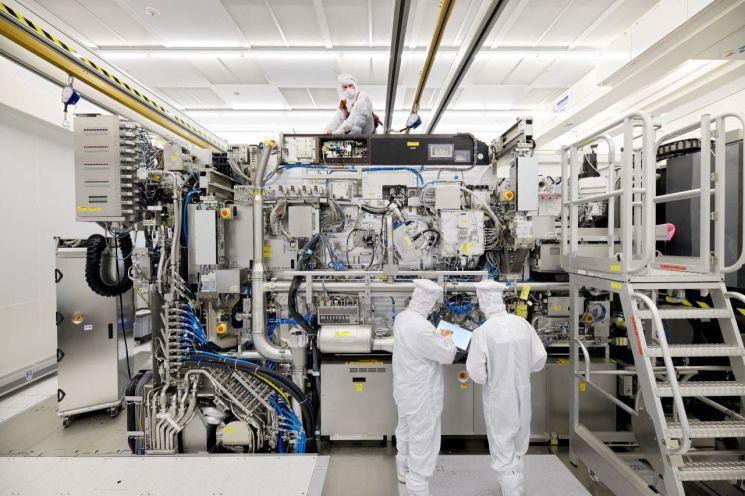
CFO Dassen mentioned ongoing legal disputes related to China's attempts to steal ASML's technology, pointing out that such actions will not be very helpful. He referred to ASML's ecosystem, which includes over 5,000 suppliers ranging from software to tin and tungsten, and strategic partnerships with specialized companies such as the German optical specialist Carl Zeiss.
He said, "Much of ASML's technology is not just written on blueprints. It is in people's minds," adding, "You need the entire supply chain surrounding the blueprints." He further stated, "This cannot be discussed over just a few months or years," and added, "To create something that can replace it, you need to have conversations for at least 10 years or more."
ASML's senior executives show such confidence because manufacturing semiconductor equipment, including EUV, is extremely difficult. Founded in 1984, ASML has become the most valuable technology company in Europe with a market capitalization of $250 billion. After securing funding for research through its IPO in 1995, ASML first developed DUV equipment used in mature processes. In the early 2000s, ASML increased its market share to 50% and later developed EUV equipment, establishing its current position.
According to the report, ASML developed EUV technology for over 20 years as part of a US government-led EUV consortium. During this process, it received investments from Intel, Taiwan's TSMC, and Samsung Electronics. These three companies are currently major buyers of EUV equipment. Bloomberg noted that the investments from these companies were a rare example of cooperation among competitors in the market. ASML also signed contracts with hundreds of suppliers worldwide at that time. ASML has long built an ecosystem for developing semiconductor equipment technology and producing it.
EUV equipment is made up of more than 100,000 parts weighing about 180 tons. This includes 3,000 cables, over 40,000 screws, and more than 2 kilometers of hoses. Moving the equipment requires three to four Boeing 747 airplanes. Despite costing hundreds of billions of Korean won, it is equipment that allows semiconductor circuits to be etched more finely, and major manufacturers are rushing to adopt it.
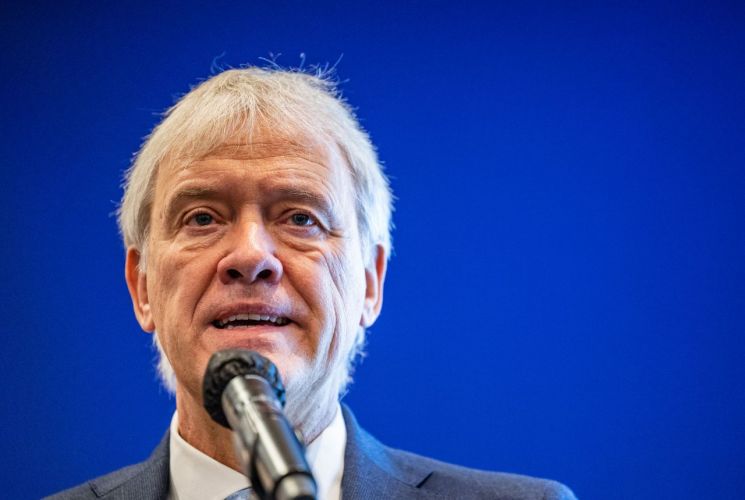
Martin van den Brink, ASML's Chief Technology Officer (CTO), said, "You cannot do everything alone," adding, "You have to do what you do well and work with other entities that do things better than you."
By the end of last year, ASML had produced 180 EUV machines. It plans to ship 60 EUV machines this year and aims to double its production capacity of DUV equipment to 600 units by 2026.
Bloomberg reported, "How accessible ASML's cutting-edge equipment is determines success in the semiconductor industry," adding, "Intel, which was late in adopting EUV equipment, lost its position as the world's largest semiconductor company last year after holding it for 30 years, and TSMC, which accelerated new technology adoption and became ASML's largest customer, is expected to take the top spot in the semiconductor industry this year," reflecting the market sentiment.
© The Asia Business Daily(www.asiae.co.kr). All rights reserved.
![Clutching a Stolen Dior Bag, Saying "I Hate Being Poor but Real"... The Grotesque Con of a "Human Knockoff" [Slate]](https://cwcontent.asiae.co.kr/asiaresize/183/2026021902243444107_1771435474.jpg)

















