Fair Trade Commission imposes 1.03 trillion won fine for unfair 'Modem Chipset' trade coercion
Supreme Court: "Modem Chipset market raises competition concerns... maintaining market dominance"
Multinational semiconductor and telecommunications company Qualcomm has been ordered to pay the largest-ever fine after ultimately losing a lawsuit to cancel a penalty exceeding 1 trillion won.
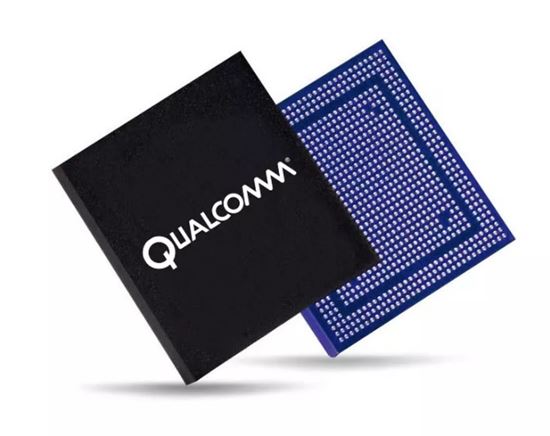
The Supreme Court's 3rd Division (Presiding Justice No Jeong-hee) on the 13th upheld the lower court ruling that ruled against Qualcomm in the appeal trial of the lawsuit filed by Qualcomm against the Korea Fair Trade Commission (KFTC) seeking cancellation of corrective orders.
In 2016, the KFTC judged that Qualcomm abused its 'market-dominant position' based on patent rights while supplying modem chipsets for telecommunications, forcing unfair transactions on mobile phone manufacturers such as Samsung Electronics and Apple, and imposed a record fine of 1.03 trillion won. Qualcomm filed a lawsuit the following year in protest.
During the trial, the KFTC argued that Qualcomm abused its superior position by preventing mobile phone manufacturers from using patents if they did not purchase chipsets. On the other hand, Qualcomm countered that the key requirement of obstructing commercial activities was not met and that chipsets were not subject to the 'FRAND commitment' which requires technology to be provided without discrimination.
The Seoul High Court ruled that four out of ten corrective orders by the KFTC should be canceled, but found it legitimate to impose the fine of 1.03 trillion won based on the abuse of market-dominant position. Fair trade-related lawsuits proceed under a two-tier system where the Seoul High Court acts as the first instance and the Supreme Court as the second instance to promptly determine the legality of KFTC's dispositions.
The first trial court stated, "Considering factors such as regional characteristics in concluding standard essential patent usage agreements, the KFTC's recognition of Qualcomm's market dominance is reasonable," and ruled, "The act of evading obligations under the 'FRAND commitment' and forcing unfair restrictions on competition is recognized."
However, regarding the claim that the comprehensive license caused disadvantages to mobile phone manufacturers, the court judged, "(The KFTC's) evidence is insufficient. There is no concrete evidence to suggest that the cost burden exceeded a reasonable level based solely on the market share structure," and concluded, "This is not a violation of the Fair Trade Act."
The Supreme Court also agreed with the first trial court's judgment. The court stated, "There is a concern that Qualcomm's actions could restrict competition in the modem chipset market for each standard by making business activities difficult for competing modem chipset manufacturers and mobile phone manufacturers," and added, "Considering internal documents revealing intent to restrict competition and unusual business practices, Qualcomm's intention or purpose in implementing the phone-level licensing policy appears to be to exclude competing modem chipset manufacturers in the standard-specific modem chipset market and maintain and strengthen its market-dominant position."
© The Asia Business Daily(www.asiae.co.kr). All rights reserved.
![Clutching a Stolen Dior Bag, Saying "I Hate Being Poor but Real"... The Grotesque Con of a "Human Knockoff" [Slate]](https://cwcontent.asiae.co.kr/asiaresize/183/2026021902243444107_1771435474.jpg)














