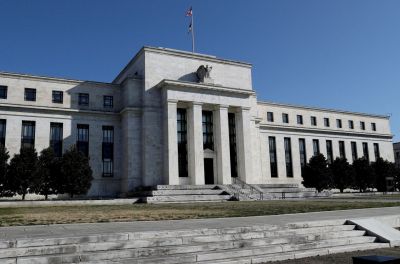
As the U.S. consumer price inflation rate eased to its lowest level in about two years, expectations have grown stronger that the Federal Reserve's (Fed) tightening cycle is nearing its end. The high-intensity tightening that began last year, combined with credit crunch concerns triggered by the Silicon Valley Bank (SVB) collapse, have led to forecasts that the Fed may conclude its rate hike cycle with a baby step (a 0.25 percentage point increase) in May and possibly start cutting rates as early as July. Fed officials have also diagnosed that the U.S. could enter a mild recession lasting two years starting in the second half of this year.
U.S. CPI Inflation Rate at 5%, Lowest in About Two Years
According to the U.S. Department of Labor on the 12th (local time), the Consumer Price Index (CPI) for March rose 5% year-over-year. This marks a significant slowdown from the 6% increase in the previous month and is the lowest level since May 2021 (5.0%). It also slightly undershoots the market forecast of 5.1% compiled by Dow Jones.
The monthly U.S. CPI has recorded a 5% range for the first time since September 2021 (5.4%). This has led to assessments that the Fed's rate hike cycle is approaching its end. Having declared war on inflation, the Fed began raising rates in March last year and has since pushed the U.S. benchmark interest rate up to 4.75?5.0%.
Although the sticky core CPI remains a key concern, there is no disagreement that U.S. inflation is trending downward. Jeffrey Roach, Chief Economist at LPL Financial, said, "Investors have gained more confidence that the next FOMC meeting will be the last rate hike." Diane Swonk, Chief Economist at KPMG, noted, "Prices are not low," but added, "It's better news than a year ago." The core CPI, which excludes volatile energy and food prices, rose 5.6% year-over-year and 0.4% month-over-month. The Producer Price Index (PPI), a wholesale price indicator, is scheduled to be released on the 13th.
Market consensus favors the Fed pausing rate hikes after an additional baby step at the May FOMC meeting. According to the Chicago Mercantile Exchange (CME) FedWatch tool, the current federal funds futures market most strongly reflects a 0.25% rate hike in May, a pause in June, and a possible rate cut in July. The probability of a May baby step exceeds 70%. Paul Ashworth, an economist at Capital Economics, predicted, "The Fed will make its last 0.25 percentage point rate hike in May."
Recession Concerns Mount... Fed Predicts "Recession Starting by Year-End"
The tightening of lending and credit crunch concerns following the SVB incident also bolster expectations that the tightening cycle is nearing its end. The International Monetary Fund (IMF) stated in reports released the previous day that ongoing tightening and the SVB incident have increased global financial stability risks. It analyzed that further rate hikes could pose even greater risks. The market is particularly wary that stricter lending standards in the banking sector could lead to a recession.
Ed Hyman, Chairman of investment advisory firm Evercore ISI, argued that the U.S. economy has already entered a recession and that the Fed should stop raising rates. Concerned about the financial shock from SVB, he emphasized, "At the very least, the Fed should not raise rates at the next meeting," adding, "The Fed needs to pause and see what happens."
Warren Buffett, Chairman of Berkshire Hathaway and known as the "Oracle of Omaha," also appeared on CNBC's Squawk Box to warn, "The bank failures are not over." IMF Deputy Managing Director Gita Gopinath acknowledged that recent U.S. economic indicators remain robust but cautioned, "The risk of a hard landing still exists." When asked about the possibility of the U.S. economy shifting to low or negative growth as the Fed continues raising rates, she responded, "That is possible."
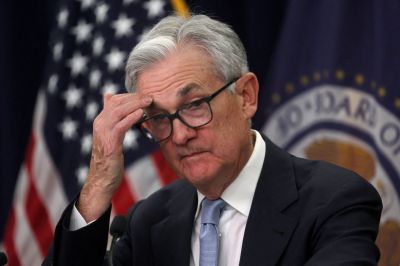
Such recession diagnoses have also emerged within the Fed. According to the minutes of the March FOMC regular meeting released that day, participants assessed that "considering the potential economic impact of the banking sector, a mild recession could begin by the end of this year" and "the recovery would take about two years." Following the consecutive failures of SVB and Signature Bank, the March FOMC meeting also saw tentative calls for a rate pause. However, consensus was reached that easing inflation remained the top priority, and the Fed ultimately raised rates by 0.25 percentage points. Additionally, considering the potential fallout from the banking crisis, the Fed maintained its year-end rate forecast on the dot plot, which had initially been set to rise.
The released minutes also contained numerous references to the need for flexibility in future monetary policy, reflecting significant uncertainty in economic forecasts. The minutes stated, "Due to developments in the banking sector, credit conditions for households and businesses have deteriorated, which could weigh on economic activity and employment," and emphasized, "There is a need to conduct monetary policy flexibly and selectively."
© The Asia Business Daily(www.asiae.co.kr). All rights reserved.
![Clutching a Stolen Dior Bag, Saying "I Hate Being Poor but Real"... The Grotesque Con of a "Human Knockoff" [Slate]](https://cwcontent.asiae.co.kr/asiaresize/183/2026021902243444107_1771435474.jpg)
















