The prosecution investigating the collapse accident at the Yangju quarry in Gyeonggi, which became the 'first case' just two days after the enforcement of the Serious Accidents Punishment Act, has indicted related parties including Jeong Dowon, chairman of Sampyo Group, and Lee Jongshin, CEO of Sampyo Industrial.
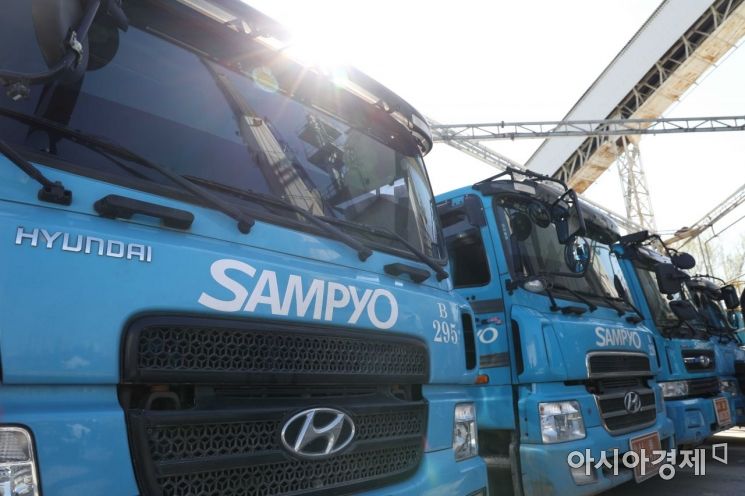
The Criminal Division 4 of Uijeongbu District Prosecutors' Office (Chief Prosecutor Hong Yonghwa) announced on the 31st that it had indicted Chairman Jeong Dowon without detention on charges of violating the Serious Accidents Punishment Act (SAP Act), and six executives including CEO Lee Jongshin on charges of violating the Industrial Safety and Health Act. Four field workers were also summarily indicted for professional negligence resulting in death.
They are accused of failing to comply with safety obligations in the accident where three workers were buried and died in a landslide while working at Sampyo Industrial's Yangju site on January 29 last year.
The prosecution particularly judged that the person responsible for management under the SAP Act in relation to this accident was Chairman Jeong. The SAP Act defines the person responsible for management subject to punishment as "a person who represents and oversees the business or a person in charge of safety and health duties equivalent to that," and concluded that this person was Chairman Jeong.
The prosecution explained that if a person exercises substantial and final authority, they can be regarded as the person responsible for management regardless of titles such as CEO or Chief Safety Officer (CSO).
Investigation results showed that Chairman Jeong was the final decision-maker who gave specific instructions to executives including the CEO during the quarrying process.
The prosecution also considered that Chairman Jeong, an expert who had worked in the quarrying industry for 30 years, ultimately decided the quarrying method at the accident site and was aware that continuing quarrying would steepen the slope, increasing instability. They judged that CEO Lee Jongshin only carried out Chairman Jeong's instructions and assisted in exercising management rights, making it difficult to regard him as the person responsible for management.
However, considering that CEO Lee recognized the danger of the accident site and failed to fulfill safety and health obligations under the Industrial Safety and Health Act, charges of violating the Industrial Safety and Health Act were applied.
Earlier, at around 10:08 a.m. on January 29 last year, a landslide occurred during drilling work for stone extraction at Sampyo Industrial's Yangju quarry in Dohari, Eunhyeon-myeon, Yangju-si, Gyeonggi Province, killing three workers. As Sampyo Industrial became the first workplace subject to the SAP Act, public attention focused on the case, leading to a search of the headquarters and the CEO being booked.
Violations of the SAP Act and the Industrial Safety and Health Act were investigated by the Ministry of Employment and Labor, while charges such as professional negligence resulting in death were investigated by the police. About four months after the accident, on June 13 last year, the Central Regional Employment and Labor Office sent the person responsible for management at Sampyo Industrial and the head of the Yangju site to Uijeongbu District Prosecutors' Office with a recommendation for indictment.
The Violent Crime Investigation Unit of the Northern Gyeonggi Provincial Police Agency sent 12 people including the site manager, safety manager, and blasting team leader of Sampyo Industrial's Yangju site to the prosecution with a recommendation for indictment.
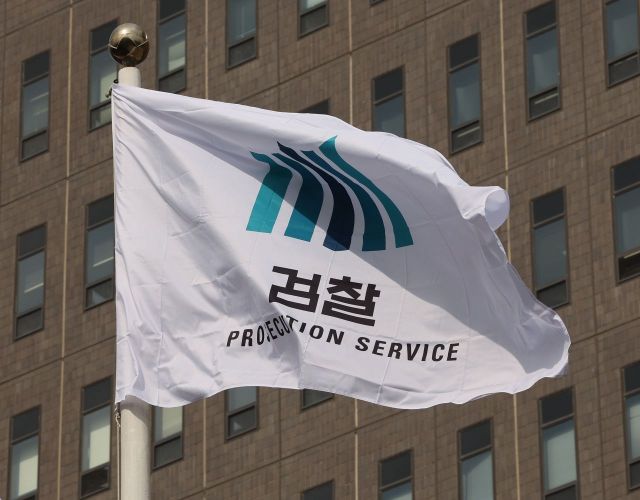
Meanwhile, the business community is strongly opposing the prosecution's decision to indict.
The prosecution applied the SAP Act to this collapse accident and indicted the group chairman, not the CEO of 'Sampyo Industrial,' the person responsible for safety. They used the fact that the group chairman showed interest in the safety of affiliates, encouraged safety activities, and that the holding company even formed a separate organization to support the safety work of affiliates as grounds for punishing the group chairman as the final person responsible for the accident.
The business community voices concerns that the prosecution's judgment may hinder future corporate safety improvement activities.
Since the SAP Act was enforced on January 27 last year, the prosecution has received 51 cases and taken action on 15. Last year, 11 cases were indicted and one was not prosecuted, and this year, including Sampyo, a total of three cases have been sent to trial.
Court rulings are also expected soon. The first trial verdict will be delivered on April 6 at the Goyang branch of Uijeongbu District Court and on April 26 at the Masan branch of Changwon District Court.
The Serious Accidents Punishment Act has only been in effect for about a year, so precedents, case law, and legal principles have not yet been accumulated. Each prosecution disposition and court ruling becomes a precedent.
A representative from the Supreme Prosecutors' Office said, "To reduce industrial accidents, preventive efforts by companies and government departments such as the Ministry of Labor are most important," adding, "The prosecution respects the legislative intent of the SAP Act, which was enacted to protect workers' lives and promote safety, and is doing its best to investigate and take action strictly based on evidence and legal principles." Prosecutor General Lee Wonseok is also reportedly encouraging frontline prosecutors' offices to handle SAP Act cases strictly and promptly.
© The Asia Business Daily(www.asiae.co.kr). All rights reserved.
![Clutching a Stolen Dior Bag, Saying "I Hate Being Poor but Real"... The Grotesque Con of a "Human Knockoff" [Slate]](https://cwcontent.asiae.co.kr/asiaresize/183/2026021902243444107_1771435474.jpg)
















