Consumers Prefer Home-Cooked Meals Due to Dining Out Costs
Self-Employed Say "Forced Price Hikes with Tears"
Major Food Ingredient Prices Up 18% in One Year
"Should I raise the prices, or should I keep them the same?"
Recently, posts like this appear daily in a self-employed community with 1.2 million small business owners and self-employed individuals. Most of these posts ask for opinions on how to raise menu prices due to soaring ingredient costs. Many worry about losing regular customers or seeing fewer visitors, but most agree that they simply cannot survive without raising prices.
Ko Young-hwan (37, pseudonym), who runs a Japanese-style pub in Namdong-gu, Incheon, recently raised the prices of key menu items by 500 to 1,000 won. Gas, labor, and ingredient costs have risen so much that profit margins have sharply declined. Ko said, "We managed to survive even when gatherings were restricted due to COVID-19, but these days it’s even harder. If prices keep going up, customers dislike it and say it’s expensive, sometimes never coming back, but right now, there’s no other option."
As the upward trend in dining-out prices continues, the burden on consumers grows, deepening the worries of self-employed business owners. With gas, labor, and food material costs continuously rising, many owners have no choice but to reluctantly raise prices as their only way out.
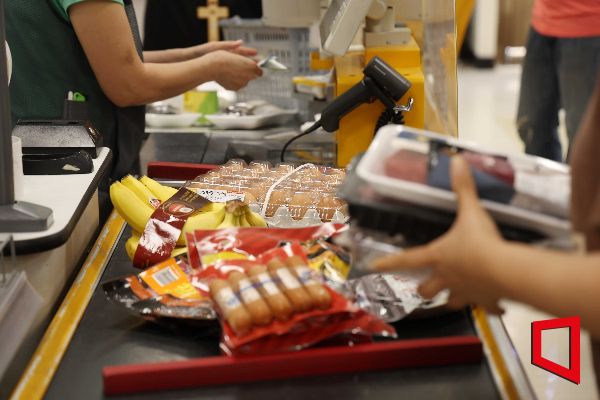
According to the National Statistical Office’s National Statistics Portal on the 27th, the dining-out price index last month was 115.45, up 7.5% compared to the same month last year. Major dining-out items all showed increases. According to the Korea Consumer Agency’s True Price survey, the average price of naengmyeon (cold noodles) in Seoul last month exceeded 10,000 won at 10,692 won, a 7.3% increase from the previous year, and bibimbap rose 8.7% to 10,115 won. Additionally, jajangmyeon (black bean noodles) recorded the highest increase rate, rising 16.5% from 5,769 won to 6,723 won. Samgyetang (ginseng chicken soup) at 16,115 won, gimbap at 3,100 won, and kalguksu (knife-cut noodles) at 8,731 won also rose by 11.1%, 10.4%, and 9.7%, respectively.
The sharp rise in ingredient prices over the past year is cited as the biggest reason for the increase in dining-out prices. In fact, a survey found that the prices of major ingredients used in restaurants rose about 18% over the past year. Food tech startup Marketboro investigated the prices of 2,015 ingredients sold on Sikbom, an ingredient purchasing app exclusively for dining-out businesses, last month and found that the average price of ingredients commonly used in restaurants rose 17.6% compared to a year ago. This increase is steeper than the 10.4% rise in the prices of eight major dining-out items reported by the Consumer Agency. For example, for jajangmyeon, which had the steepest price increase, the price of flour (20kg for noodle making) rose 15.5% over the year, cooking oil (18L) increased by 22%, and chunjang (fried black bean paste, 10kg) rose 8.8%. The price of onions (15kg), an essential vegetable, surged by a staggering 182.5%.
Processed food prices continue to rise, triggering a domino effect of price hikes across companies. Following bread, snacks, and alcoholic beverages, franchise brands such as hamburgers and chicken have joined the ranks of price increases in the first half of the year. Namyang Dairy Products will raise the wholesale prices of seven types of soy milk, including Mat-itneun Duyu GT Mild and Sweet flavors, by an average of 4.7% starting next month. Lotte Confectionery also raised prices of some frozen products like dumplings by 5-11% and plans to adjust convenience store prices for ice cream and chocolate from next month. Alcohol prices, especially imported ones, continue to rise. OB Beer is expected to raise prices of imported and distributed beers such as Budweiser, Stella Artois, and Corona by an average of 9%. Kyochon F&B, operator of Kyochon Chicken, plans to raise chicken menu prices by up to 3,000 won starting from the 3rd of next month. As a result, the Soy Sauce Original menu will increase from 16,000 won to 19,000 won, an 18.8% rise, nearing 20,000 won.
An official from the distribution industry said, "With the continuous rise in prices of dining-out and processed foods, it is difficult to guarantee whether the inflation, which had shown signs of slowing down for a while, will continue this trend."
© The Asia Business Daily(www.asiae.co.kr). All rights reserved.
![Clutching a Stolen Dior Bag, Saying "I Hate Being Poor but Real"... The Grotesque Con of a "Human Knockoff" [Slate]](https://cwcontent.asiae.co.kr/asiaresize/183/2026021902243444107_1771435474.jpg)















