High Likelihood of Becoming a Constant in the Industry, Not Just a Temporary Trend
The craze for ‘zero sugar’ and ‘zero calorie’ products is spreading throughout the beverage and alcohol markets. As interest in health continues to grow, there are voices suggesting that the zero trend is likely to become a constant in the industry rather than a temporary fad.
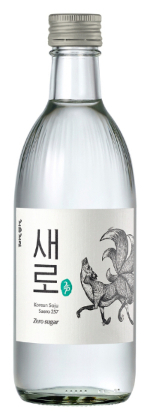 Lotte Chilsung Beverage 'Cheoeumcheoreom Saero'
According to the distribution industry on the 16th, Lotte Mart launched its private brand (PB) products ‘One Good Cola Zero’ and ‘One Good Cider Zero’ and began full-scale sales. Lotte Mart explained that to gain competitiveness in the rapidly growing zero carbonated beverage market, it commercialized zero cola and cider after more than six months of internal testing and about 20 recipe revisions.
Recently, products with zero sugar, zero calories, and other reductions have flooded the entire alcohol and beverage markets. The reason zero products are receiving enthusiastic responses in the market is health. Interest in health and immunity has increased through the COVID-19 pandemic, and a trend to enjoy while managing health has taken root, especially among younger generations. Instead of forcibly refraining from foods they want to eat, consumers increasingly seek products that remove or replace specific ingredients.
The company leading the recent zero trend is Lotte Chilsung Beverage. Having officially entered the zero beverage market in 2021 with the launch of ‘Chilsung Cider Zero’ and ‘Pepsi Cola Zero,’ Lotte Chilsung expanded its zero lineup last year with ‘Tams Zero,’ ‘Hot6 Zero,’ and ‘Ceylon Tea Zero,’ and recently added ‘Milkis Zero.’ In the alcohol sector, it introduced ‘Cheoeumcheoreom Saero’ in September last year, a zero sugar soju made without fructose, which sold 50 million bottles by January.
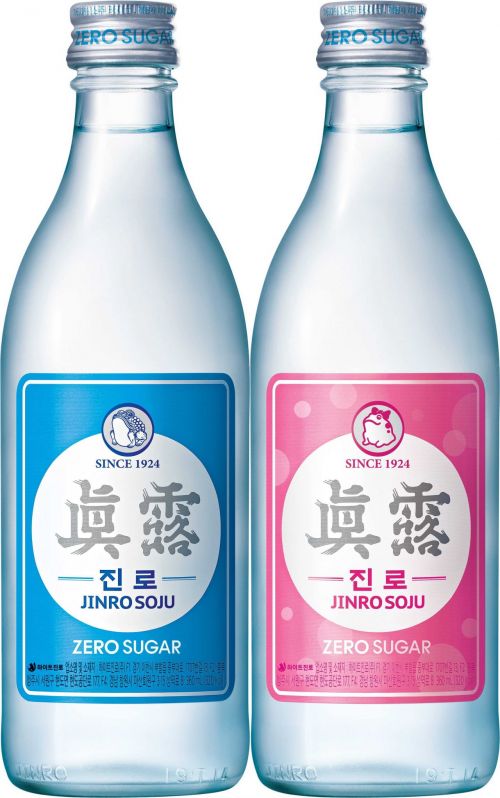
As Lotte Chilsung takes the lead in the zero market, follow-up competitors are accelerating their moves. In the alcohol industry, Hite Jinro, the leading soju company, is feeling the pressure. After ‘Cheoeumcheoreom Saero’ performed well in the market, Hite Jinro renewed ‘Jinro Is Back’ as a zero sugar product to counter it. This month, Mackiss Company, a liquor company in Daejeon, Chungnam, and Sejong regions, launched ‘Seonyang,’ a zero sugar soju with the lowest alcohol content (14.9 degrees) and lowest calories (298 kcal per 360 ml) in Korea, stirring up the market.
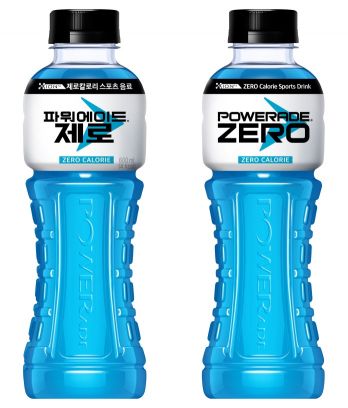
The beverage industry is also quickly joining the zero trend. This month alone, Coca-Cola launched the sports drink ‘Powerade Zero’ on the 13th, and Kwangdong Pharmaceutical and Woongjin Foods introduced ‘Vita 500 Zero’ and the blended tea ‘Teazle Zero,’ respectively. Last month, Ilhwa released ‘McCol Zero,’ a zero-calorie version of the barley carbonated drink ‘McCol.’
The industry expects the popularity of zero products to continue long-term, as it is based on consumer trends that emphasize health. Heeji Ha, a researcher at Hyundai Motor Securities, predicted, “Consumers are increasingly considering health in food consumption, so interest in zero beverages that replace traditional sugar with artificial sweeteners will continue to grow.” Hyundai Motor Securities forecasts that the domestic zero carbonated beverage market will grow to about 495 billion KRW this year, a 34% increase from last year’s estimated 380 billion KRW.
Additionally, whether zero sugar becomes a trend in the alcohol industry will depend on developments after April. Sanghoon Jo, a researcher at Shinhan Investment Corp., explained, “Typically, it takes 2-3 months for new alcoholic products to enter major channels after launch, and another 2-3 months for turnover and repurchase by consumers. The outcome of the zero soju craze will be determined after April.”
Moreover, starting this year, the Fair Trade Commission and the Ministry of Food and Drug Safety have agreed to gradually expand voluntary calorie labeling on alcoholic products until 2025, which is expected to provide a background for the release and consumption of various zero sugar products. An industry insider explained, “Until now, alcohol consumers could not check calorie information, but from this year, calorie information will be available for soju and beer products, creating an environment where consumption of low-calorie products emphasizing low calories rather than high-calorie products can increase.”
© The Asia Business Daily(www.asiae.co.kr). All rights reserved.
![Clutching a Stolen Dior Bag, Saying "I Hate Being Poor but Real"... The Grotesque Con of a "Human Knockoff" [Slate]](https://cwcontent.asiae.co.kr/asiaresize/183/2026021902243444107_1771435474.jpg)
















