Attention on Manufacturers' Moves Regarding 317-Yard Limit Rule
US Media Predicts Lighter Weight, Softer Feel, and Design Changes
The Royal and Ancient Golf Club of St Andrews (R&A) and the United States Golf Association (USGA), which oversee the global rules of golf, have sparked complex considerations among manufacturers by publicizing plans to suppress the distance of golf balls used in professional tournaments. This is because only the performance of the golf ball must be restricted, excluding players' skills or club specifications from consideration. Some predict changes such as reducing the weight and elasticity of the ball and modifying its appearance.
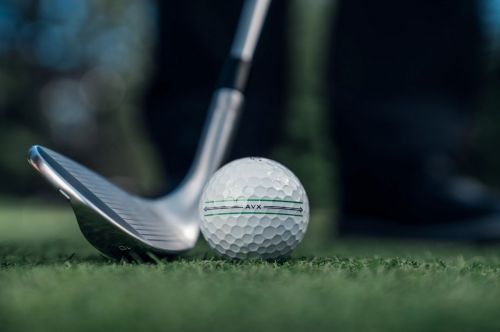
On the 15th, the U.S. golf media outlet Golf.com identified three potential changes that golf ball manufacturers could implement: lighter and softer golf balls, and surface modifications for aerodynamic control.
First, reducing the weight of the golf ball while keeping other variables constant could decrease its distance compared to current balls. Unlike cars or airplanes that have their own propulsion systems and benefit from being lighter to achieve higher speeds, golf balls gain energy only through the club head. Golf.com explained, "The faster a ball flies, the more it experiences air resistance, which reduces its speed," adding, "Reducing the weight of the golf ball decreases its ability to maintain speed compared to a heavier ball." This principle is similar to why a hard, heavy baseball travels farther than a plastic 'wiffle ball' with holes on its surface, which has a much shorter distance.
A 'soft golf ball' involves making the core, the spherical center, from more flexible materials and compressing the outer layer less. This causes more deformation upon impact, potentially reducing distance, the outlet added. Lastly, adjusting the 'dimples'?the concave patterns on the golf ball's surface?can be considered. Dimples increase friction and pressure, allowing the ball to fly farther and longer. Typically, a golf ball has 300 to 500 dimples; reducing their number or lessening their depth could affect distance. It is known that a golf ball without dimples can see its distance decrease by about 20%.
Earlier, the R&A and USGA announced in a joint statement that they plan to change regulations within three years to ensure that golf balls used by players in professional tournaments do not travel more than 317 yards when struck at a swing speed of 127 miles per hour (approximately 204.4 km/h). This will not apply to amateur golfers who play golf recreationally. The industry expects that if golf ball performance is limited as planned, the driving distance of top players on the PGA Tour will decrease by about 15 yards.
These associations have long been concerned that the continuous increase in distance undermines the essence of golf and does not benefit the development of the golf industry. As long hitters increase, the cost of maintaining longer courses rises, and the use of water and chemicals increases, negatively impacting the environment. In fact, the average driving distance of PGA Tour players was about 286 yards in 2003, with only nine players exceeding 300 yards, but this season the average distance increased to 297.2 yards, with 83 players surpassing 300 yards.
The R&A and USGA plan to gather opinions on the regulations to suppress golf ball distance by August. Although there is an idea to implement changes starting January next year, considering the time required for golf ball development and manufacturing, enforcement is expected to be possible only three years later. Acushnet, the maker of Titleist golf balls most used by professional players, immediately issued a statement opposing this move.
© The Asia Business Daily(www.asiae.co.kr). All rights reserved.
![Clutching a Stolen Dior Bag, Saying "I Hate Being Poor but Real"... The Grotesque Con of a "Human Knockoff" [Slate]](https://cwcontent.asiae.co.kr/asiaresize/183/2026021902243444107_1771435474.jpg)















