The nationwide decline in housing sale prices narrowed for the second consecutive month. This is interpreted as being influenced by the government's regulatory easing measures, including the 1st and 3rd real estate policies, and the slowing pace of interest rate hikes, which affected the depletion of urgent sale listings and market recovery expectations.
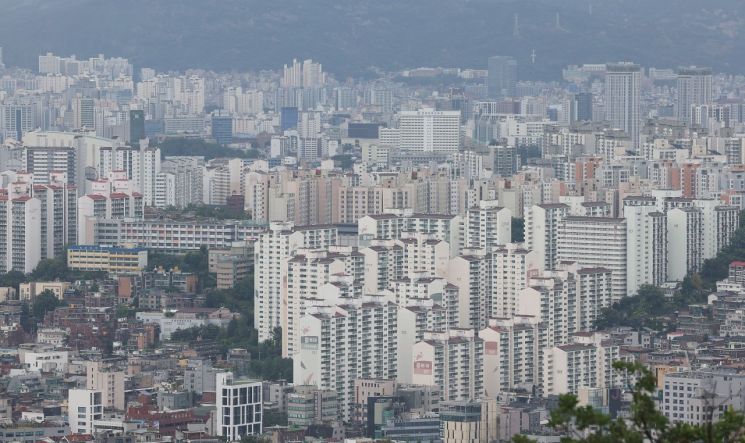
On the 15th, the Korea Real Estate Board announced that according to the nationwide housing price trend survey in February this year, the comprehensive housing (apartments, multiplex houses, detached houses, etc.) sale prices fell by 1.15%, reducing the decline compared to the previous month (-1.49%). Last November and December recorded the largest drops ever with -1.37% and -1.98%, respectively, but the downward trend has slowed this year.
By region, the decline narrowed in Seoul (-1.25% → -0.80%), the metropolitan area (-1.86% → -1.38%), and other provinces (-1.15% → -0.93%). While the decline continued mainly in older buildings, some preferred complexes saw urgent sale listings depleted, resulting in a reduced decline or a gentle upward trend.
Among the 25 autonomous districts in Seoul, only Dongjak-gu (-0.82% → -0.93%) saw an increased decline. The largest drop was recorded in Geumcheon-gu (-1.35%), mainly in Siheung and Doksan-dong, where falling transactions are ongoing. Gangdong-gu (-1.03%) saw price drops mainly in major complexes in Gangil, Myeongil, Cheonho, and Sangil-dong, while Dongdaemun-gu (-0.90%) experienced continued downward pressure due to supply volume, with prices falling mainly in Imun, Hwikyung, Yongdu, Jeonnong, and Dapsimni-dong. In Jungnang-gu (-0.85%), the decline was notable in small to medium-sized older apartments mainly in Sangbong, Sinnnae, and Junghwa-dong, where urgent sale listings are being traded.
In Gyeonggi Province (-1.82%), the decline was centered on new towns such as Hanam, Suwon, and Hwaseong, while Incheon (-1.16%) saw decreases mainly in large older complexes in Gyeyang, Bupyeong, and Yeonsu districts, though the rate of decline slowed. In other provinces, a wait-and-see attitude persisted in areas with abundant supply. In Daegu (-1.74%), housing prices fell mainly in Dalseo-gu and Dalseong-gun, and in Busan (-1.48%), mainly in Haeundae-gu and Gijang-gun.
Last month, the nationwide comprehensive housing jeonse (long-term lease) prices fell by 1.80%, narrowing the decline compared to the previous month (-2.29%). Seoul, the metropolitan area, and other provinces fell by 2.16%, 2.48%, and 1.17%, respectively. The Real Estate Board stated, "Despite the accumulation of listings, the decline narrowed compared to the previous month as the properties with large price drops were sold."
In Seoul's Gangnam-gu (-3.86%), jeonse prices dropped significantly in Apgujeong, Irwon, Suseo, Daechi, and Gaepo-dong, while in Dongjak-gu (-3.32%), areas affected by move-in volumes such as Sadang, Sangdo, Dongjak, and Heukseok-dong saw large declines. The situation was similar in other provinces. Daegu (-2.28%) saw declines mainly in Dalseong-gun and Dalseo-gu, Busan (-2.01%) in Nam and Haeundae-gu, and Gyeongnam (-1.05%) mainly in Yangsan-si and Changwon Seongsan-gu.
Nationwide monthly rent prices fell by 0.29%, narrowing the decline again after one week. This was due to expectations that further interest rate hikes would be limited and the continued decline in jeonse prices, which reduced preference for monthly rent. Both Seoul (-0.33%) and other provinces (-0.16%) saw the same rate of decline as the previous week.
© The Asia Business Daily(www.asiae.co.kr). All rights reserved.
![Clutching a Stolen Dior Bag, Saying "I Hate Being Poor but Real"... The Grotesque Con of a "Human Knockoff" [Slate]](https://cwcontent.asiae.co.kr/asiaresize/183/2026021902243444107_1771435474.jpg)















